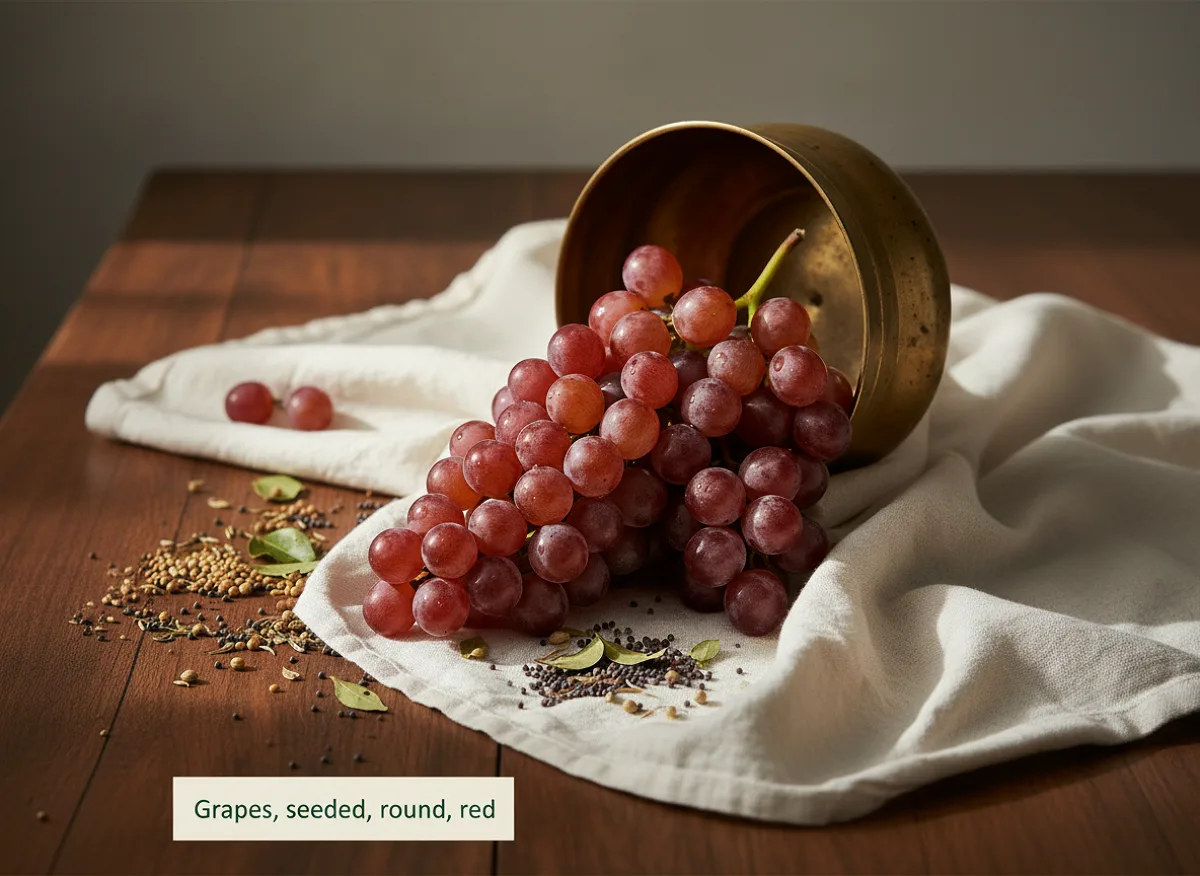
Grapes, seeded, round, red
Vitis vinifera · Also known as Angoor, Lal Draksha, Draksha, Dach, Soh grape saw, Mundiringa, Draakssaa, Dratchai, Draksha padu.
Red grapes are sweet, juicy berries rich in natural sugars and antioxidants, commonly enjoyed fresh as a snack or dessert across Indian homes. Seeded varieties offer a traditional eating experience and are used in chutneys, salads, and festive dishes (IFCT 2017, Ref #E024).
Nutrition per 100 g
Mean values ± IFCT published SD (edible portion).
More macros
Classification
About Grapes, seeded, round, red
What it is
Red grapes are round, seeded berries from the vine plant, naturally sweet and juicy with a thin skin and firm flesh. They are a seasonal fruit in India, typically harvested in late summer and early autumn, and are classified under the IFCT fruit category (IFCT 2017, Ref #E024). Seeded varieties have been a staple in Indian kitchens for centuries, prized for their flavour and versatility.
Use in Indian Kitchen
Red grapes appear across Indian regions in different forms. In North India, they are enjoyed fresh during harvest season, added to fruit salads, and sometimes used in traditional chutneys and pickles. In the South, they feature in fruit-based desserts and are occasionally paired with coconut or jaggery preparations. Grapes are also dried into kishmish (raisins) for use in biryanis, pulaos, and sweet dishes year-round. During festivals and celebrations, fresh red grapes are a popular offering and gift, symbolising abundance and sweetness. The fruit holds a nostalgic place in many Indian households, especially in grape-growing regions like Maharashtra and Karnataka, where fresh bunches are a summer treat.
Key Nutrients
Red grapes contain natural sugars (glucose and fructose), dietary fibre, vitamin C, and polyphenols including resveratrol. They also provide potassium, manganese, and small amounts of B vitamins. The red pigment comes from anthocyanins, a class of antioxidants. Exact nutrient composition varies with ripeness and growing conditions; refer to IFCT 2017 for detailed micronutrient profiles.
Health Benefits (Evidence-based)
- May support heart health through polyphenols and potassium, which help maintain healthy blood pressure.
- Linked to antioxidant activity that may help protect cells from oxidative stress.
- Natural sugars provide quick energy, making them a good pre- or post-activity snack.
- Dietary fibre supports digestive wellness when consumed with skin intact.
- Traditionally used in Ayurvedic and folk medicine to cool the body and support liver function.
- May contribute to bone health through minerals like manganese and potassium.
Culinary Uses (Vegetarian)
- Eaten fresh as a snack or dessert, chilled in summer.
- Added to fruit salads, yoghurt parfaits, and curd-based desserts.
- Used in traditional chutneys paired with spices like ginger, chilli, and cumin.
- Incorporated into rice dishes like biryani and pulao for sweetness and texture.
- Dried as kishmish for use in kheer, halwa, and festive sweets.
- Pressed into fresh juice or blended into smoothies with yoghurt and honey.
Caution
Grapes are naturally high in sugar and should be consumed in moderation by those managing blood sugar levels. Seeds may pose a choking risk for very young children; seedless varieties are safer for toddlers. Pesticide residues can accumulate on grape skin, so wash thoroughly under running water before eating. Those on blood-thinning medications should consult a healthcare provider, as high polyphenol intake may interact with certain drugs.
References
- Indian Council of Medical Research - National Institute of Nutrition (ICMR-NIN). Indian Food Composition Tables (IFCT) 2017. Reference #E024 (Grapes, seeded, round, red).
- National Institute of Nutrition, ICMR. Dietary Guidelines for Indians - A Manual. 2011.
Sourcing & Storage
Storage
Store red grapes in a breathable container or perforated plastic bag in the refrigerator at 2-4°C to maintain freshness and prevent mould. Keep them away from direct sunlight and moisture. In Indian climates, ensure good air circulation to prevent condensation. Do not wash grapes before storage; wash only when ready to eat. Keep grapes away from strong-smelling foods as they absorb odours easily.
Shelf Life
Fresh red grapes keep for 1-2 weeks in the refrigerator when stored properly. Once removed from the bunch, individual grapes may soften faster and should be consumed within 3-5 days. Grapes can be frozen whole on a tray and transferred to freezer bags for up to 3 months; frozen grapes work well in smoothies or as a chilled snack but will lose firmness when thawed.
Check Before You Buy
Choose bunches with plump, firm grapes that feel heavy for their size. The skin should be smooth, glossy, and deeply coloured with no wrinkles, soft spots, or mould. Avoid grapes that are mushy or have brown patches. Smell the bunch lightly - fresh grapes have a subtle sweet aroma. Check that grapes are firmly attached to the stem; loose berries indicate age or poor handling. When buying from a mandi or kirana shop, ask for recently arrived stock and inspect a few grapes from different parts of the bunch. Packaged grapes should have no condensation inside the container, which signals mould risk.