Goosberry
Emblica officinalis · Also known as Amlakhi, Indian Gooseberry, Amla, Betta nelli, Soh mylleng, Nellikka, Heikru, Aanla, Olle, Nellikkai
Gooseberry (amla) is a small, round, tart fruit rich in vitamin C, traditionally used across Indian kitchens in chutneys, pickles, and fresh preparations. A staple of Ayurvedic wellness and home remedies, it brings a sharp, tangy flavour to both sweet and savoury dishes (IFCT 201...
Nutrition per 100 g
Mean values ± IFCT published SD (edible portion).
More macros
Classification
About Goosberry
What it is
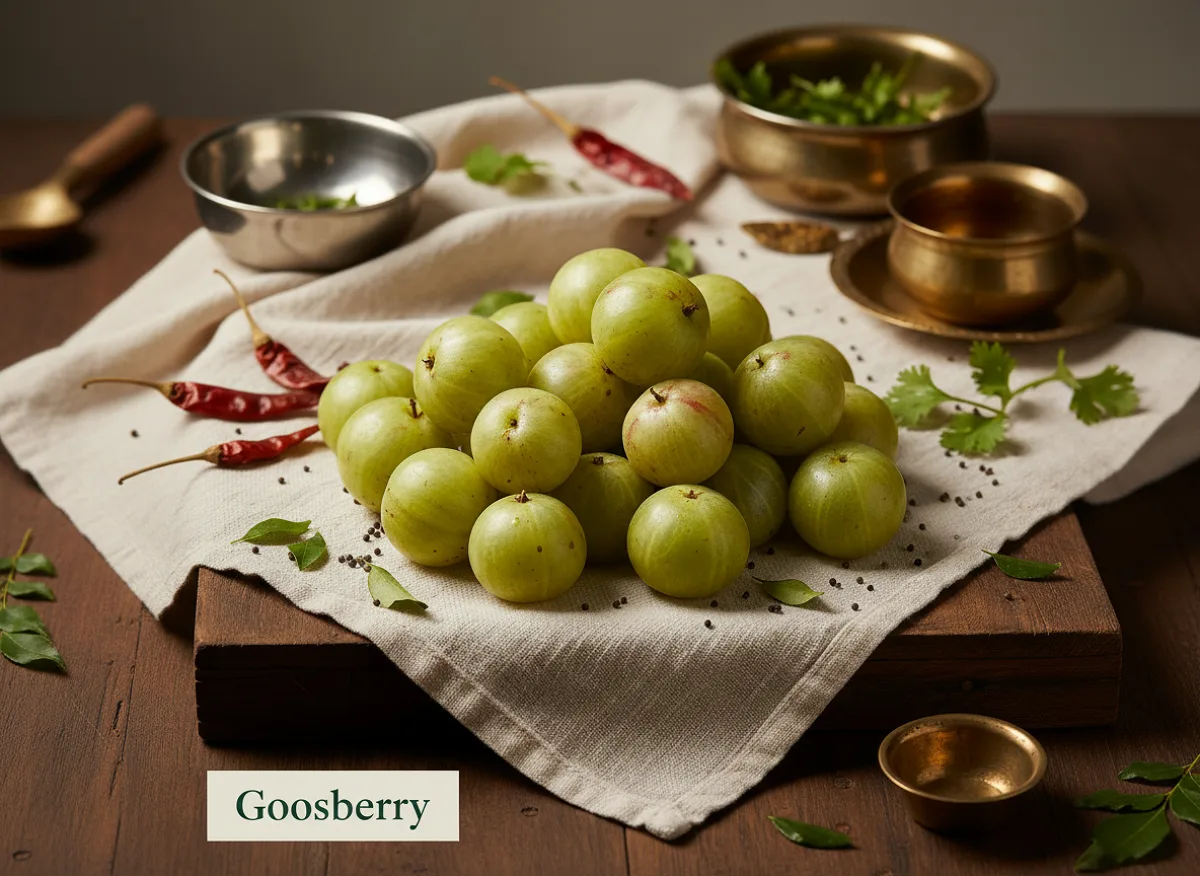
Gooseberry, known as amla in Hindi and across most Indian regions, is a small, pale-green to golden-yellow fruit with thin, translucent skin and a distinctly tart, astringent taste. Native to the Indian subcontinent, it grows wild and is widely cultivated in home gardens and orchards. The fruit is eaten fresh, dried, or processed into powders, oils, and preserves (IFCT 2017, Ref #E021).
Use in Indian Kitchen
Amla holds a cherished place in Indian home cooking, particularly in South and North Indian households. It is the soul of tangy chutneys, sharp pickles (achar), and cooling summer drinks. In the South, fresh amla is often candied or made into murabba (preserve); in the North, it features in achaar and is dried for year-round use. The fruit's sharp bite cuts through rich curries and balances sweet dishes. Seasonally abundant in winter and early spring, amla is also a symbol of wellness in Indian tradition - grandmothers have long pressed fresh amla juice or powder into daily routines for vitality and immunity.
Ayurvedic Connection
Amla is revered in Ayurveda as a tridoshic rasayana (rejuvenative), balancing all three doshas. It is cooling (virya), sour and astringent (rasa), and traditionally used to support digestion, strengthen hair and skin, and boost natural immunity. Classical texts and home remedy practice have long valued amla for its role in maintaining vitality and longevity.
Key Nutrients
Gooseberry is exceptionally rich in vitamin C (ascorbic acid), a powerful antioxidant. It also contains tannins, fibre, minerals including iron and copper, and small amounts of B vitamins. The exact nutrient profile varies with ripeness and growing conditions; refer to IFCT 2017 (Ref #E021) for detailed compositional data.
Health Benefits (Evidence-based)
- High vitamin C content may support immune function and help the body resist common infections.
- Antioxidants and tannins may help protect cells from oxidative stress and support overall wellness.
- Traditionally linked to healthy digestion and gentle bowel regularity when consumed fresh or as a mild preparation.
- May support skin health and collagen formation due to its vitamin C and antioxidant profile.
- Fibre content may contribute to satiety and digestive comfort as part of a balanced diet.
Culinary Uses (Vegetarian)
- Fresh amla chutney - a sharp, tangy condiment for dal, rice, and bread.
- Amla pickle (achar) - preserved in oil and spices for months, served as a side with meals.
- Amla murabba - candied or stewed with sugar, eaten as a sweet preserve or added to yoghurt.
- Dried amla powder - sprinkled into lassi, smoothies, or stirred into warm water as a daily tonic.
- Amla juice - fresh or diluted, consumed as a cooling summer drink or wellness shot.
- Amla in curries and dal - the fruit's tartness balances rich, creamy vegetable dishes.
Caution
Amla is very tart and may cause discomfort if consumed in large quantities on an empty stomach, especially for those with sensitive digestion or acid reflux. Those taking blood-thinning medications or with bleeding disorders should consult a healthcare provider before consuming amla in medicinal amounts, as its high vitamin C and tannin content may have mild anticoagulant properties. Pregnant and nursing mothers should consume amla in normal culinary amounts only.
References
- Indian Council of Medical Research - National Institute of Nutrition (ICMR-NIN). Indian Food Composition Tables 2017 (IFCT 2017). Reference #E021 - Gooseberry.
- Bhattacharya, A., Ghosal, S., & Bhattacharya, S. K. (2002). Antioxidant activity of tannin-rich extracts from Emblica officinalis fruits. Journal of Ethnopharmacology, 86(2-3), 217-222.
Sourcing & Storage
Storage
Store fresh gooseberries in a cool, dry place away from direct sunlight, or refrigerate in a breathable cloth bag or perforated container to allow air circulation and prevent moisture buildup. In warm, humid Indian climates, keep them in the coldest part of the fridge (2-4°C) to slow ripening and spoilage. Dried amla powder should be stored in an airtight glass jar in a cool, dark cupboard, away from moisture and strong odours.
Shelf Life
Fresh gooseberries keep for 5-7 days at room temperature in a cool spot, or up to 2-3 weeks when refrigerated in a breathable container. Once cut or bruised, use within 1-2 days. Dried amla powder, when stored in an airtight container in a cool, dark place, remains potent for 6-12 months. Amla pickles and murabba, when properly sealed and stored in a cool cupboard, last 6-12 months or longer.
Check Before You Buy
Choose firm, unblemished gooseberries with smooth, thin skin and a pale-green to golden hue - avoid soft, wrinkled, or darkly discoloured fruit, which may be overripe or spoiled. Fresh amla should feel slightly waxy and have a faint, pleasant aroma; reject any with mould, cracks, or a fermented smell. When buying from a mandi or kirana shop, ask for recently harvested fruit and avoid pre-packed bags that feel damp or show signs of leakage. Dried amla powder should be uniform in colour, free of lumps, and purchased from a trusted source to ensure no adulteration with added sugars or fillers.