Golden raisins, dried
Vitis vinifera · Also known as Kishmish, golden sultanas, yellow raisins, मुनक्का (munakka - though munakka traditionally refers to black raisins with seeds)
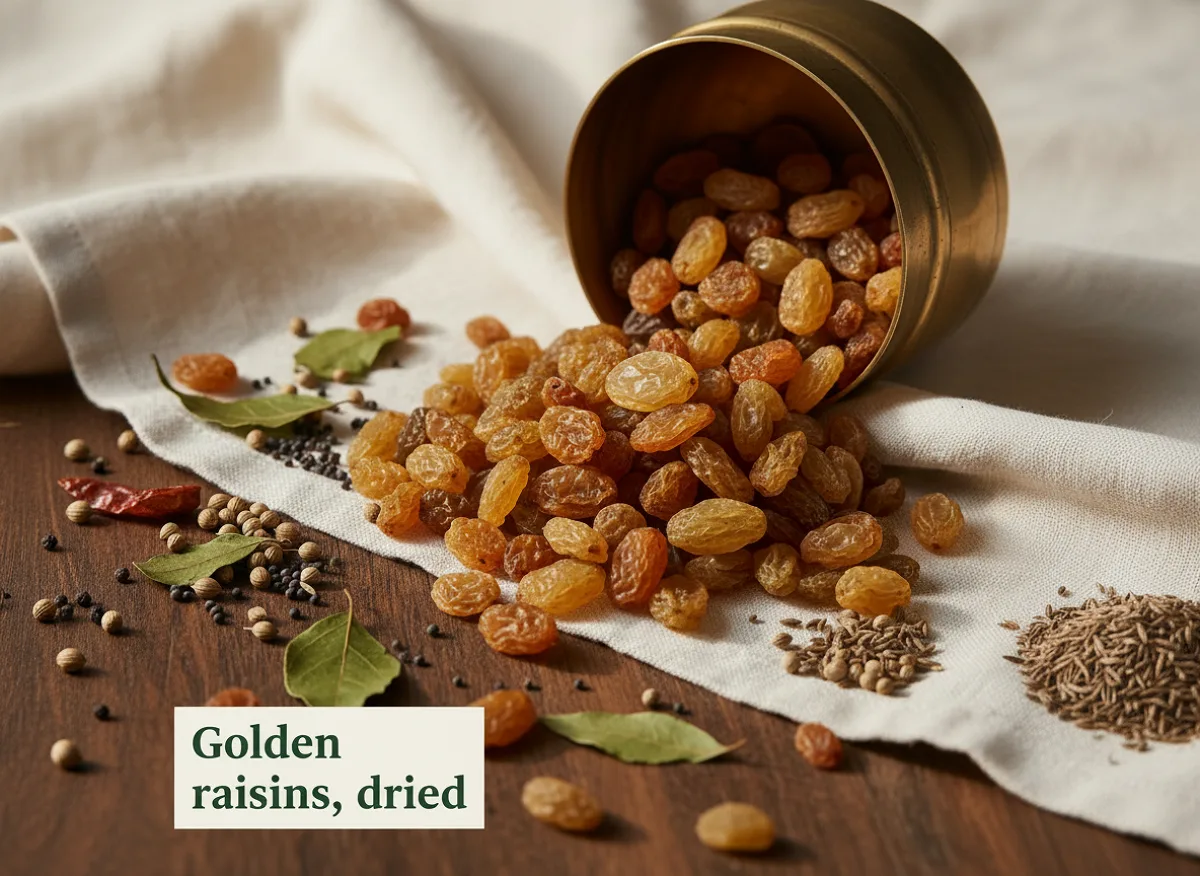
Golden raisins are plump, naturally sun-dried grapes with a honey-sweet flavour and tender, chewy texture. Lighter in colour and milder than their dark cousins, they bring gentle sweetness to Indian sweets, chutneys, and rice dishes without the deep molasses notes. A staple in kh...
Nutrition per 100 g
Mean values ± IFCT published SD (edible portion).
More macros
Classification
About Golden raisins, dried
What it is
Golden raisins are whole dried grapes, naturally sun-dried or sometimes treated with a light oil coating to preserve their pale golden colour and soft texture. Unlike dark raisins, they retain a brighter hue and a more delicate, honey-like sweetness. They are plump and tender when fresh, with thin skin and a moist interior. Widely used across Indian kitchens - from North Indian sweets to South Indian payasams - they are a familiar ingredient in festive cooking and everyday desserts. (IFCT 2017, Ref #E058)
Use in Indian Kitchen
Golden raisins are a workhorse in Indian sweets and savoury dishes. They feature prominently in kheer (rice pudding), halwa (semolina or carrot pudding), and payasam (South Indian dessert), where their gentle sweetness complements milk and ghee. In North India, they are folded into barfi, laddu, and shahi tukda. Biryani cooks prize them for garnish and flavour - they plump up beautifully in the steam. They also appear in chutneys (especially fruit chutneys), pilau rice, and even some savoury curries where a touch of sweetness is desired. A practical tip: soak them briefly in warm water or milk before adding to dishes to soften them further and release their flavour into the cooking liquid. Children often enjoy them as a natural sweet snack or stirred into warm milk with a pinch of cardamom.
Key Nutrients
Golden raisins are a concentrated source of natural sugars (glucose and fructose), dietary fibre, and potassium. They also contain iron, magnesium, and small amounts of B vitamins. The drying process concentrates these nutrients, making them calorie-dense. Exact nutrient composition is documented in IFCT 2017.
Health Benefits (Evidence-based)
- May support energy and stamina due to natural sugars and carbohydrates - traditionally given to children and athletes.
- Linked to digestive health through dietary fibre content, which may help maintain regular bowel function.
- Contain polyphenols and antioxidants that may help protect cells from oxidative stress.
- Good source of potassium, which plays a role in heart and muscle function.
- Iron content may contribute to oxygen transport in the blood, particularly useful in plant-based diets.
- Traditionally used in Ayurvedic tonics and milk-based remedies for general wellness and vitality.
Culinary Uses (Vegetarian)
- Kheer, payasam, halwa, and other milk-based desserts.
- Barfi, laddu, and other Indian sweets and confections.
- Biryani garnish and flavouring.
- Fruit chutneys and sweet-savoury chutneys.
- Pilau rice and festive rice dishes.
- Soaked in warm milk as a simple tonic or snack.
- Stuffing for parathas and puris (less common, but used in some regional recipes).
Caution
- High in natural sugars; those managing blood sugar levels should consume in moderation and pair with protein or fat.
- May cause digestive discomfort (bloating, gas) if eaten in large quantities due to fibre and fructose content.
- Some commercial golden raisins are treated with mineral oil or other coatings for preservation; rinse well before use if concerned.
- Choking hazard for very young children - always supervise and consider soaking or chopping if needed.
References
- Indian Council of Medical Research - National Institute of Nutrition (ICMR-NIN). Indian Food Composition Tables (IFCT) 2017. Reference #E058 (Fruits - Raisins, dried).
- National Institute of Nutrition, ICMR. Nutritive Value of Indian Foods. Hyderabad: NIN; regularly updated resource on dried fruit composition and health properties.
Sourcing & Storage
Storage
Store golden raisins in an airtight container or resealable pouch in a cool, dry place away from direct sunlight and heat. An unrefrigerated kitchen cupboard or pantry is ideal. If your kitchen is very warm or humid (common in Indian summers), refrigerate in an airtight container to prevent moisture absorption and mould. Keep away from strong-smelling foods, as raisins can absorb odours. Once opened, seal the container tightly after each use.
Shelf Life
Well-stored golden raisins keep for 6-12 months in a cool, dry pantry. In the refrigerator, they may last up to 18 months. After opening, consume within 2-3 months for best flavour and texture, though they remain safe longer if stored properly. If they harden over time, soak them briefly in warm water to soften before use.
Check Before You Buy
Look for plump, evenly golden raisins with no visible mould, discolouration, or hard clumps. They should feel slightly moist and tender to the touch, not rock-hard or shrivelled. Avoid packs with a musty or fermented smell. Check the packaging date and choose fresher stock when possible. If buying from a mandi or loose from a kirana shop, ask the vendor when the stock arrived and inspect a handful for quality. Reputable brands often list the origin (e.g. California, Turkey) and any processing details on the pack.
In Ayurveda
In classical Ayurveda, dried grapes (raisins) are valued for their sweet (madhura) rasa and warming (ushna) virya. They are traditionally used to support digestion, nourish tissues (dhatu), and promote vitality. Raisins are considered beneficial for balancing Vata dosha due to their grounding and nourishing qualities, and are often recommended in Ayurvedic wellness routines as a gentle tonic for overall strength and energy.