French Beans
Phaseolus vulgaris · Also known as Beans, Fansi, Phrench Beens, Green Beans, String Beans
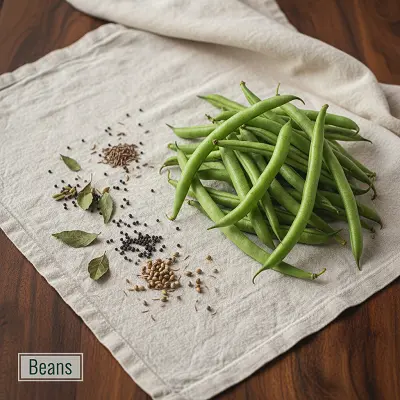
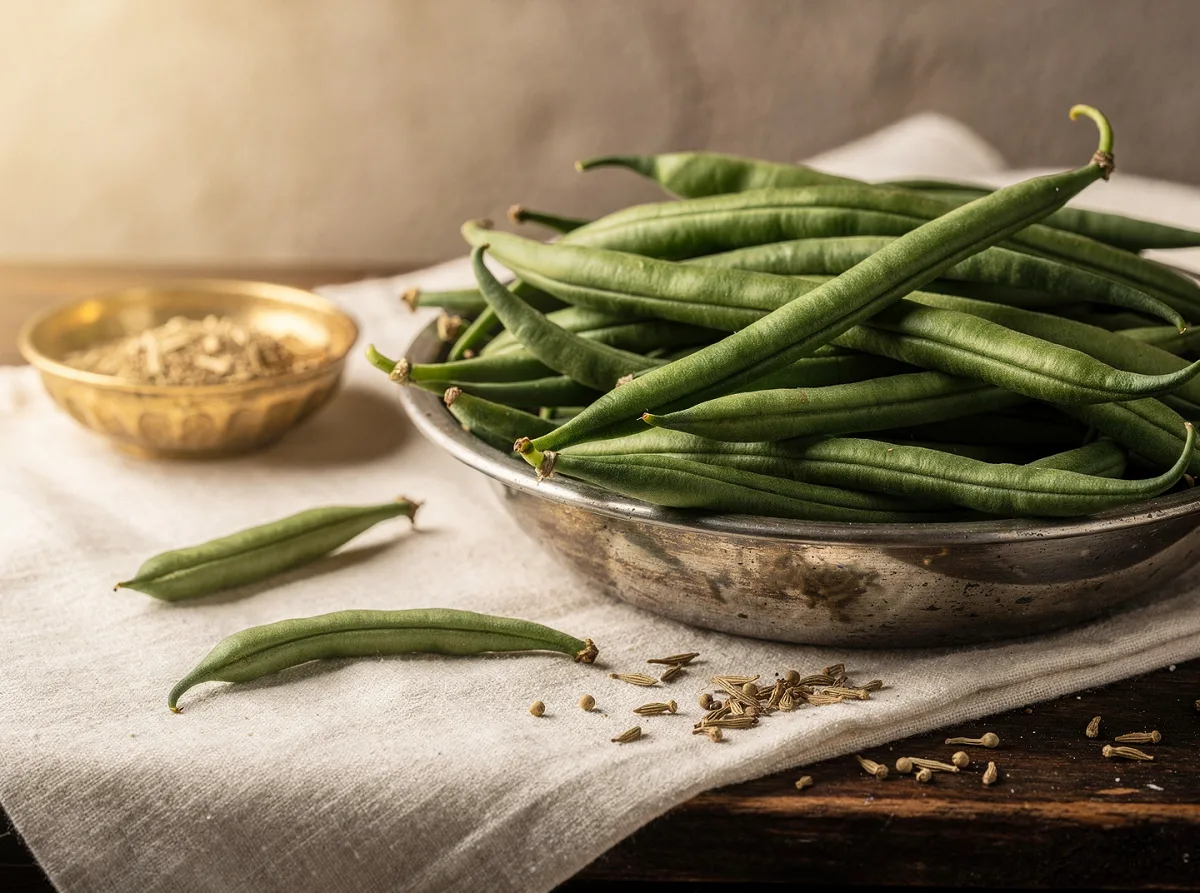
French beans (फ्रेंच बीन्स, fansi) are slender, tender green pods with a mild, slightly sweet flavour and crisp bite. Fresh and versatile, they feature in stir-fries, curries, and dry preparations across Indian home kitchens. A quick-cooking vegetable rich in fibre and vitamins,...
Nutrition per 100 g
Mean values ± IFCT published SD (edible portion).
More macros
Classification
About French Beans
What it is
French beans (फ्रेंच बीन्स, fansi) are the immature green pods of Phaseolus vulgaris, harvested before the seeds inside mature. They are slender, smooth-skinned, and bright green, with a tender texture and mild, slightly sweet taste. Eaten whole - pod and all - they are a staple in Indian kitchens, particularly in South and North Indian home cooking. (IFCT 2017, Ref #D049)
Use in Indian Kitchen
French beans shine in quick, everyday preparations. In South India, they feature in thoran (dry stir-fry with grated coconut and tempering), sambar, and kootu curries. North Indian cooks favour them in dry sabzi - pan-fried with onions, tomatoes, and basic spices - or mixed into vegetable pulao and parathas. A practical tip: trim the ends, cut into 2-inch pieces, and blanch briefly in salted boiling water if you prefer them softer; for a crisp, quick fry, use them raw and cook on high heat with minimal water. Their mild flavour pairs well with cumin, mustard seeds, chilli, and coconut.
Key Nutrients
French beans are a good source of dietary fibre, vitamin C, and folate. They also contain vitamin A, potassium, and small amounts of iron and magnesium. The exact nutrient profile varies slightly with freshness and cooking method; refer to IFCT 2017 for detailed compositional data.
Health Benefits (Evidence-based)
- High in dietary fibre, supporting digestive health and regular bowel function.
- Rich in vitamin C, which aids immune function and collagen formation.
- Contain folate, important for cell division and DNA synthesis, particularly valuable during pregnancy.
- Low in calories and fat, making them a nutrient-dense choice for weight-conscious meals.
- Linked to stable blood sugar levels due to their fibre and low glycaemic index.
- Provide plant-based antioxidants that may help reduce inflammation.
Culinary Uses (Vegetarian)
- Dry stir-fry (thoran, sabzi) with onions, tomatoes, and tempering spices.
- Curries and kootu with lentils, coconut, and tamarind.
- Mixed vegetable pulao, biryani, and fried rice.
- Paratha and roti fillings, blanched and spiced.
- Sambar and rasam as a supporting vegetable.
- Quick pan-fried side dish with minimal seasoning.
- Pickled or preserved for longer shelf life.
Caution
- Raw french beans contain small amounts of lectins; cooking thoroughly neutralises them.
- Those with kidney or bladder stones should consume in moderation due to oxalate content, though levels are relatively low.
- Pesticide residue is possible in non-organic produce; wash thoroughly under running water before use.
References
- Indian Council of Medical Research - National Institute of Nutrition (ICMR-NIN). Indian Food Composition Tables 2017. Hyderabad: NIN; 2017. [Reference code D049]
- Gopalan C, Ramasastri BV, Balasubramanian SC. Nutritive Value of Indian Foods. Hyderabad: National Institute of Nutrition, ICMR; 2011.
Health Benefits
- Antioxidant
- Supports Digestion
- Boosts Immunity
- Weight Management Support
- Heart Health Support
Sourcing & Storage
Storage
Store fresh french beans in a perforated plastic bag or breathable container in the refrigerator crisper drawer at 4-7°C. Keep them away from ethylene-producing fruits (apples, bananas) which can cause yellowing and decay. In warm, humid Indian climates, use the coldest part of your fridge and check every 2-3 days for spoilage. Do not wash before storage; wash only just before cooking to prevent moisture-related rot.
Shelf Life
Fresh french beans keep for 4-7 days in the refrigerator when stored properly. Once cooked, they last 3-4 days in an airtight container in the fridge. Blanched and frozen french beans can be stored for up to 8-10 months in the freezer, making them a convenient option for off-season use.
Check Before You Buy
Choose bright green, firm pods with no soft spots, blemishes, or yellowing. Snap one gently - it should break cleanly with a crisp sound, not bend limply. Avoid pods that are too thick (seeds inside will be large and tough) or those with visible brown patches or mould. At the mandi or kirana, check that the bundle feels heavy for its size and smells fresh and grassy, not musty or fermented.
In Ayurveda
French beans are not extensively documented in classical Ayurvedic texts as a standalone ingredient. However, they are considered a light, easily digestible vegetable with cooling properties. In modern Ayurvedic practice, they are often recommended as a balancing vegetable for all doshas when prepared with warming spices such as ginger, turmeric, and asafoetida (hing).