Fig
Ficus carica · Also known as Anjeer, dried fig, fresh fig, Ficus carica
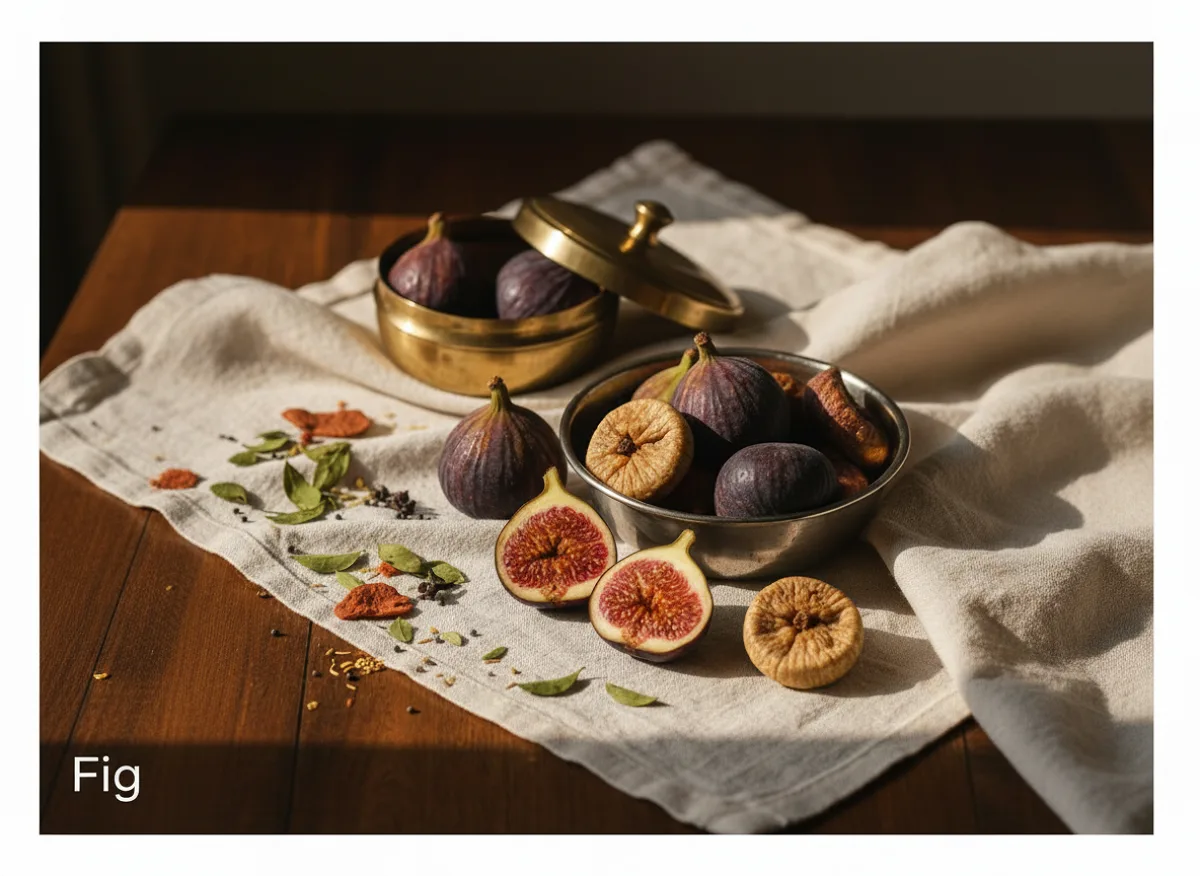
Fig (अंजीर, anjeer) is a soft, pear-shaped fruit with thin skin ranging from green to deep purple and sweet, seed-studded flesh inside. Fresh figs are delicate and perishable; dried figs are the more common kitchen staple across India, prized for their concentrated sweetness and...
Nutrition per 100 g
Mean values ± IFCT published SD (edible portion).
More macros
Classification
About Fig
What it is
Fig (अंजीर, anjeer) is a soft, pear-shaped fruit with thin skin that ranges from pale green to deep purple depending on variety and ripeness. The flesh inside is pale pink or amber, studded with tiny edible seeds and a mild, honey-like sweetness. Fresh figs are highly perishable and seasonal; dried figs are the form most commonly found in Indian kitchens and markets, where they are valued for their concentrated natural sweetness, chewy texture, and long shelf life. (IFCT 2017, Ref #E020)
Use in Indian Kitchen
Dried figs are soaked in warm milk or water and eaten whole as a breakfast or bedtime snack, often paired with almonds and dates for a nourishing energy bite. They are blended into chutneys with ginger, tamarind, and spices to accompany dal and rice, or ground into a paste and stirred into warm milk with a pinch of cardamom for a comforting winter drink. In South Indian homes, figs are sometimes added to payasam or kheer for subtle sweetness and texture. A practical tip: soak dried figs for 15-20 minutes in warm water or milk before eating to soften them and make them easier to digest, especially if you have a sensitive stomach.
Key Nutrients
Figs are a good source of dietary fibre, calcium, potassium, and magnesium. They also contain polyphenols and other plant compounds with antioxidant properties. Dried figs are more nutrient-dense than fresh due to water loss during drying. Exact nutrient composition varies by variety and drying method; refer to IFCT 2017 for detailed micronutrient profiles.
Health Benefits (Evidence-based)
- May support digestive health due to high fibre content, traditionally used to ease constipation and promote regular bowel movement.
- Linked to bone health through calcium and magnesium content, particularly valuable for growing children and older adults.
- Polyphenols and antioxidants may help reduce oxidative stress and support overall cellular health.
- Natural sugars provide quick energy, making figs a popular choice for athletes and those needing sustained stamina.
- Traditionally used in Ayurvedic and folk medicine to support respiratory comfort and soothe throat irritation.
Culinary Uses (Vegetarian)
- Soaked and eaten whole as a breakfast or bedtime snack, often paired with milk, almonds, and dates.
- Blended into fig and ginger chutney to serve with dal, rice, and bread.
- Ground into a paste and stirred into warm milk with cardamom and honey for a winter drink.
- Added to payasam, kheer, or other milk-based desserts for subtle sweetness and texture.
- Chopped and mixed into granola, laddu, or energy balls with nuts and seeds.
- Stewed with spices like cinnamon and clove to make a compote for breakfast or dessert.
Caution
- Figs are high in natural sugars; those managing blood sugar levels should eat them in moderation and pair with protein or fat to slow absorption.
- The high fibre content, while beneficial, may cause bloating or loose stools if eaten in large quantities, especially on an empty stomach.
- Some people may experience allergic reactions to figs or fig pollen; if you have a known latex allergy, consult a healthcare provider as figs belong to the same plant family.
- Dried figs may contain added sugar or oil in some commercial packs; check labels and buy unsweetened varieties when possible.
References
- Indian Council of Medical Research - National Institute of Nutrition (ICMR-NIN). Indian Food Composition Tables (IFCT 2017). Hyderabad: NIN; 2017. Reference code E020 (Fruits category).
- Vaya J, Mahmood U. Flavonoid content in leaf extracts of the fig (Ficus carica L.), carob (Ceratonia siliqua L.) and locust bean (Ceratonia siliqua L.). Journal of Agricultural and Food Chemistry. 2006; 54(20): 7651-7654.
Sourcing & Storage
Storage
Store dried figs in an airtight container or glass jar in a cool, dry place away from direct sunlight and moisture. In warm, humid climates like India, keep them in the refrigerator or freezer to prevent mould and insect infestation. Ensure the container is sealed tightly after each use. Fresh figs should be refrigerated in a paper bag or breathable container and used within 2-3 days.
Shelf Life
Properly stored dried figs can last 6-12 months in a cool, dry pantry, and up to 2 years in the refrigerator or freezer. Once opened, transfer to an airtight container and consume within 3-4 weeks if stored at room temperature, or up to 6 months if refrigerated. Fresh figs are highly perishable and should be eaten within 2-3 days of purchase.
Check Before You Buy
When buying dried figs, look for plump, evenly coloured pieces without visible mould, cracks, or a sour smell. Avoid figs that feel hard or brittle, as they may be old or improperly dried. Check the packaging for an expiry date and ensure the seal is intact. If buying from a mandi or loose from a kirana shop, ask the vendor when they were dried and stored; fresher dried figs will have a softer texture and richer aroma. Unsweetened, unsulphured varieties are preferable for home cooking.
In Ayurveda
In classical Ayurveda, fig (Ficus carica) is valued as a nourishing fruit that balances Vata and Pitta doshas. Its sweet taste (rasa) and warm potency (virya) make it grounding and energizing. Dried figs are traditionally recommended to support digestion, relieve constipation, and strengthen the body after illness or weakness. When consumed with ghee and honey, figs are believed to enhance their rejuvenating properties and improve nutrient absorption.