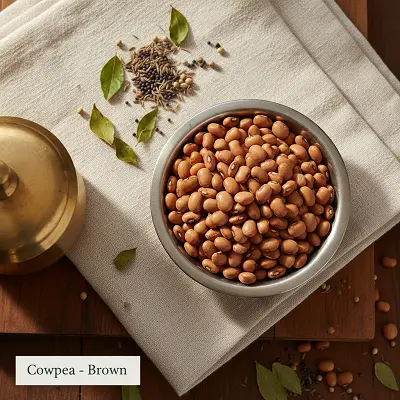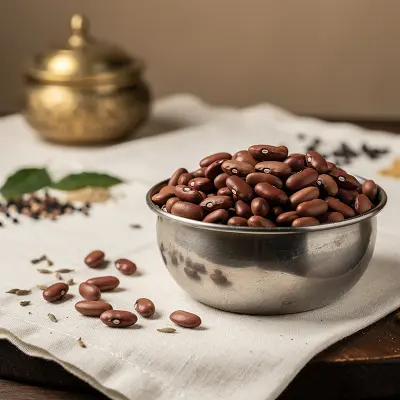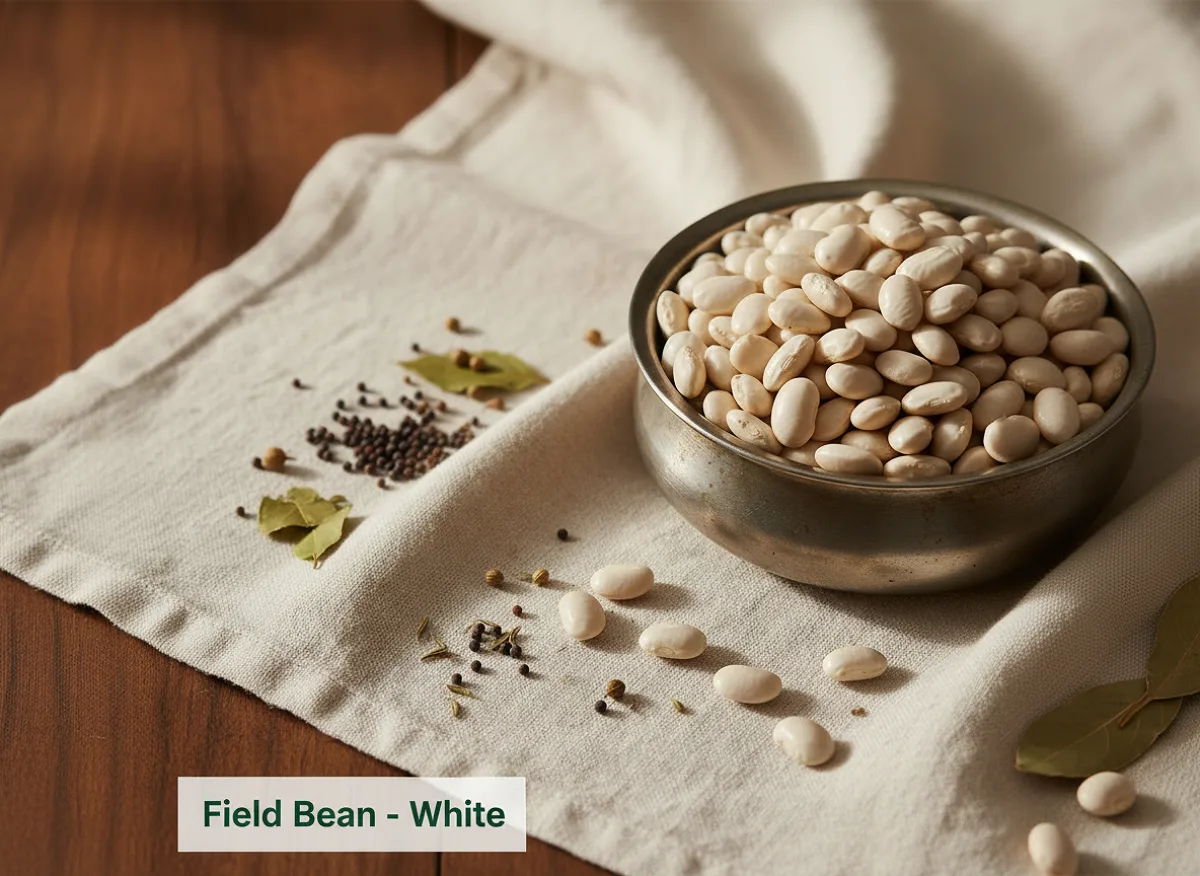
Field Bean - White
Phaseolus vulgaris · Also known as Pheeld been - saphed, white field bean, safed pheeld, cowpea (white variety), white crowder pea
Field beans - white (पहेड़ी बीन - सफेद, pheeld been - saphed) are small, creamy-white dried legumes with a mild, slightly nutty flavour and tender texture when cooked. A staple in Indian home kitchens, they feature in everyday dals, sambhar, and mixed vegetable curries across Sou...
Nutrition per 100 g
Mean values ± IFCT published SD (edible portion).
More macros
Classification
About Field Bean - White
What it is
Field beans - white (पहेड़ी बीन - सफेद, pheeld been - saphed) are small, oval dried legumes with a smooth, pale cream to ivory skin. They belong to the cowpea family and are prized in Indian kitchens for their quick cooking time, tender flesh, and gentle, slightly earthy-nutty taste. Unlike heavier dals, they cook soft without becoming mushy, making them ideal for both everyday family meals and festival dishes. (IFCT 2017, Ref #B009)
Use in Indian Kitchen
White field beans are a workhorse in South Indian and Central Indian home cooking. They feature in sambhar (the tangy lentil-vegetable stew), mixed vegetable curries, and simple tadka dals with cumin, mustard seed, and curry leaves. In the North and West, they appear in mixed dal preparations and slow-cooked curries with onion and tomato. A practical tip: soak for 2-3 hours before cooking to reduce cooking time and improve digestibility; they need less water than chickpeas and cook in 30-40 minutes. Pair them with tamarind, coconut, or jaggery to balance their mild flavour, or use in khichdi for comfort food.
Key Nutrients
White field beans are a good source of plant-based protein, dietary fibre, and complex carbohydrates. They contain B vitamins (especially folate), iron, magnesium, and phosphorus. Exact nutrient composition per 100g (cooked) is available in IFCT 2017, Ref #B009.
Health Benefits (Evidence-based)
- May support steady blood sugar levels due to their low glycaemic index and high fibre content.
- Linked to improved digestive health through soluble and insoluble fibre, supporting regular bowel function.
- Plant-based protein makes them a valuable addition to vegetarian and vegan diets for muscle maintenance.
- Iron and folate content may help support energy levels and red blood cell formation, particularly useful in plant-based eating patterns.
- Traditionally used in Ayurvedic cooking as a lighter, easier-to-digest legume compared to heavier beans.
Culinary Uses (Vegetarian)
- Sambhar - the classic South Indian lentil and vegetable stew with tamarind and spices.
- Mixed vegetable curries and kootu (South Indian dry curry with coconut and spices).
- Simple tadka dal with tempering of mustard seeds, cumin, and curry leaves.
- Khichdi - comfort rice and dal porridge with ghee and mild spices.
- Mixed dal preparations (dal makhani style, though lighter) with tomato and cream.
- Salads and cold preparations when cooked and cooled, dressed with lemon and fresh herbs.
Caution
- Like all legumes, they contain compounds that may cause bloating or gas in sensitive individuals; soaking and thorough cooking help reduce this.
- Those with kidney disease or on a potassium-restricted diet should consult a healthcare provider, as legumes are potassium-rich.
- Ensure thorough cooking to improve digestibility and nutrient absorption.
References
- Indian Council of Medical Research - National Institute of Nutrition (ICMR-NIN). Indian Food Composition Tables (IFCT 2017). Reference #B009 - Field Beans (White).
- Nutritive Value of Indian Foods, National Institute of Nutrition, ICMR, Hyderabad - standard reference for Indian legume composition and culinary use.
Health Benefits
- Supports Digestion
- Supports Heart Health
- Helps Blood Sugar Control
- Provides Iron
- Provides Satiety
Sourcing & Storage
Storage
Store dried white field beans in an airtight container (glass jar, metal tin, or sealed cloth bag) in a cool, dry place away from direct sunlight and moisture. Keep away from strong-smelling foods and spices, as dried beans absorb odours easily. In humid climates (monsoon or coastal areas), store in the refrigerator or freezer to prevent moisture absorption and insect infestation. Ensure the container is sealed tightly after each use.
Shelf Life
Well-stored dried white field beans keep for 8-12 months in a cool, dry pantry, and up to 18-24 months in the refrigerator or freezer. Once cooked, store in an airtight container in the refrigerator for 3-4 days, or freeze for up to 3 months. Older dried beans (beyond 12 months) may take longer to cook; discard if they show signs of mould, discolouration, or insect damage.
Check Before You Buy
When buying from a mandi or kirana store, look for beans that are uniformly pale cream or ivory in colour, with no dark spots, cracks, or shrivelling. They should feel firm and whole, not broken or powdery. Avoid beans with a musty or off smell, which signals moisture or age. If buying packed goods, check the manufacturing date and ensure the seal is intact; reputable brands will list the harvest or packing date. Weigh a small handful - good-quality beans should feel dense and not rattle loosely in the bag, which may indicate old stock or moisture loss.
In Ayurveda
In classical Ayurvedic texts, field beans (लोबिया) are recognized as a light, easily digestible legume with a balancing effect on Vata and Pitta doshas. The beans are considered warming (ushna virya) and are traditionally used to support digestive strength and tissue nourishment. However, detailed classical references specific to the white variety are limited in major Ayurvedic pharmacopeias, and modern Ayurvedic practice often groups all field bean varieties together for their general nutritive and grounding properties.