Fenugreek Seed
Trigonella foenum graecum · Also known as Methee, methi ke beej, methee ke dane, fenugreek, Greek hay seed
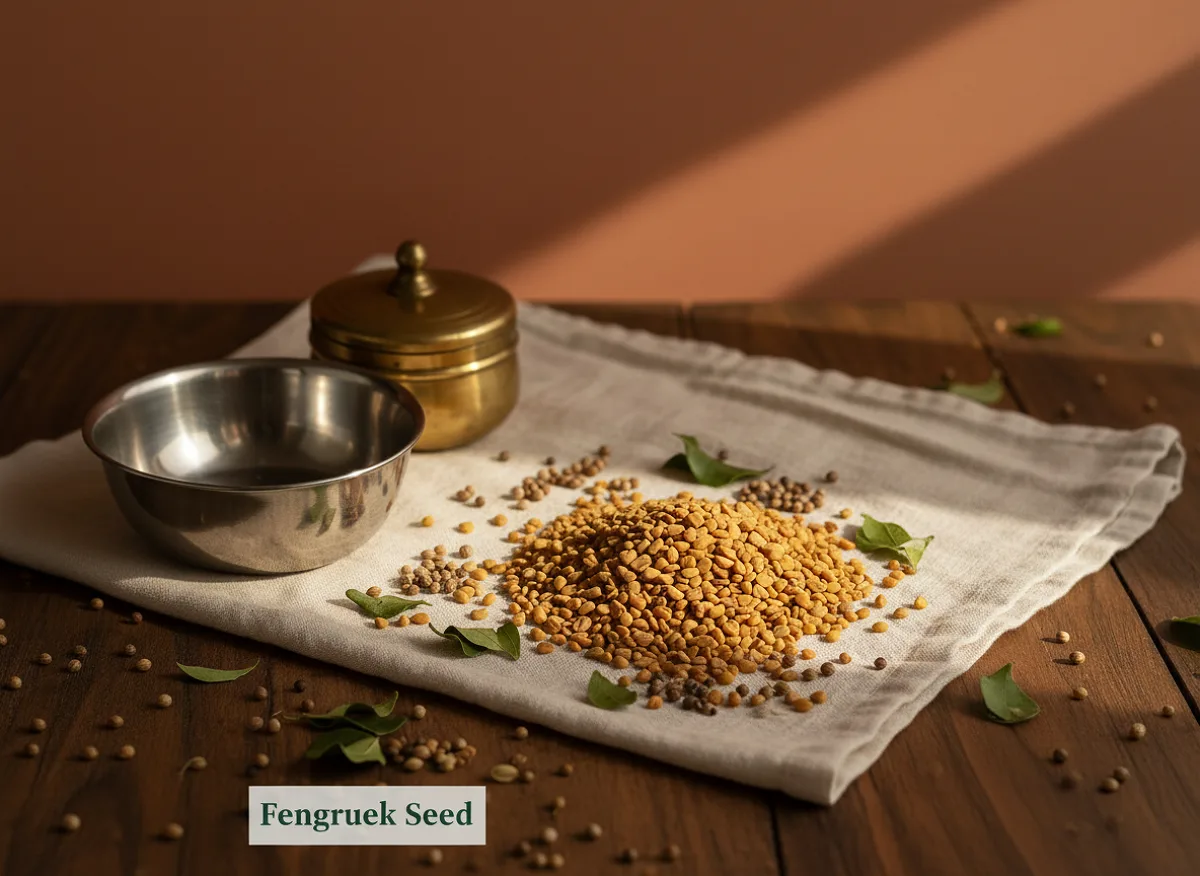
Fenugreek seed (methee) is a small, hard, golden-brown seed with a distinctive maple-like aroma and slightly bitter, warm taste. Whole seeds are commonly dry-roasted and tempered into dal, pickles, and spice blends across Indian kitchens, or soaked and sprouted for fresh greens....
Nutrition per 100 g
Mean values ± IFCT published SD (edible portion).
More macros
Classification
About Fenugreek Seed
What it is
Fenugreek seed (methee ke beej) is a small, hard, golden-brown seed roughly the size of a chickpea, with a warm, slightly bitter flavour and a distinctive maple-like aroma that intensifies when roasted. Whole seeds are the most common form in Indian kitchens, though sprouted methee (fresh greens) and ground methee powder are also used. The seed is native to the Mediterranean but has been cultivated across India for centuries, particularly in North India and Maharashtra. (IFCT 2017, Ref #G026)
Use in Indian Kitchen
Fenugreek seeds are most often dry-roasted and added to the tadka (tempering) of dal, sambar, and vegetable curries, releasing their warm, slightly bitter notes into hot oil or ghee. In North India, methee is ground into spice blends and used in pickles and chutneys; in Maharashtra, it flavours batata-methee (potato and fenugreek stir-fry) and is mixed into flour for rotli and paratha. Sprouted methee greens are eaten fresh in salads or lightly sautéed as a nutritious side dish. A practical tip: soak seeds briefly in water before sprouting to speed germination, and always dry-roast whole seeds lightly before grinding to mellow any raw bitterness and deepen their warm, maple-like character.
Key Nutrients
Fenugreek seeds are a source of protein, dietary fibre, iron, and manganese. They also contain alkaloids (including trigonelline) and saponins, compounds traditionally linked to metabolic support. Exact nutrient composition per serving is available in IFCT 2017, Ref #G026.
Health Benefits (Evidence-based)
- May support healthy blood sugar levels when consumed regularly as part of a balanced diet.
- Linked to improved digestion and gentle support for gut health due to high fibre content.
- Traditionally used to support lactation in nursing mothers; some clinical studies suggest modest benefit.
- Contains compounds that may help reduce inflammation and support joint comfort.
- May contribute to cholesterol management when included in a heart-healthy diet.
- Sprouted seeds are nutrient-dense and easier to digest than whole seeds.
Culinary Uses (Vegetarian)
- Dry-roasted whole seeds tempered into dal, sambar, and vegetable curries.
- Ground into spice blends and masalas for pickles, chutneys, and marinades.
- Sprouted fresh greens eaten raw in salads or lightly sautéed with onion and turmeric.
- Mixed into flour for rotli, paratha, and traditional breads (North India).
- Stir-fried with potatoes, onion, and green chilli as a simple side dish (batata-methee).
- Infused in warm milk or water as a traditional wellness drink.
Caution
- Pregnant women should avoid large amounts; consult a healthcare provider before use.
- May cause mild digestive discomfort or a maple-like body odour in some people when consumed in large quantities.
- Those with a history of blood clotting disorders or taking anticoagulant medications should seek medical advice before regular use.
- Allergic reactions are rare but possible; discontinue if any unusual symptoms occur.
References
- Indian Council of Medical Research (ICMR) & National Institute of Nutrition (NIN). Indian Food Composition Tables (IFCT 2017). Hyderabad: NIN; 2017. Reference #G026.
- Wani SA, Kumar P. Fenugreek: A review on its nutraceutical properties and utilisation in various food products. Journal of the Saudi Society of Agricultural Sciences. 2018; 17(4): 409-418.
Health Benefits
- Improves Digestion
- Regulates Blood Sugar
- Reduces Cholesterol
- Boosts Lactation
Sourcing & Storage
Storage
Store fenugreek seeds in an airtight glass jar or metal container away from direct sunlight, heat, and moisture. Keep in a cool, dry place - ideally a kitchen cupboard or pantry away from the stove. In humid climates (monsoon or coastal regions), store in the refrigerator in an airtight container to prevent moisture absorption and pest infestation. Whole seeds keep better than ground powder and are less prone to losing aroma.
Shelf Life
Whole fenugreek seeds, when stored in an airtight container in a cool, dry place, remain fresh and aromatic for 6-8 months. Ground fenugreek powder loses potency more quickly and is best used within 2-3 months. Once opened, transfer to an airtight container and use within the timeframe above. Refrigeration extends shelf life by 1-2 months in humid climates.
Check Before You Buy
When buying fenugreek seeds, look for seeds that are uniform in colour (golden-brown to tan), hard and dry to the touch, and free from dust, debris, or discolouration. Smell the seeds if possible - they should have a warm, slightly sweet, maple-like aroma; a musty or off smell indicates age or poor storage. Avoid seeds that are soft, cracked, or clumped together, as these suggest moisture damage or insect infestation. Buy from reputable kirana shops or mandi vendors with good turnover, and check the packaging date if buying pre-packed seeds. Whole seeds are preferable to ground powder, as they retain flavour and aroma longer.
In Ayurveda
Fenugreek seeds are classified as warm (ushna) in Ayurvedic tradition and are believed to strengthen digestive fire (agni). They are considered helpful in balancing Kapha and Vata doshas. In classical Ayurvedic texts and traditional Indian households, fenugreek seeds have been used to support lactation in nursing mothers and to aid postpartum recovery. However, their warming nature means they should be used cautiously during pregnancy and in excess heat conditions.