Fenugreek Leaves
Trigonella foenum graecum · Also known as Methi, methee, fenugreek greens, methi saag
Fenugreek leaves (मेथी, methi) are tender, feathery green leaflets with a warm, slightly bitter-sweet flavour and a distinctive maple-like aroma. Fresh methi is a staple in North Indian kitchens, used in dal, paratha stuffing, and dry sabzi preparations. The leaves are rich in ir...
Nutrition per 100 g
Mean values ± IFCT published SD (edible portion).
More macros
Classification
About Fenugreek Leaves
What it is
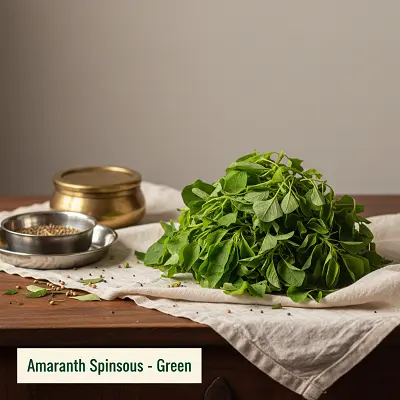
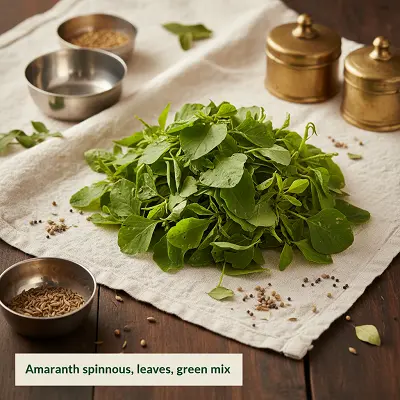
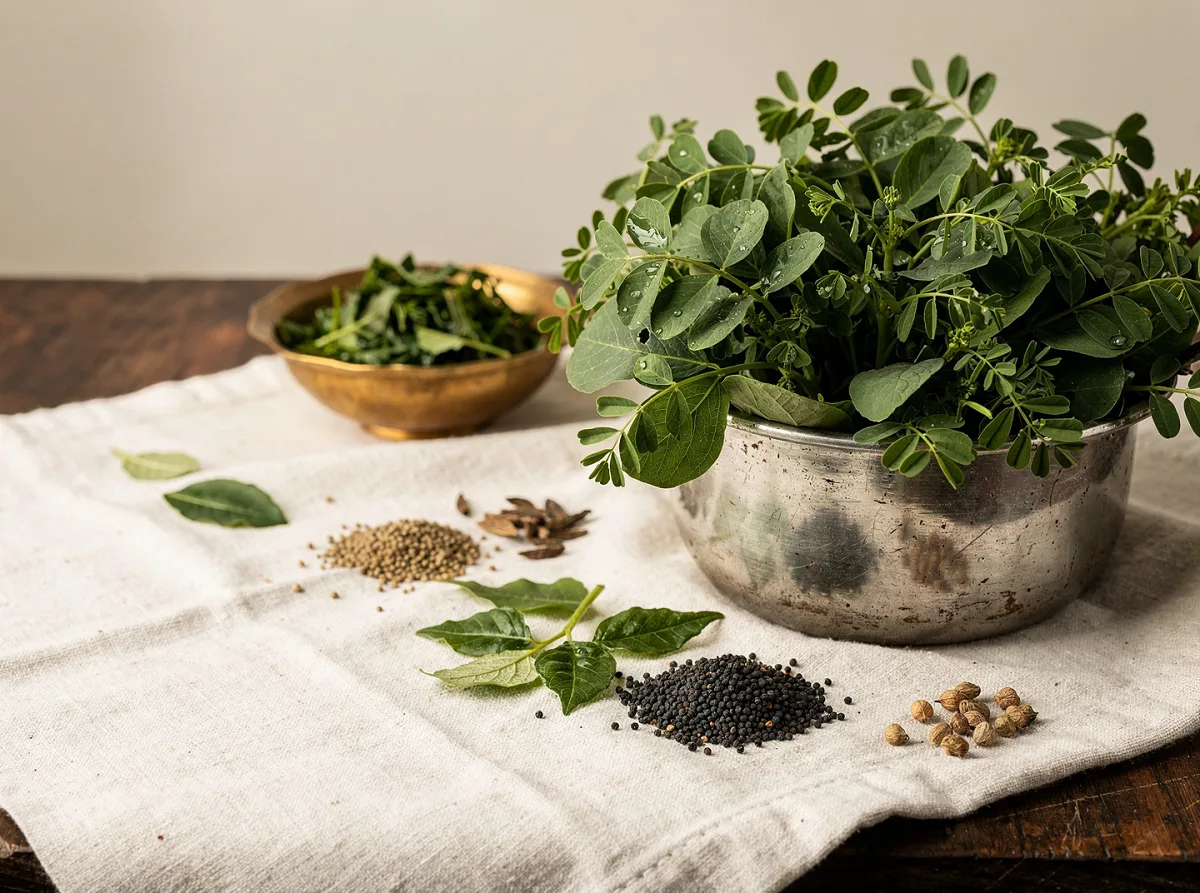
Fenugreek leaves (मेथी, methi) are the tender, feathery green leaflets of the fenugreek plant, with a warm, slightly bitter-sweet taste and a distinctive maple-like aroma that lingers on the fingers and cutting board. Fresh methi is sold in bundles at Indian markets, with delicate stems and small oval leaves clustered along thin branches. The leaves are most tender and flavourful in winter and early spring, when they are harvested young. (IFCT 2017, Ref #C020)
Use in Indian Kitchen
Methi is a beloved North Indian green, especially in Punjab, Rajasthan, and Gujarat. It is most commonly used in methi paratha (flatbread stuffed with spiced, crumbled leaves), methi dal (lentils tempered with cumin and asafoetida), and methi thepla (a thin, savoury Gujarati flatbread). In South India, fresh methi leaves appear in sambar and kootu curries. A practical tip: wash and dry the leaves thoroughly, then crumble them by hand or chop finely just before cooking to preserve their aroma and reduce any grassy bitterness. Pairing methi with warm spices like cumin, asafoetida, and turmeric, or with jaggery in sweet-savoury dishes, balances its slight astringency beautifully.
Key Nutrients
Fenugreek leaves are a good source of iron, calcium, and vitamin C. They also contain fibre, folate, and small amounts of protein. Exact nutrient composition varies with harvest season and freshness; refer to IFCT 2017 for detailed micronutrient profiles.
Health Benefits (Evidence-based)
- May support healthy digestion and help ease bloating when consumed regularly in cooked form.
- Traditionally used by nursing mothers to support milk supply; some clinical studies suggest a modest benefit, though evidence remains limited.
- High in iron and folate, making it a valuable green for those at risk of anaemia, especially when paired with vitamin C sources.
- Contains compounds linked to blood sugar regulation; may be helpful as part of a balanced diet for metabolic wellness.
- Provides antioxidants and anti-inflammatory compounds that support general immune and cellular health.
Culinary Uses (Vegetarian)
- Methi paratha - flatbread stuffed with spiced, crumbled fenugreek leaves.
- Methi dal - tempered lentils with fresh or dried methi, cumin, and asafoetida.
- Methi thepla - thin, savoury Gujarati flatbread with methi and spices.
- Dry methi sabzi - pan-fried leaves with onion, ginger, and green chilli.
- Sambar and kootu curries (South Indian vegetable stews).
- Mixed into curd or buttermilk-based raita for a tangy side dish.
- Tempering for dal and vegetable curries.
Caution
- Fenugreek leaves are generally safe for most people when eaten in normal culinary amounts. However, those with a known allergy to legumes (peas, beans, peanuts) should be cautious, as fenugreek is botanically related.
- Pregnant women should consume methi in moderation and consult a healthcare provider, as large medicinal doses have been traditionally used to induce labour.
- Those on blood-thinning medications should check with their doctor before consuming large quantities, as fenugreek may have mild anticoagulant properties.
- Fresh methi can sometimes cause a maple-like body odour in urine or sweat; this is harmless and temporary.
References
- Indian Council of Medical Research - National Institute of Nutrition (ICMR-NIN). Indian Food Composition Tables (IFCT) 2017. Hyderabad: ICMR-NIN; 2017. [Green Leafy Vegetables, Ref #C020]
- Sreeja S, Anju VS, Sreeja S. Fenugreek seeds in the management of non-insulin dependent diabetes mellitus. Nutrition & Metabolism. 2011;8(1):54. [General wellness reference on fenugreek compounds]
Health Benefits
- Supports Digestion
- Boosts Immunity
- Supports Heart Health
- Helps Blood Sugar Control
- Detox Support
Sourcing & Storage
Storage
Store fresh methi leaves in a breathable cloth bag or paper wrap inside the refrigerator's vegetable drawer, away from ethylene-producing fruits like apples and tomatoes. Do not wash before storing; moisture encourages wilting and decay. In warm, humid Indian climates, use the fridge promptly and check daily for yellowing or slime. For longer storage, wash, dry thoroughly on a clean cloth, chop finely, and freeze in an airtight container or ice-cube tray with a little water for up to 3 months.
Shelf Life
Fresh methi leaves keep for 3-5 days in the refrigerator when stored dry and unwashed. Once washed and chopped, use within 1-2 days. Frozen methi (chopped and packed) lasts up to 3 months. Dried methi leaves (kasuri methi) remain potent for 6-12 months in an airtight, cool, dark container.
Check Before You Buy
Choose bundles with bright, tender green leaves and thin, flexible stems - avoid yellowing, wilted, or slimy leaves, which indicate age or poor storage. The aroma should be fresh and warm, with a hint of maple; a musty or off smell signals decay. At the mandi or kirana shop, gently squeeze the bundle - it should feel crisp and springy, not limp. Avoid bundles with brown spots, insect damage, or excessive soil. Packed methi in supermarkets should have a clear, sealed pack with a harvest date; check that leaves are still green and not compressed into a wet mass.
In Ayurveda
In classical Ayurvedic texts, fenugreek leaves (methi) are recognized for their warming (ushna) and slightly bitter (tikta) properties. They are traditionally used to support digestive fire (agni) and are believed to help balance vata and kapha doshas when used in moderation.
Fenugreek is mentioned in traditional Indian home remedies as a supportive herb for blood sugar balance and lactation. The seeds and leaves have been part of Ayurvedic and folk medicine practices for centuries, though modern clinical evidence is still evolving.