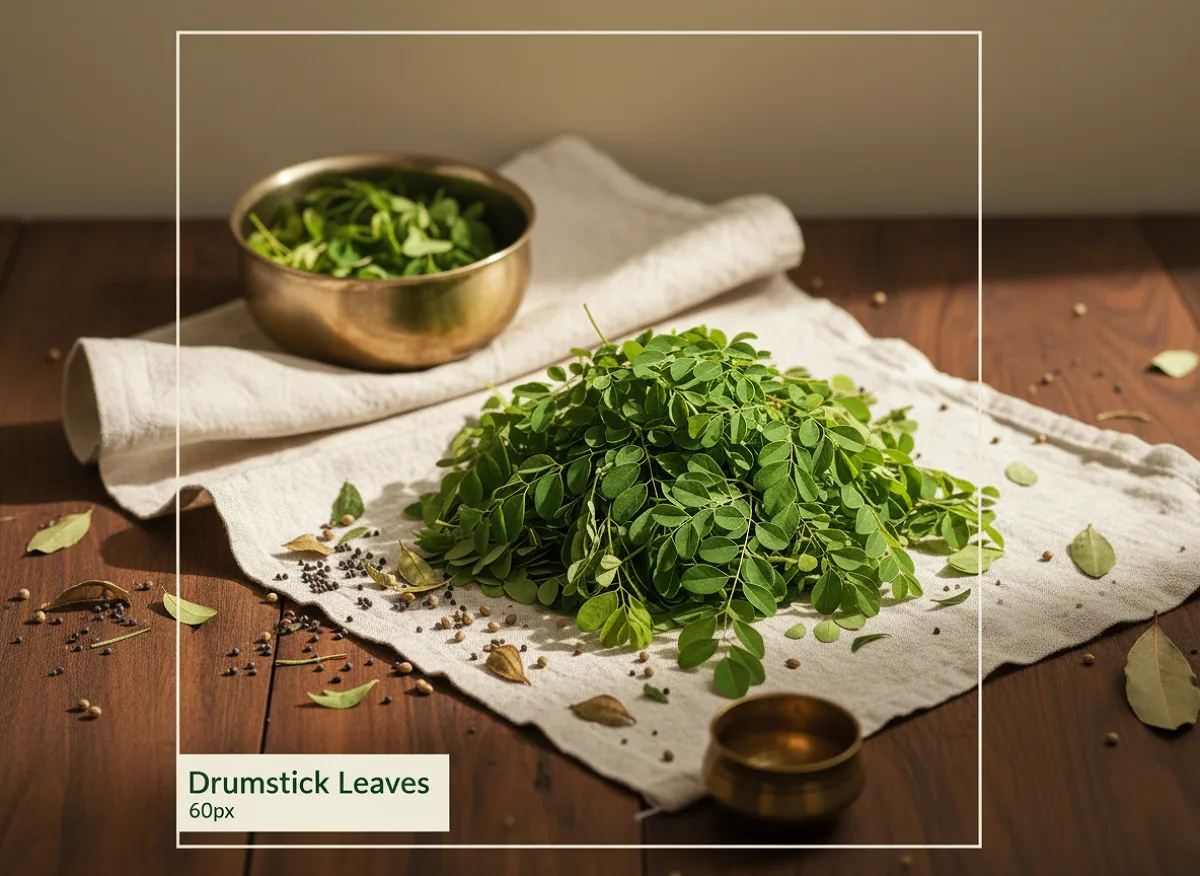
Drumstick Leaves
Moringa oleifera · Also known as Moringa leaves, sahjan ki pattiyaan, murungai keerai, munaga aku, shobhanjana
Drumstick leaves (sahjan ki pattiyaan) are feathery, tender green leaflets packed with iron, calcium, and protein - a nutritional powerhouse in South Indian and North Indian home kitchens. Fresh or dried, they bring a mild, slightly bitter earthiness to sambar, rasam, and leafy d...
Nutrition per 100 g
Mean values ± IFCT published SD (edible portion).
More macros
Classification
About Drumstick Leaves
What it is
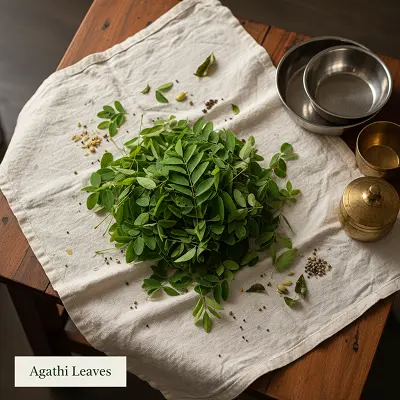
Drumstick leaves (sahjan ki pattiyaan in Hindi, murungai keerai in Tamil, munaga aku in Telugu) are the feathery, compound leaflets of the moringa tree, harvested fresh or dried. They are bright green, tender, and slightly bitter with a mild herbaceous taste. Commonly used fresh in South India and increasingly popular across North India, they are sold as whole sprigs or stripped leaves in markets and are also available dried. (IFCT 2017, Ref #C019)
Use in Indian Kitchen
Drumstick leaves are a beloved addition to sambar, where they add body and nutrition without overpowering the tamarind-spice base. In rasam, they soften into the broth and blend seamlessly with pepper and cumin. North Indian cooks use them in leafy dal curries (like moong dal with greens) and simple stir-fries tempered with mustard seeds and dried chilli. A practical tip: if the leaves taste too bitter, blanch them briefly in salted water before adding to the dish, or stir them in at the very end of cooking to keep them tender and bright. Regional preference leans South, but they are increasingly found in Delhi and Mumbai markets year-round.
Key Nutrients
Drumstick leaves are rich in iron, calcium, vitamin A, vitamin C, and plant protein. They also contain fibre and small amounts of B vitamins. Exact nutrient composition varies with freshness and growing conditions; refer to IFCT 2017 (Ref #C019) for standardised values.
Health Benefits (Evidence-based)
- May support bone health due to high calcium and magnesium content, particularly useful for vegetarian diets.
- Iron and vitamin C together may aid iron absorption, helping prevent anaemia when eaten regularly.
- Traditionally used in Ayurvedic and folk medicine to support digestion and general wellness.
- Antioxidants present may help reduce oxidative stress in the body.
- Fibre content supports healthy digestion and regular bowel function.
Culinary Uses (Vegetarian)
- Sambar - the classic South Indian vegetable and lentil stew.
- Rasam - a light, peppery broth served as a soup or with rice.
- Leafy dal curries - moong dal, masoor dal, or chana dal with greens.
- Stir-fried with mustard seeds, dried chilli, and coconut (South Indian style).
- Mixed into vegetable kootu or thoran (dry curry).
- Dried leaves crumbled into dal powder or spice blends for year-round use.
Caution
- Pregnant women should consume in moderation, as traditional texts suggest high doses may stimulate uterine contractions; normal culinary amounts are generally considered safe.
- Those on blood-thinning medications should consult a healthcare provider, as moringa leaves may have mild anticoagulant properties.
- Individuals with thyroid conditions should not rely on drumstick leaves as a primary supplement without medical guidance.
References
- Indian Council of Medical Research - National Institute of Nutrition (ICMR-NIN). Indian Food Composition Tables (IFCT 2017). Reference #C019 - Green Leafy Vegetables: Drumstick Leaves.
- Gopalakrishnan, L., Doriya, K., & Kumar, D. S. (2016). Moringa oleifera: A review on nutritive importance and its medicinal application. Food Science and Human Wellness, 5(2), 49-56.
Health Benefits
- Anti Inflammatory
- Supports Bone Health
- Boosts Immunity
- Supports Eye Health
- Improves Hemoglobin
Sourcing & Storage
Storage
Store fresh drumstick leaves in a breathable cloth bag or perforated plastic bag in the refrigerator crisper drawer, away from ethylene-producing fruits. In warm, humid Indian climates, use within 2-3 days to prevent wilting and mould. For longer storage, blanch the leaves briefly, pat dry, and freeze in airtight containers or freeze-bags for up to 3 months. Dried leaves should be kept in an airtight glass jar away from direct sunlight and moisture.
Shelf Life
Fresh drumstick leaves last 2-3 days in the refrigerator in a cool climate, and 1-2 days in hot, humid conditions. Blanched and frozen leaves keep for up to 3 months. Dried leaves, stored in an airtight container away from light and moisture, remain usable for 6-12 months, though flavour and nutrient potency gradually fade.
Check Before You Buy
Look for bright green, tender leaves with no yellowing, browning, or slimy patches. The stems should snap cleanly when bent, not wilt. Avoid bunches with a musty or fermented smell. If buying from a mandi or kirana shop, ask for leaves harvested the same day or the previous day. Packed or frozen drumstick leaves should show no ice crystals or discolouration; check the harvest and packaging dates. Dried leaves should be vibrant green and crumbly, not dusty or grey.
In Ayurveda
In classical Ayurveda, drumstick leaves (sahjan patra) are traditionally regarded as a nourishing and strength-building food. They are believed to help balance Vata and Kapha doshas. Ancient texts recommend their use to support immunity and address nutritional deficiency, particularly during periods of weakness or convalescence.