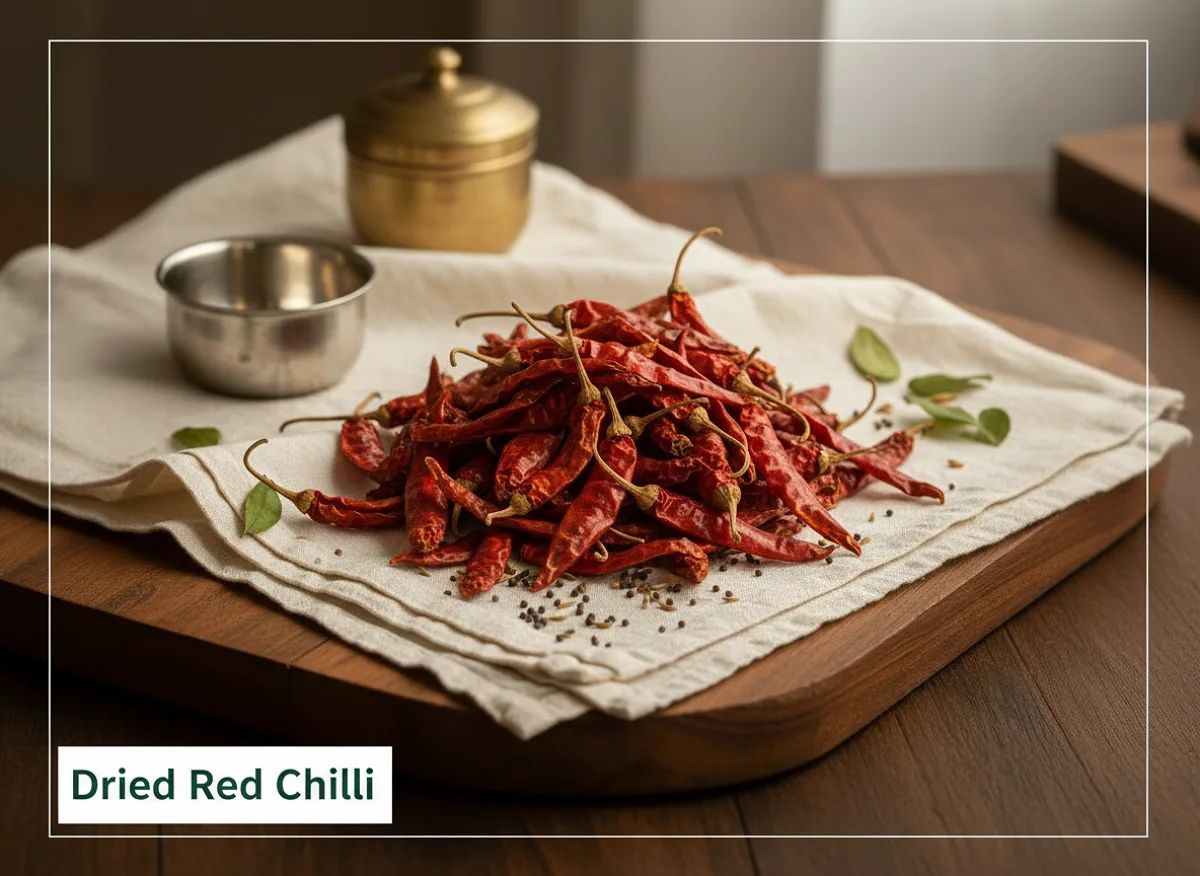
Dried Red Chilli
Capsicum annum · Also known as Dry Chilli, Teja chilli, Guntur chillies, sukhee laal mirch, Red Dry Chilli, Red Chilli (Dry)
Dried red chillies - also called sukhee laal mirch, teja chilli, or Guntur chillies - are the backbone of Indian cooking's heat and depth. These shrivelled, deep-red pods pack concentrated flavour and spice, used whole in tempering, ground into powder for curries and chutneys, or...
Nutrition per 100 g
Mean values ± IFCT published SD (edible portion).
More macros
Classification
About Dried Red Chilli
What it is: Dried red chillies are mature chilli peppers that have been sun-dried to preserve them. They are a staple in Indian kitchens, used whole for tempering (tadka), ground into powder, or crushed coarsely for sambhar, rasam, and curries. Common varieties include Guntur chillies from Andhra Pradesh and Kashmiri chillies, each with distinct heat and colour profiles.
Key Nutrients: Vitamin C, Vitamin A, Capsaicin, Dietary Fibre, Potassium, Iron, Manganese.
Health Benefits:
- Capsaicin, the compound that gives chillies their heat, may help boost metabolism and support circulation.
- Rich in Vitamin C and antioxidants, traditionally linked to immune support and skin health.
- Iron and manganese content makes dried chillies useful for those watching mineral intake in their diet.
- Traditionally used in Ayurvedic cooking to kindle digestive fire (agni) and improve appetite.
- The heat may help clear congestion and is often used in warming spice blends during cooler months.
- Fibre content supports digestive regularity when used as part of whole-food cooking.
Culinary Uses: Dried red chillies are used whole in hot oil for tempering dals, curries, and rice dishes - the heat infuses the oil and mellows slightly. Ground into powder, they colour and spice sambhar, rasam, chutney powders, and dry curries. Crushed or broken pieces go into pickle, masala blends, and slow-cooked gravies. Roasting them briefly before grinding deepens their flavour.
Caution: Dried chillies are concentrated and potent - a little goes a long way. Those with sensitive digestion, acid reflux, or gastric ulcers should use sparingly or avoid. Capsaicin can irritate eyes and skin; wash hands after handling and avoid touching your face. If you are on blood-thinning medication, check with your doctor before significantly increasing intake, as chillies have mild anticoagulant properties.
Health Benefits
- Improves Digestion
- Anti Inflammatory
- Boosts Metabolism
Sourcing & Storage
Storage
Store dried red chillies in an airtight glass jar or container away from direct sunlight and heat. Keep them in a cool, dry place - a kitchen cupboard away from the stove works well. In humid climates, store in the fridge in an airtight container to prevent moisture absorption and mould. Ensure the container is completely dry before sealing. Whole chillies keep better than ground powder, as grinding exposes more surface area to air and light.
Shelf Life
Whole dried red chillies, when stored properly in an airtight container in a cool, dry place, keep for 6 to 12 months. Ground chilli powder has a shorter shelf life of 3 to 6 months due to faster oxidation. Once opened, transfer to an airtight jar and use within the recommended timeframe. Refrigeration extends shelf life by a few months in humid climates.
Check Before You Buy
Look for chillies that are deep red, glossy, and pliable - not brittle or pale. Avoid any with visible mould, white spots, or a musty smell, which signal moisture damage or storage problems. Check that the pods are whole and not broken into fragments, as broken pieces dry out faster and lose potency. Squeeze gently - they should feel slightly flexible, not rock-hard or powdery.
Buy from trusted kirana shops or mandi vendors with good turnover, or opt for sealed packets with a clear date. Guntur chillies from Andhra Pradesh and Kashmiri chillies are reliable regional varieties. Avoid chillies that smell stale or have a dull, faded colour, which suggests age or poor storage. If buying ground powder, check the date and seal carefully - powder loses flavour quickly.