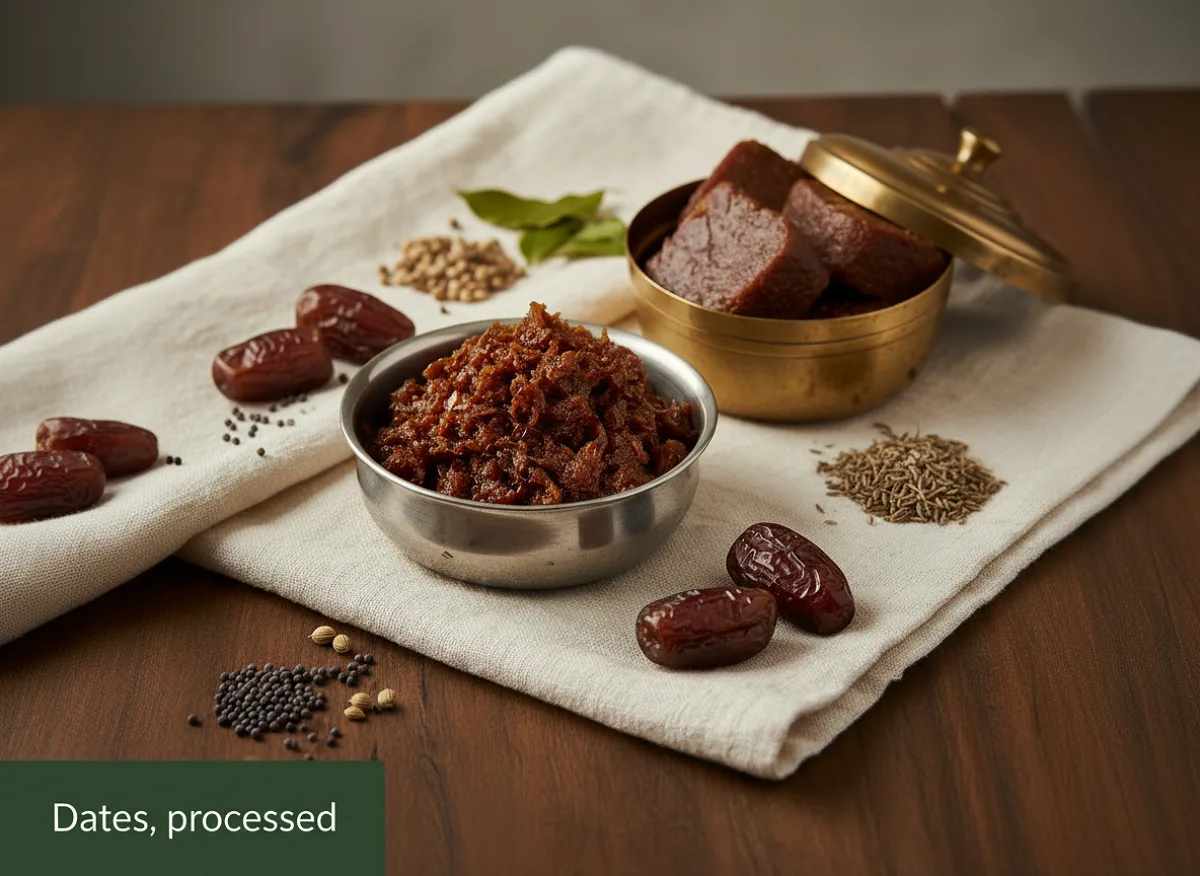
Dates, processed
Phoenix dactylifera · Also known as Khajoor, dried dates, pitted dates, date paste, chopped dates
Processed dates (खजूर, khajoor) are soft, chewy dried fruits with deep caramel sweetness and a sticky texture. Pitted, chopped, or pressed into paste, they bring natural sweetness to Indian sweets, energy balls, and chutneys without refined sugar. A staple in festive halwas, barf...
Nutrition per 100 g
Edible portion values from the master catalog.
More macros
Classification
About Dates, processed
What it is
Processed dates are dried fruits from the date palm, sold pitted, chopped, or as a smooth paste. They have a deep brown to black colour, soft and sticky texture, and intense caramel-like sweetness with subtle fruity notes. Unlike fresh dates, processed dates are shelf-stable and ready to use in Indian sweets, energy foods, and condiments. (IFCT 2017, Ref #E019)
Use in Indian Kitchen
Processed dates are a beloved natural sweetener in Indian home cooking, especially in North Indian halwas, barfis, and laddoos, and South Indian payasams and date-jaggery chutneys. Chopped dates soften quickly in warm milk or ghee, making them ideal for kheer, sheer khorma, and festive puddings. Date paste replaces refined sugar in energy balls mixed with nuts and coconut, or stirred into warm milk for a quick breakfast drink. A practical tip: soak chopped dates in warm water for 10-15 minutes to soften them further before blending into chutneys or desserts, especially if they are very dry.
Key Nutrients
Processed dates are rich in natural sugars (glucose, fructose), dietary fibre, potassium, magnesium, and copper. They also contain small amounts of iron, calcium, and B vitamins. The exact nutrient profile varies by variety and processing method; refer to IFCT 2017 for detailed composition.
Health Benefits (Evidence-based)
- May support steady energy release due to natural sugars and fibre content, making them useful for post-workout or mid-morning snacks.
- Linked to digestive health through their dietary fibre, which may help maintain regular bowel function.
- Rich in antioxidants and polyphenols, which may help reduce oxidative stress in the body.
- Traditionally used in Ayurvedic and folk medicine to support bone health and mineral absorption, though clinical evidence is limited.
- May help maintain healthy blood pressure due to potassium content, supporting cardiovascular wellness.
Culinary Uses (Vegetarian)
- Halwas and barfis - dates blended with ghee, nuts, and milk solids for festive sweets.
- Energy balls and laddoos - date paste mixed with coconut, sesame, or ground nuts.
- Payasams and kheer - chopped dates stirred into warm milk-based desserts.
- Date-jaggery chutney - a tangy-sweet condiment for dosas, idlis, and rice.
- Smoothies and milk drinks - date paste blended with milk, cardamom, and nuts for breakfast.
- Stuffing for parathas and puris - chopped dates mixed with ghee and spices.
Caution
- High in natural sugars; those managing blood sugar levels should consume in moderation and pair with protein or fat to slow absorption.
- May cause digestive discomfort if eaten in large quantities due to high fibre and sugar content; start with small portions.
- Sticky texture can adhere to teeth; rinse mouth after eating to maintain dental health.
- Some processed dates may contain added sugars or oils; check labels for pure, unsweetened varieties.
References
- Indian Council of Medical Research - National Institute of Nutrition (ICMR-NIN). Indian Food Composition Tables (IFCT 2017). Hyderabad: NIN; 2017. Category E - Fruits, Ref #E019.
- Al-Farsi M, Alasalvar C. Compositional and sensory characteristics of three native sun-dried date (Phoenix dactylifera L.) varieties grown in Oman. Journal of Agricultural and Food Chemistry. 2008;56(17):8274-8280.
Sourcing & Storage
Storage
Store processed dates in an airtight container in a cool, dry place away from direct sunlight and moisture. In warm or humid climates, refrigerate in a sealed jar or freezer bag to prevent hardening and mould growth. Keep away from strong-smelling foods as dates can absorb odours. If dates harden over time, soften them by placing the container in a warm spot for a few hours or by soaking in warm water before use.
Shelf Life
Well-stored processed dates keep for 6-12 months in a cool pantry, and up to 18-24 months in the refrigerator or freezer. Once opened, transfer to an airtight container and consume within 2-3 months at room temperature, or up to 6 months if refrigerated. Freezing extends shelf life significantly with no loss of quality.
Check Before You Buy
Look for dates that are plump, evenly coloured (deep brown to black), and free from visible mould, cracks, or crystallisation. Avoid dates that smell fermented or rancid. Check the packaging for a manufacturing date and ensure the container is sealed and undamaged. If buying from a mandi or loose from a kirana shop, ask for recently stocked batches and avoid dates that feel rock-hard or have a white powdery coating (which may indicate sugar crystallisation or mould).
In Ayurveda
In classical Ayurvedic texts, dates (खजूर) are recognized as a warming, nourishing fruit with sweet (madhura) rasa and heavy (guru) qualities. They are traditionally considered beneficial for balancing Vata dosha due to their grounding and moistening properties, and are often recommended during convalescence or for those with depleted energy. Dates are mentioned in Ayurvedic preparations as a natural sweetener and energy tonic, particularly valued in winter months and for supporting overall vitality.