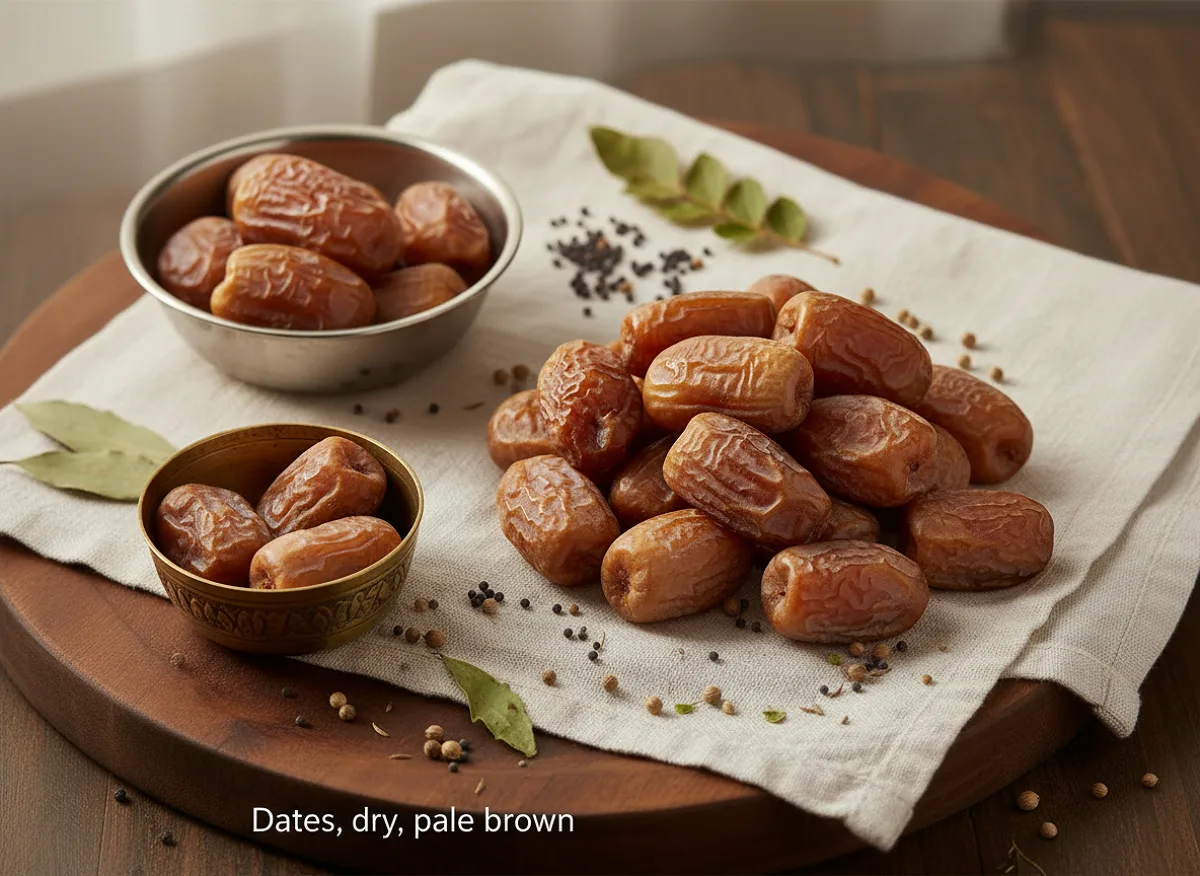
Dates, dry, pale brown
Phoenix dactylifera · Also known as Khajoor, khajur, dried dates, medjool dates, deglet noor
Dates (खजूर, khajoor) are plump, wrinkled dried fruits with a caramel-brown skin and dense, chewy flesh inside. Sweet and sticky, they're eaten whole as a snack, soaked in milk for energy drinks, or blended into chutneys and halwas across Indian kitchens. A staple during Ramzan a...
Nutrition per 100 g
Mean values ± IFCT published SD (edible portion).
More macros
Classification
About Dates, dry, pale brown
What it is
Dried dates are the fruit of the date palm, preserved by natural drying to concentrate their sugars and extend shelf life. The pale brown varieties (such as Deglet Noor or lighter Medjool types) have a wrinkled, leathery skin and a dense, chewy interior that ranges from golden to deep amber. They are eaten whole, pitted, or chopped, and are a cornerstone of Indian festive and everyday cooking. (IFCT 2017, Ref #E017)
Use in Indian Kitchen
Dates appear across Indian cuisines in both sweet and savoury contexts. In North India, they're soaked in warm milk with a pinch of cardamom and nutmeg for a nourishing winter drink, or ground into a paste for date and walnut halwa. South Indian chutneys often blend dates with tamarind, coconut, and chillies for a sweet-sour condiment. They're also stuffed with nuts and ghee for festive sweets, or simply eaten as a quick energy snack. A practical tip: soak dates in warm water for 10-15 minutes to soften them before chopping or blending, which makes them easier to incorporate into doughs and batters.
Key Nutrients
Dates are rich in natural sugars (glucose, fructose, sucrose), dietary fibre, potassium, magnesium, and copper. They also contain small amounts of iron, calcium, and B vitamins. The exact nutrient profile varies by variety and processing; refer to IFCT 2017 for standardised Indian food composition data.
Health Benefits (Evidence-based)
- High in natural sugars and calories, making them a quick energy source for physical activity and recovery.
- Dietary fibre content may support digestive health and regular bowel function.
- Rich in potassium, which is linked to heart health and blood pressure regulation.
- Contain polyphenols and other antioxidants that may help reduce oxidative stress.
- Traditionally used in Ayurvedic and Unani medicine to support overall vitality and stamina.
- May help satisfy sweet cravings in a whole-food form, reducing reliance on refined sugars.
Culinary Uses (Vegetarian)
- Soaked in warm milk with cardamom and ghee for a winter tonic drink.
- Blended into date and walnut halwa or barfi.
- Ground into a paste for date chutney with tamarind and coconut.
- Stuffed with nuts, ghee, and spices for festive sweets.
- Chopped into oat or millet porridge for added sweetness and texture.
- Mixed into dough for traditional breads and parathas.
- Eaten whole as a quick snack or energy booster.
Caution
- Very high in natural sugars; those managing blood sugar levels or diabetes should consume in moderation and pair with protein or fat to slow absorption.
- May cause digestive discomfort (bloating, gas) if eaten in large quantities, especially on an empty stomach.
- Sticky texture can adhere to teeth; rinse mouth or brush after eating to protect dental health.
- Some dried dates may be treated with added sugars or oils during processing; check labels for additives if buying packaged varieties.
References
- Indian Council of Medical Research - National Institute of Nutrition (ICMR-NIN). Indian Food Composition Tables (IFCT) 2017. Hyderabad: NIN; 2017. [Ref #E017 - Fruits category]
- Vaya J, Mahmood S. Flavonoid content in leaf extracts of the fig (Ficus carrica L.), carob (Ceratonia siliqua L.) and date palm (Phoenix dactylifera L.). Journal of Agricultural and Food Chemistry. 2006;54(20):7651-7654.
Sourcing & Storage
Storage
Store dried dates in an airtight container or sealed plastic bag in a cool, dry place away from direct sunlight and moisture. In warm, humid climates (typical of much of India), refrigeration is recommended to prevent mould and insect infestation. Keep away from strong-smelling foods, as dates can absorb odours. If dates harden over time, seal them with a slice of bread or apple in the container for a day to restore softness.
Shelf Life
Well-stored dried dates can last 6-12 months in a cool pantry, or up to 2 years in the refrigerator. Once opened, transfer to an airtight container and consume within 2-3 months for best quality. Frozen dates will keep for up to 3 years, though texture may become slightly grainy upon thawing.
Check Before You Buy
Look for dates with a uniform, deep brown or caramel colour and a slightly wrinkled but supple skin - avoid those that are rock-hard, cracked, or showing white crystalline deposits (which may indicate mould or fermentation). Smell the packet if buying loose dates from a mandi or kirana shop; they should have a sweet, fruity aroma with no sour or fermented odour. Check packaged dates for a clear expiry date and ensure the seal is intact. Avoid dates that feel oily or sticky to the touch beyond normal stickiness, as this may indicate added sugars or improper storage.
In Ayurveda
In classical Ayurveda, dates (खजूर) are regarded as a sweet (मधुर रस) and unctuous (स्निग्ध गुण) food that pacifies Vata and Pitta doshas. The virya (thermal nature) is warming, and vipaka (post-digestive effect) is sweet, making dates nourishing and grounding. Traditionally, dates have been used to restore strength and vitality, particularly in cases of weakness, fatigue, and general debility. They are often recommended for pregnant women, nursing mothers, and the elderly as a wholesome, easily digestible source of energy and minerals.