Dates
Phoenix dactylifera · Also known as Khajur, date palm fruit
Dates (खजूर, khajur) are sweet, chewy dried fruits from the date palm, prized across Indian kitchens for their natural caramel flavour and sticky texture. Rich in natural sugars and fibre, they're eaten whole as a quick energy snack, soaked and blended into chutneys, or stuffed w...
Nutrition per 100 g
Edible portion values from the master catalog.
More macros
Classification
About Dates
What it is
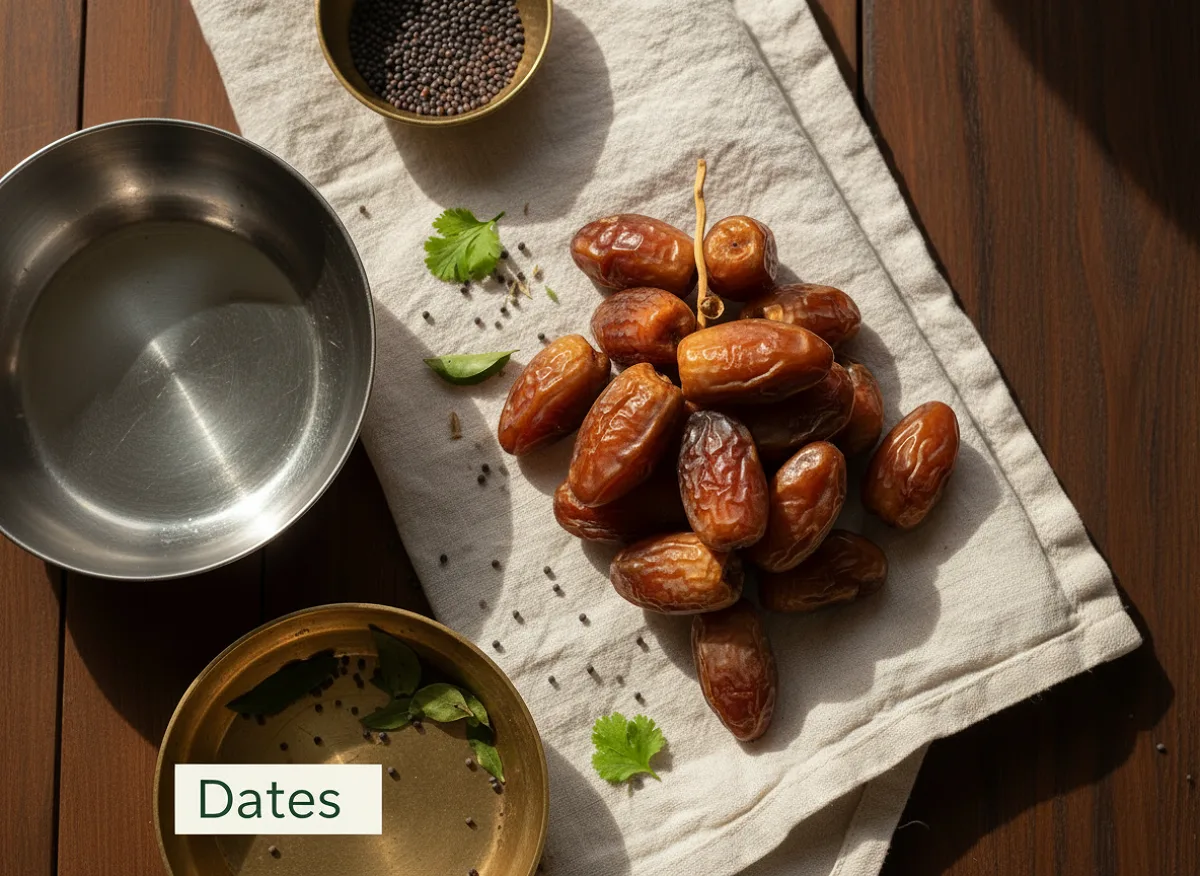
Dates (खजूर, khajur) are the dried or semi-dried fruit of the date palm, with a deep brown or amber skin, soft caramel-coloured flesh, and a single hard pit at the centre. They are naturally sweet, sticky, and chewy, with a subtle honey-like aroma. Sold whole, pitted, or occasionally as a paste, dates are a traditional ingredient across North Indian sweets, Ramzan preparations, and Ayurvedic tonics. (IFCT 2017, Ref #E018)
Use in Indian Kitchen
Dates are eaten whole as a quick energy snack or soaked in warm milk with ghee and cardamom for a nourishing winter drink. They are ground into a smooth paste and blended with tamarind and spices to make a tangy-sweet chutney for samosas and pakoras, or stuffed with dry fruits and rolled in coconut for festive barfi. In North India, dates are simmered with milk, jaggery, and warming spices like cinnamon and ginger to make a traditional winter tonic. A practical tip: soak hard dates in warm water for 10-15 minutes to soften them before grinding or chopping, making them easier to blend into chutneys or energy balls.
Key Nutrients
Dates are a rich source of natural sugars (glucose, fructose, sucrose), dietary fibre, potassium, magnesium, copper, and B vitamins. They also contain polyphenols and antioxidants. Exact nutrient composition varies by variety and processing; refer to IFCT 2017 for detailed values.
Health Benefits (Evidence-based)
- High in natural sugars and calories, making them an excellent quick energy source for active individuals and during fasting periods.
- Good source of dietary fibre, which may support digestive health and regular bowel function.
- Rich in potassium and magnesium, minerals linked to heart health and muscle function.
- Contain polyphenols and antioxidants, which may help reduce oxidative stress in the body.
- Traditionally used in Ayurvedic and folk medicine as a mild laxative and digestive aid.
- May help maintain steady energy levels due to their balanced sugar and fibre content, though portion control is important for those managing blood sugar.
Culinary Uses (Vegetarian)
- Eaten whole as a snack or breakfast item, often paired with milk, ghee, or nuts.
- Soaked and ground into a smooth paste for chutneys, fillings, and sweet spreads.
- Blended with warm milk, ghee, cardamom, and ginger for a traditional winter tonic (खजूर का शरबत).
- Stuffed with almonds, cashews, or coconut for festive sweets and barfi.
- Mixed into energy balls (लड्डू) with ghee, nuts, and warming spices.
- Used in halwa, kheer, and other traditional Indian desserts.
- Chopped and added to granola, oatmeal, or yoghurt for breakfast.
Caution
- Very high in natural sugars; those managing diabetes or blood sugar levels should consume in moderation and pair with protein or fat to slow sugar absorption.
- May cause digestive discomfort (bloating, gas) if eaten in large quantities, especially on an empty stomach.
- The pit is a choking hazard; always remove it before serving to children or elderly family members.
- Some commercial dates may be treated with oils or preservatives; rinse or check packaging if concerned about additives.
References
- Indian Council of Medical Research - National Institute of Nutrition (ICMR-NIN). Indian Food Composition Tables (IFCT 2017). Hyderabad: ICMR-NIN; 2017. Food code E018 (Dates, dried).
- Al-Farsi M, Alasalvar C. Polyphenolic content and antioxidant activity of date palm (Phoenix dactylifera L.) fruits. Journal of Agricultural and Food Chemistry. 2011;59(4):1997-2005.
Health Benefits
- Anti Inflammatory
- Boosts Immunity
- Heart Health Support
- Supports Urinary Health
Sourcing & Storage
Storage
Store dates in an airtight container or sealed plastic bag in a cool, dry place away from direct sunlight and moisture. In warm or humid climates, refrigerate in an airtight container to prevent mould and insect infestation. Keep away from strong-smelling foods, as dates can absorb odours easily. Whole, pitted, or paste forms all store well under these conditions.
Shelf Life
Properly stored whole dates keep for 6-12 months at room temperature in a cool, dry place, and up to 2 years in the refrigerator. Once opened, transfer to an airtight container and consume within 2-3 weeks at room temperature, or up to 3-4 months if refrigerated. Date paste has a shorter shelf life of 2-4 weeks in the fridge once opened; freezing extends it to several months.
Check Before You Buy
Choose dates that are plump, glossy, and free of cracks, mould, or dark spots. The skin should feel slightly sticky but not wet or oily (unless oil is listed on the label). Avoid dates that smell fermented or off, or those with visible insect damage. Check the packaging date and storage instructions; reputable brands from established suppliers (mandi, kirana, or certified packaged goods) are safer than loose dates of unknown origin or age.
In Ayurveda
In classical Ayurveda, dates (खजूर) are considered warming and nourishing, with a sweet (madhura) rasa and heavy (guru) quality. They are traditionally used to support vitality and strength, particularly in recovery from illness or during periods of physical exertion. Dates are believed to balance Vata dosha due to their grounding nature and are often recommended in Ayurvedic texts as a wholesome food for building ojas (vital essence).
Traditionally, dates have been used in Ayurvedic preparations to support digestive health and promote regular bowel movement when combined with ghee or warm milk. They are also valued in classical texts as a rejuvenating food (rasayana) for overall wellness and longevity.