Custard Apple
Annona squamosa · Also known as Sitaphal, Cherimoya, Sugar apple, Sweetsop, Sharifa
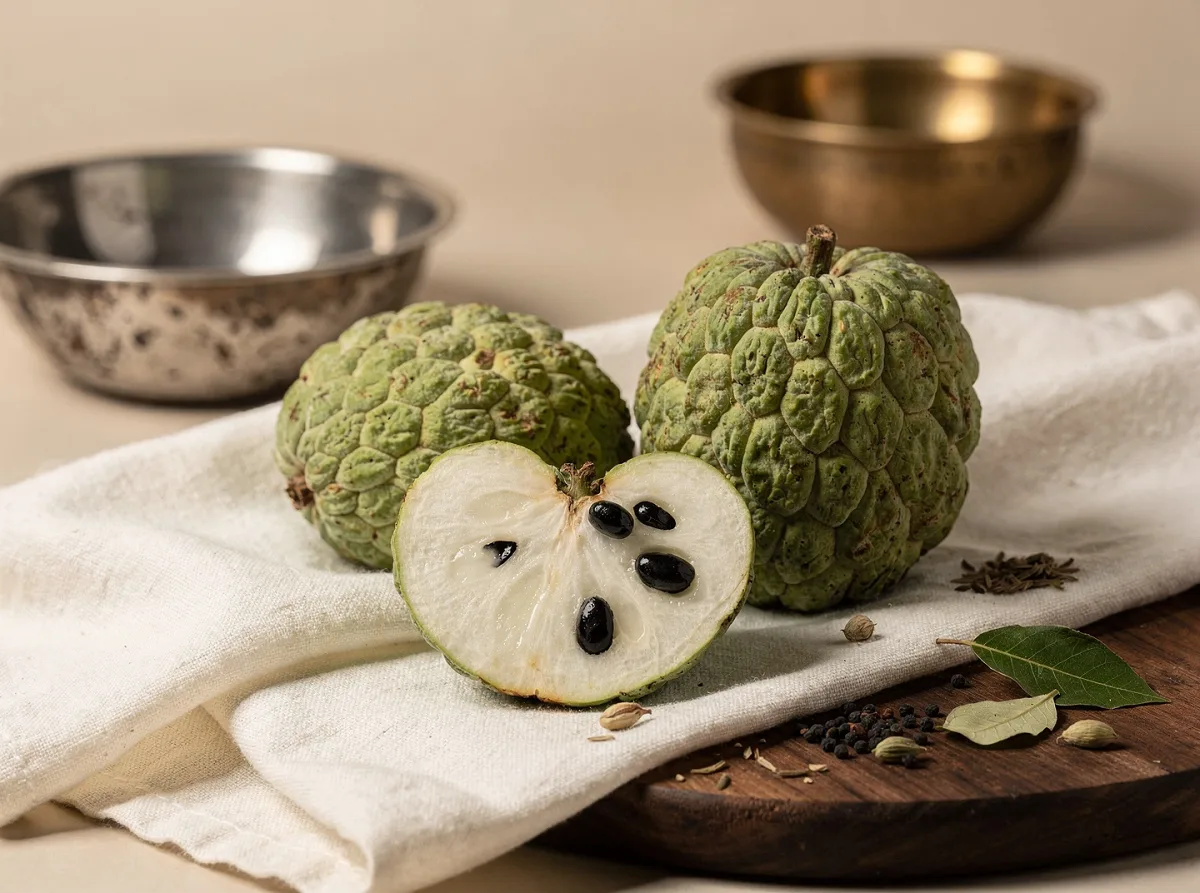
Custard apple (सीताफल, sitaphal) is a heart-shaped tropical fruit with bumpy, pale-green skin and creamy white flesh dotted with black seeds. Sweet, custard-like in texture, it is eaten fresh by scooping the flesh with a spoon, or blended into milkshakes and desserts across India...
Nutrition per 100 g
Edible portion values from the master catalog.
More macros
Classification
About Custard Apple
What it is
Custard apple (सीताफल, sitaphal) is a heart-shaped tropical fruit with distinctive bumpy, pale-green or yellowish skin and creamy white flesh inside. Each segment contains a single black seed. The flesh is soft, sweet, and custard-like in texture - hence the English name - and is typically eaten fresh by scooping with a spoon or splitting the fruit open. Grown widely in Maharashtra, Gujarat, and parts of South India, it is a monsoon and post-monsoon seasonal fruit. (IFCT 2017, Ref #E016)
Use in Indian Kitchen
Custard apple is most commonly eaten fresh as a dessert fruit, chilled and scooped straight from the skin. In Indian home kitchens, it is blended into milkshakes with milk and a pinch of cardamom, stirred into curd for a quick dessert, or mashed and folded into ice cream. Some regional cooks add it to fruit salads with a squeeze of lime and a sprinkle of chaat masala for contrast. The fruit is occasionally used in traditional sweets and halwas in parts of Maharashtra and Gujarat. A practical tip: chill the fruit well before eating, and discard the seeds carefully as they are not edible.
Key Nutrients
Custard apple is a good source of vitamin C, dietary fibre, and potassium. It also contains B vitamins (including B6), copper, and small amounts of magnesium. The fruit is naturally sweet and provides simple carbohydrates, making it a satisfying whole-fruit snack.
Health Benefits (Evidence-based)
- High in vitamin C, which may support immune function and skin health.
- Good source of dietary fibre, linked to digestive health and satiety.
- Contains potassium, traditionally valued for heart and muscle function.
- Antioxidants present in the fruit may help reduce oxidative stress.
- Natural sweetness makes it a whole-food alternative to refined desserts.
Culinary Uses (Vegetarian)
- Fresh fruit eaten chilled, scooped with a spoon.
- Blended into milkshakes with milk, cardamom, and a touch of honey.
- Stirred into plain curd or Greek yoghurt for a quick dessert.
- Mashed and folded into homemade ice cream or kulfi.
- Added to fruit salads with lime juice and chaat masala.
- Pureed and used in traditional halwas and kheer in some regional kitchens.
Caution
- Seeds are not edible and should be removed before eating or blending.
- The fruit is high in natural sugars; those managing blood sugar should eat in moderation.
- Unripe fruit is astringent and inedible; wait until the skin yields slightly to pressure.
- Allergic reactions are rare but possible; introduce cautiously if new to the fruit.
References
- Indian Council of Medical Research - National Institute of Nutrition (ICMR-NIN). Indian Food Composition Tables (IFCT 2017). Hyderabad: NIN; 2017. Food code E016.
- Kavitha, S., Parimelazhagan, T. (2014). "Antioxidant and anti-inflammatory activities of Annona squamosa L. leaves." Journal of Medicinal Plants Research, 8(15), 599-610.
Health Benefits
- Improves Digestion
- Provides Energy
- Boosts Immunity
- Supports Brain Health
Sourcing & Storage
Storage
Store custard apples at room temperature (20-25°C) in a cool, dry place away from direct sunlight until ripe. Once ripe (when the skin yields gently to pressure), transfer to the refrigerator in a perforated plastic bag or open container to slow ripening and extend shelf life. Do not store in an airtight container, as this may trap moisture and encourage mould. In hot, humid Indian climates, refrigerate ripe fruit immediately to prevent spoilage.
Shelf Life
Unripe custard apples ripen at room temperature in 3-7 days depending on initial maturity and ambient temperature. Once ripe, they keep in the refrigerator for 3-5 days. Do not freeze whole fruit, as the texture becomes mushy upon thawing; however, you may freeze the scooped flesh in an airtight container for up to 2-3 months for use in smoothies or desserts.
Check Before You Buy
Choose custard apples that are firm but yield slightly to gentle pressure - a sign of ripeness. The skin should be pale green to yellowish-green with no dark bruises, cracks, or soft spots. Avoid fruit with a fermented or off smell. If buying from a mandi or kirana store, check that the fruit is free of insect damage and has no oozing sap. Ripe fruit should feel heavy for its size, indicating good flesh content.
In Ayurveda
In classical Ayurvedic texts, custard apple (Annona squamosa) is recognized as a sweet (madhura rasa) and cooling (sheeta virya) fruit. It is traditionally considered beneficial for balancing Pitta dosha due to its cooling nature and sweet taste. The fruit is believed to support digestion and nourish the body when consumed in moderation.