Cumin seeds
Cuminum cyminum · Also known as Jeera
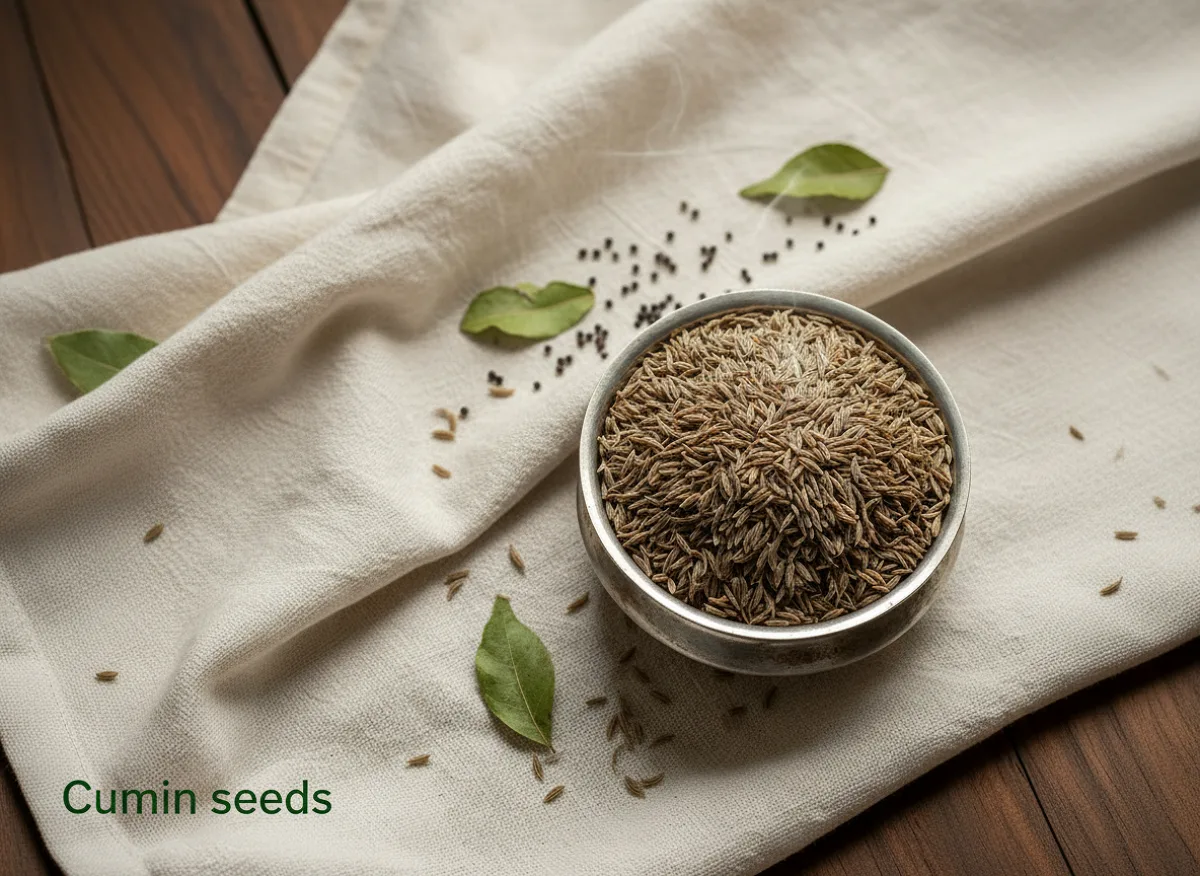
Cumin seeds, or jeera as we call them in Indian kitchens, are small, boat-shaped seeds with a warm, earthy flavour and a slightly bitter, nutty finish. They're one of the most essential spices in our tadka - whether you're tempering them in hot oil for dal, rasam, or sabzi, or to...
Nutrition per 100 g
Mean values ± IFCT published SD (edible portion).
More macros
Classification
About Cumin seeds
Cumin seeds are small, elongated seeds with a ridged surface, ranging from olive-brown to grey-brown in colour. When you crush or toast them, they release a warm, slightly smoky aroma that's instantly recognisable in any Indian kitchen. The flavour is earthy and bitter-sweet, with a subtle peppery note that deepens when heated.
We use jeera in two main ways: as a tempering spice (tadka) in hot ghee or oil at the start of cooking, where it infuses the entire dish with its warmth, and as a dry-roasted powder mixed into spice blends like garam masala, sambar powder, and chaat masala. It's equally at home in everyday dal, in the slow-cooked gravies of North Indian curries, in South Indian rasam and sambar, and even sprinkled over yoghurt raita or roasted vegetables.
Cumin is one of those spices that works quietly - it doesn't shout, but every dish tastes incomplete without it. A single tempering of jeera can transform a simple bowl of rice or lentils into something deeply satisfying.
Some of the traditional benefits of cumin seeds include:
- Known to support digestion and reduce bloating, especially in warm preparations
- Traditionally used to ease stomach discomfort and gas
- Valued in Ayurveda for balancing Vata and Kapha doshas
- Often included in digestive spice blends and herbal teas
- Believed to have mild anti-inflammatory properties
- Used traditionally to enhance nutrient absorption from food
- Considered warming and grounding in nature
In the kitchen, cumin is non-negotiable. Whether you're a daily cook or someone who reaches for spices occasionally, jeera is the one you'll use most often.
Health Benefits
- Improves Digestion
- Boosts Immunity
- Reduces Bloating
- Enhances Metabolism
Sourcing & Storage
Storage
Store cumin seeds in an airtight glass jar or container, away from direct sunlight, heat, and moisture. Keep the jar in a cool, dry cupboard or pantry - not above the stove or near the kitchen window. In humid climates or during the monsoon, consider storing in the refrigerator to prevent the seeds from absorbing moisture and losing their aroma. Make sure the lid is sealed tightly after each use, as jeera loses its essential oils quickly when exposed to air.
Shelf Life
Whole cumin seeds, when stored properly in an airtight container in a cool, dry place, keep well for 6 to 12 months. Once opened, use within 3 to 4 months for best flavour and aroma. If stored in the refrigerator during humid seasons, they will retain their potency longer. Ground cumin powder, by contrast, loses flavour faster - use within 2 to 3 months of opening. Always check for any musty smell or visible moisture before use; if the seeds smell stale or feel damp, it's time to replace them.
Check Before You Buy
When buying cumin seeds from a local vendor or kirana shop, look for seeds that are uniform in colour - a warm olive-brown to grey-brown - with no discolouration, dust, or visible debris. Smell them if possible; fresh jeera has a strong, warm, slightly peppery aroma. Avoid seeds that smell musty, flat, or like nothing at all, as this signals age or poor storage. Check for any small stones, twigs, or insect damage mixed in, and avoid any that feel damp or clumpy.
If buying packaged cumin, inspect the packet for any moisture inside, tears, or damage to the seal. The printed date should be recent, and the packet should feel dry to the touch. Whole seeds are always preferable to pre-ground powder, as they hold their flavour and aroma far longer. When in doubt, buy from a vendor with good turnover - busy spice shops mean fresher stock.
In Ayurveda
In Ayurveda, cumin (Cuminum cyminum) is highly valued for its numerous health benefits. It is known to balance the three doshas: Vata, Pitta, and Kapha, promoting overall well-being. Cumin aids digestion, enhances metabolism, and alleviates gas and bloating, making it a common ingredient in digestive remedies. Its warming properties help stimulate appetite and improve nutrient absorption. Cumin is also rich in antioxidants, supporting immune health and detoxification. Additionally, it is believed to have anti-inflammatory and antimicrobial effects, making it a powerful spice in Ayurvedic practices for maintaining balance and promoting health.