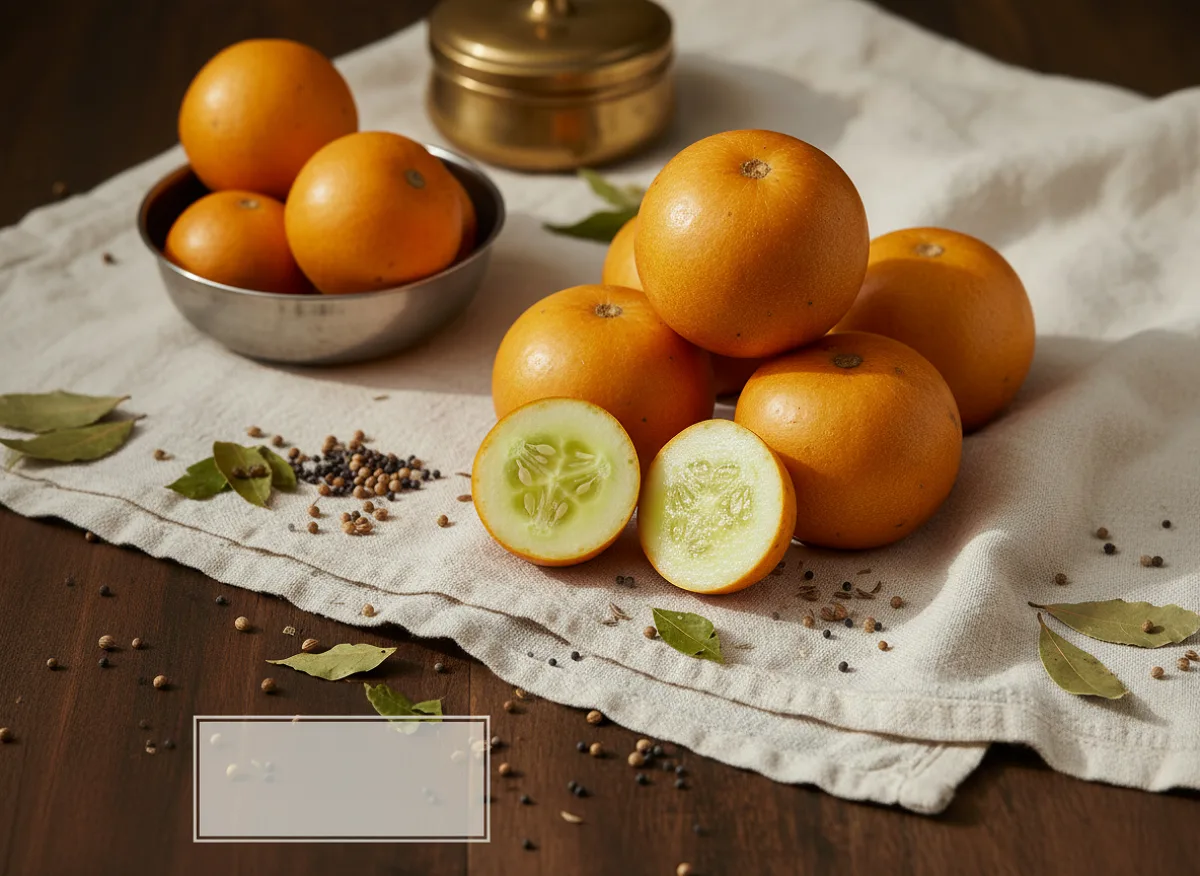
Cucumber, orange, round
Cucumis sativus · Also known as Orange cucumber, round cucumber, sweet cucumber, Desi khira (देसी खीरा)
Orange or round cucumbers are a distinctive heirloom variety with smooth, golden-orange skin and crisp, mild-flavoured flesh. Less watery than long green cucumbers, they hold their shape well when cooked and are prized in Indian kitchens for fresh salads, raita, and light curries...
Nutrition per 100 g
Edible portion values from the master catalog.
More macros
Classification
About Cucumber, orange, round
What it is
Orange round cucumbers are a heritage variety with a distinctive golden or pale orange skin, round or slightly oblong shape, and tender, pale green flesh inside. Unlike the long, thin green cucumbers common in supermarkets, these are sweeter, less watery, and hold their texture better when sliced or lightly cooked. They are eaten fresh, raw in salads and raita, or gently stewed in light curries across North and South Indian home kitchens. (IFCT 2017, Ref #D045)
Use in Indian Kitchen
Orange cucumbers shine in cool, refreshing dishes: sliced thin into raita with yoghurt, cumin, and chaat masala; diced into fresh salads with lemon and coriander; or gently sautéed with mustard seeds and curry leaves for a light sabzi. In South India, they are sometimes added to sambar or mixed vegetable kootu. A practical tip: peel them lightly or leave the skin on for colour and texture; their mild flavour means they need little more than salt, lemon, and fresh herbs to shine. They are best eaten raw or barely cooked to preserve their crisp, delicate character.
Key Nutrients
Orange cucumbers are mostly water (around 95%), making them hydrating and low in calories. They contain small amounts of vitamin C, potassium, and dietary fibre, particularly in the skin. Exact nutrient composition varies by growing conditions; refer to IFCT 2017 for standardised Indian values.
Health Benefits (Evidence-based)
- High water content supports hydration and may help maintain healthy skin and digestion.
- Low calorie density makes them a light, filling addition to meals and weight-conscious diets.
- Vitamin C and antioxidants in the skin may support immune function and reduce oxidative stress.
- Dietary fibre aids digestive regularity when eaten with skin intact.
- Potassium content may support heart health and electrolyte balance, especially in warm climates.
Culinary Uses (Vegetarian)
- Fresh raita with yoghurt, cumin, and chaat masala.
- Sliced into salads with lemon juice, fresh coriander, and green chilli.
- Diced into kachumber or mixed vegetable salads.
- Lightly sautéed with mustard seeds, curry leaves, and a pinch of turmeric.
- Added to sambar or vegetable kootu in South Indian cooking.
- Pickled or preserved in light vinegar and spice brine.
Caution
Orange cucumbers are generally very safe and well-tolerated. Those with sensitive digestion may find raw cucumber harder to digest; lightly cooking or eating in smaller quantities can help. Pesticide residue is possible on non-organic produce; wash thoroughly under running water before eating. Store-bought cucumbers may be waxed for shelf life; scrub gently or peel if concerned.
References
- Indian Council of Medical Research - National Institute of Nutrition (ICMR-NIN). Indian Food Composition Tables (IFCT) 2017. Reference #D045 (Other Vegetables - Cucumber).
- Sharma, R., Yadav, S. K., & Sharma, R. (2012). Nutritional composition and health benefits of cucumber. Journal of Medicinal Plants Research, 6(35), 4975-4983.
Sourcing & Storage
Storage
Store orange cucumbers in the refrigerator crisper drawer, ideally between 10-13°C (50-55°F) in a perforated plastic bag or wrapped loosely in paper towel to allow air circulation and prevent excess moisture buildup. Keep them away from ethylene-producing fruits like apples, bananas, and tomatoes, which can cause yellowing and softening. In warm Indian climates, use the coldest part of the fridge and consume within 3-4 days for best texture.
Shelf Life
When stored properly in the refrigerator, orange cucumbers will keep for 5-7 days. Once cut or sliced, use within 1-2 days. They do not freeze well due to their high water content and will become mushy when thawed; it is best to use them fresh.
Check Before You Buy
Choose orange cucumbers that are firm to the touch with unblemished, smooth skin and a bright golden or pale orange colour. Avoid any that are soft, wrinkled, yellowed unevenly, or show dark spots or mould. The cucumber should feel heavy for its size, indicating good water content and freshness. If buying from a mandi or kirana store, ask when they arrived; fresher stock will have better flavour and texture. Organic or pesticide-free varieties are preferable if available.
In Ayurveda
In classical Ayurvedic texts, cucumber (khira) is traditionally regarded as cooling (sheeta virya) and light (laghu guna), making it beneficial for balancing Pitta dosha, especially during summer. Its high water content and mild taste support digestive comfort and natural hydration.
Orange cucumber, with its sweeter profile and tender seeds, is often used in Ayurvedic dietary recommendations as a gentle, easily digestible vegetable suitable for all constitutions when consumed fresh and uncooked. It is sometimes recommended in Ayurvedic wellness routines as a cooling food to support natural body temperature regulation.