Cucumber, green, short
Cucumis sativus · Also known as Khira, kheera, ककड़ी (kakdi), short cucumber, pickling cucumber, Kiroda
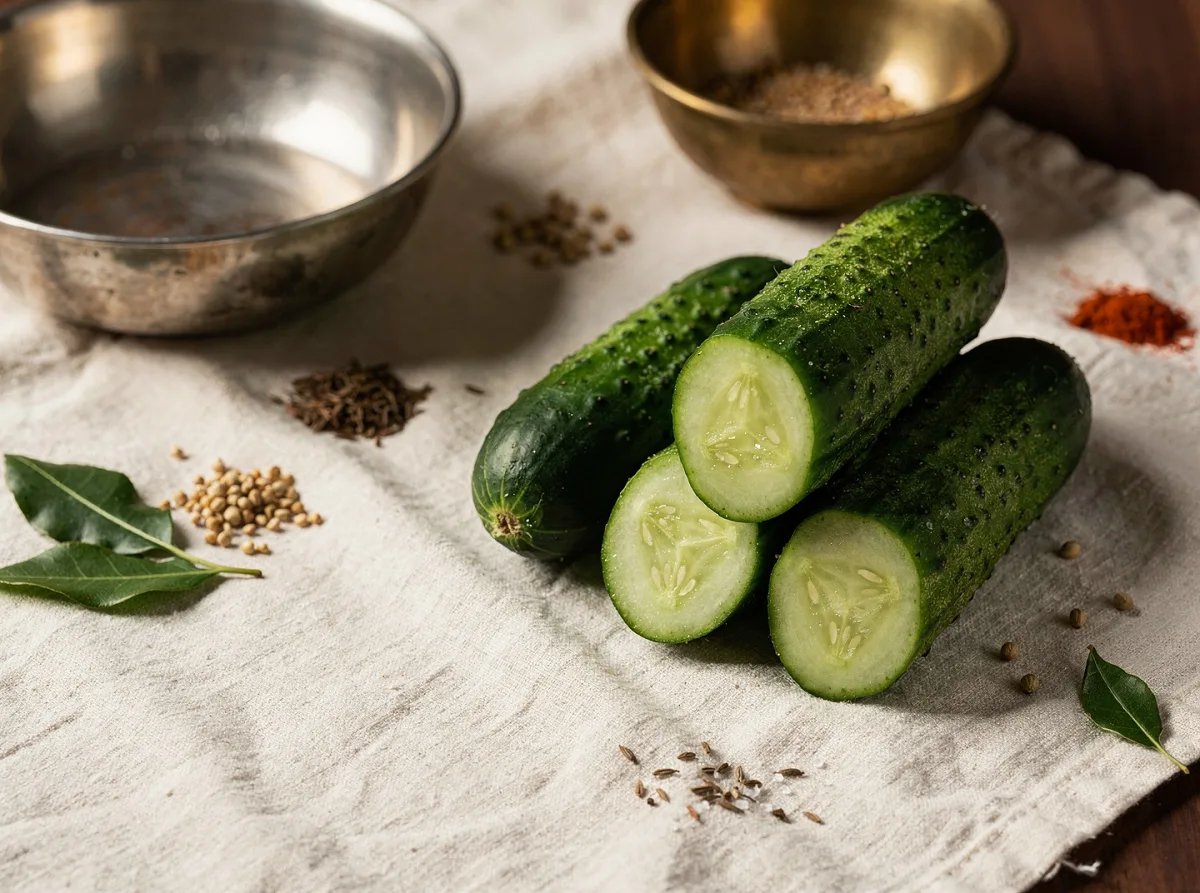
Green cucumber, or khira (खीरा), is a crisp, watery vegetable with thin tender skin and mild, refreshing flavour. Short varieties are ideal for slicing into salads, raita, or quick stir-fries, and their firm flesh holds up well in light tempering with mustard seeds and curry leav...
Nutrition per 100 g
Mean values ± IFCT published SD (edible portion).
More macros
Classification
About Cucumber, green, short
What it is
Green cucumber, known as khira (खीरा) or kakdi (ककड़ी) in Hindi, is a tender, watery vegetable with smooth or lightly bumped pale-green skin and crisp, pale flesh. Short varieties are compact and firm, ideal for fresh use. Eaten raw or lightly cooked, it is a cooling, hydrating staple especially valued in summer across India. (IFCT 2017, Ref #D044)
Use in Indian Kitchen
Cucumber is most often sliced raw into raita (yoghurt salad) with cumin and chilli, or tossed into fresh salads with lemon and salt. In the South, thin rounds are sometimes tempered with mustard seeds, curry leaves, and a pinch of turmeric for a light sabzi. North Indian kitchens use it in kachumbar (tomato-cucumber salad) and as a cooling side with meals. A practical tip: slice just before serving to keep the flesh crisp, and if the skin feels waxy or thick, peel lightly before eating.
Key Nutrients
Cucumber is mostly water (around 95%), making it very low in calories. It contains small amounts of vitamin K, vitamin C, potassium, and dietary fibre, chiefly in the skin. Exact nutrient composition is documented in IFCT 2017.
Health Benefits (Evidence-based)
- High water content supports hydration, especially valuable in hot Indian summers.
- Low calorie density makes it a filling addition to meals without significant energy contribution.
- Skin contains dietary fibre, which may support gentle digestive function.
- Vitamin K in the skin is linked to bone health and blood clotting.
- Traditionally used as a cooling food in Ayurvedic summer routines.
Culinary Uses (Vegetarian)
- Raw in raita, kachumbar, and fresh salads with lemon, salt, and cumin.
- Lightly tempered with mustard seeds and curry leaves as a side dish.
- Sliced into dahi (yoghurt) with roasted cumin powder and green chilli.
- Pickled whole or sliced for long storage.
- Blended into cooling summer drinks or lassi.
Caution
- Cucumber skin may carry pesticide residue if not organically grown; wash thoroughly under running water or peel if concerned.
- Those with weak digestion or prone to bloating may find raw cucumber difficult; light cooking or eating in moderation can help.
- High water content means it spoils quickly once cut; use within a few hours of slicing.
References
- Indian Council of Medical Research - National Institute of Nutrition (ICMR-NIN). Indian Food Composition Tables 2017 (IFCT 2017). Reference code D044 (Other Vegetables - Cucumber, green).
- Gopalan, C., Rama Sastri, B. V., & Balasubramanian, S. C. (2016). Nutritive Value of Indian Foods. National Institute of Nutrition, ICMR, Hyderabad.
Sourcing & Storage
Storage
Store whole cucumbers in the refrigerator crisper drawer or a cool, dark place at 10-13°C (50-55°F) for best results. Keep them away from ethylene-producing fruits like tomatoes and bananas, which can speed ripening and spoilage. In Indian summer heat, place in a perforated plastic bag or cloth to allow air circulation and prevent moisture buildup. Do not wash before storage; wash only when ready to use.
Shelf Life
Whole, unwashed cucumbers keep for 5-7 days in the refrigerator under cool conditions. In hot, humid climates without air conditioning, use within 2-3 days. Once sliced or cut, consume within a few hours, as the exposed flesh loses crispness and moisture quickly. Pickled cucumber preparations, when properly sealed and stored in a cool place, last several weeks to months.
Check Before You Buy
Choose firm, bright green cucumbers with no soft spots, yellowing, or wrinkled skin. Short varieties should feel heavy for their size, indicating good water content. Avoid cucumbers that are overly large, pale, or have thick, dull skin, as these tend to be watery and less flavourful. If buying from a mandi or kirana shop, gently squeeze to check firmness; the skin should spring back. Inspect for any mould or dark patches, especially near the ends. Packaged cucumbers should show no condensation inside the wrapper, which signals decay.
In Ayurveda
In classical Ayurvedic texts, cucumber (khira) is recognized for its cooling (sheeta) and hydrating properties, making it particularly beneficial during hot seasons and for balancing excess Pitta dosha. Its high water content and light digestibility support the body's natural cooling mechanisms.
Traditionally, cucumber has been used in Ayurvedic home remedies to soothe inflammation and support healthy digestion. The vegetable's natural diuretic properties are valued in classical practice for gentle detoxification and maintaining healthy fluid balance in the body.