Cucumber
Cucumis sativus · Also known as Cucumis sativus, kheera, khira, kakdi, green cucumber, elongate cucumber
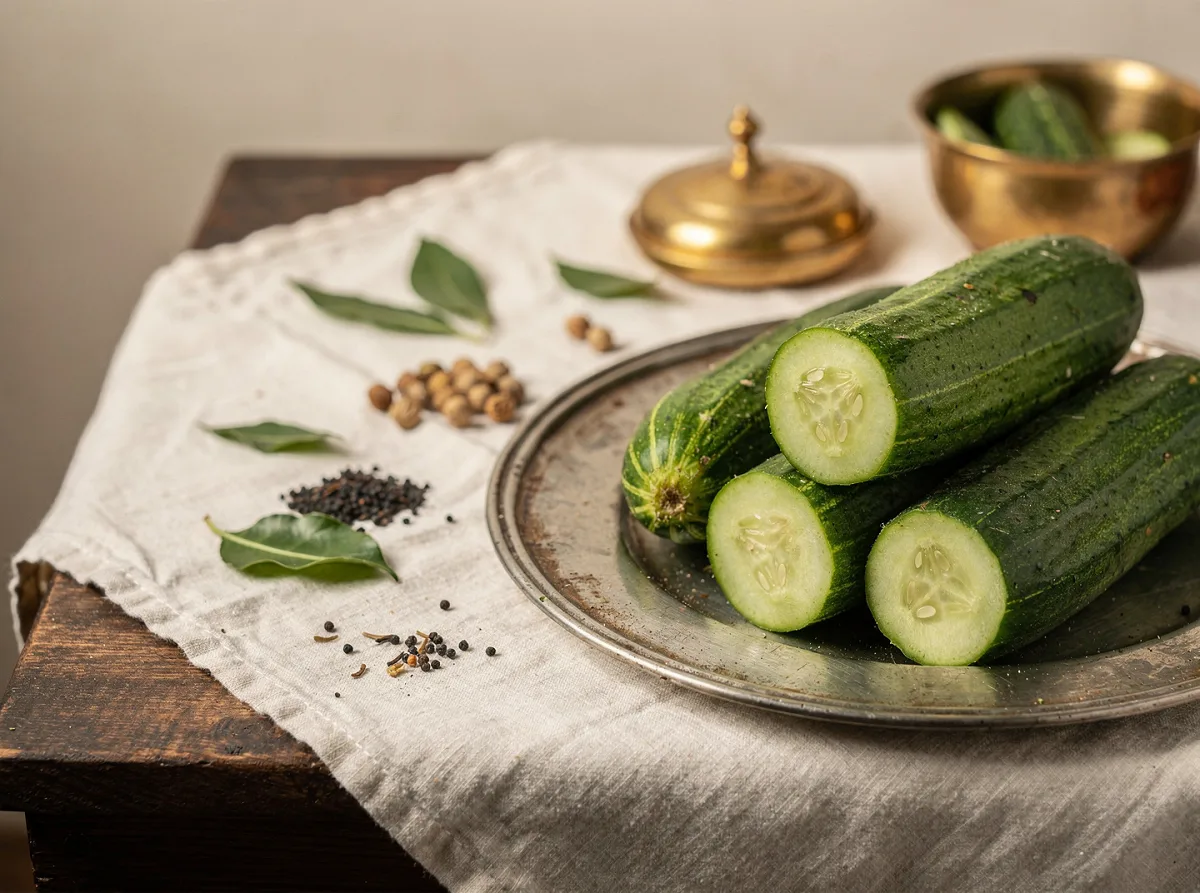
Cucumber (खीरा, kheera) is a cool, watery vegetable with thin green skin and crisp, pale flesh studded with small seeds. Fresh and refreshing, it is eaten raw in salads, sliced into raita, or lightly cooked in curries across Indian kitchens. A summer staple prized for its hydrati...
Nutrition per 100 g
Mean values ± IFCT published SD (edible portion).
More macros
Classification
About Cucumber
What it is
Cucumber (खीरा, kheera) is a long, slender vegetable with smooth or slightly bumpy green skin and pale, watery flesh inside. It is eaten fresh, whole or sliced, and is one of the most refreshing vegetables in the Indian kitchen, especially during hot months. The flesh is mild and slightly sweet, with a satisfying crunch when raw. Cucumber is typically available year-round in markets but is most abundant and flavourful in summer. (IFCT 2017, Ref #D043)
Use in Indian Kitchen
Cucumber is most commonly eaten raw - sliced into salads, mixed into raita with yoghurt and cumin, or served as a cooling side with meals. In the South, it appears in sambhar and kootu curries, often cooked gently to retain some crunch. North Indian kitchens use it in kachumbar (raw salad with onion, tomato, and lemon), while pickle makers preserve it as achar for year-round use. A practical tip: if your cucumber tastes slightly bitter, salt the slices lightly and let them rest for 10 minutes, then rinse - this mellows the flavour. Pairing cucumber with mustard seeds, curry leaves, and a squeeze of lemon brings out its natural freshness.
Key Nutrients
Cucumber is mostly water (around 95%), making it very low in calories. It contains small amounts of vitamin K, vitamin C, potassium, and manganese. The skin holds most of the fibre and nutrients, so eating it unpeeled is ideal. Exact nutrient composition is documented in IFCT 2017.
Health Benefits (Evidence-based)
- High water content helps keep you hydrated, especially valuable during hot Indian summers.
- Low in calories and may support weight management when included in regular meals.
- Contains antioxidants and vitamin C, which may help support immune function.
- Fibre in the skin and flesh may aid gentle digestion and regular bowel health.
- Traditionally used in Ayurvedic practice as a cooling food to balance excess heat in the body.
- May help reduce bloating and support kidney health due to its diuretic properties.
Culinary Uses (Vegetarian)
- Raw in salads, kachumbar, and sliced as a cooling side dish.
- Mixed into yoghurt-based raita with cumin, mustard seeds, and fresh coriander.
- Cooked gently in South Indian sambhar, kootu, and vegetable curries.
- Pickled as achar for long-term storage and tangy flavour.
- Blended into fresh juices and smoothies for hydration.
- Stuffed with spiced paneer or besan filling for a light appetiser.
Caution
- Cucumber is generally very safe for all ages. Those with sensitive digestion may find raw cucumber harder to digest; cooking it lightly can help.
- Pesticide residue is possible on non-organic skins; wash thoroughly under running water or peel if concerned.
- Cucumber seeds can occasionally cause mild bloating in sensitive individuals; remove them if needed.
References
- Indian Council of Medical Research - National Institute of Nutrition (ICMR-NIN). Indian Food Composition Tables (IFCT) 2017. Reference #D043 (Other Vegetables - Cucumber).
- Ayurveda Prakasha and classical Ayurvedic texts document cucumber as a cooling (sheeta virya) vegetable beneficial for pitta balance and summer wellness.
Health Benefits
- Improves Digestion
- Hydration
- Weight Management Support
- Cools Body
- Skin Health Support
Sourcing & Storage
Storage
Store cucumbers in the refrigerator crisper drawer or a cool, dark cupboard away from direct sunlight. Keep them in a perforated plastic bag or loosely wrapped in paper to allow air circulation and prevent moisture buildup. Avoid storing near ethylene-producing fruits like apples, bananas, or tomatoes, as these can speed ripening and spoilage. In Indian kitchens during summer, a cool, well-ventilated shelf or the coldest part of the fridge works best.
Shelf Life
Fresh cucumbers keep for 3 to 7 days in the refrigerator when stored properly. They are best eaten within 3 to 4 days for peak crispness and flavour. Once sliced, use within a few hours. Pickled cucumber achar, when made with salt and oil and stored in an airtight jar, will keep for several weeks to months in a cool cupboard.
Check Before You Buy
Choose cucumbers that are firm to the touch, with unblemished, evenly coloured green skin. Avoid soft spots, yellowing, or wrinkled patches, which signal age or decay. A good cucumber should feel heavy for its size, indicating high water content. If buying from a mandi or kirana, ask for recently arrived stock; older cucumbers become hollow and bitter. Organic or pesticide-free varieties are preferable if available, as you will likely eat the skin.
In Ayurveda
In classical Ayurvedic texts, cucumber (खीरा) is recognized for its cooling (शीत) virya and sweet (मधुर) rasa, making it particularly beneficial during hot seasons. It is traditionally used to balance excess Pitta dosha and is valued for its hydrating and soothing properties on the digestive tract. Ayurvedic practitioners often recommend fresh cucumber in summer to maintain internal coolness and support natural detoxification.