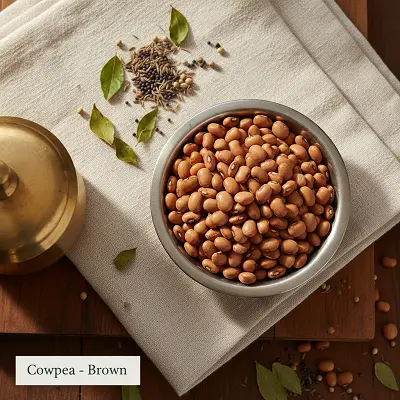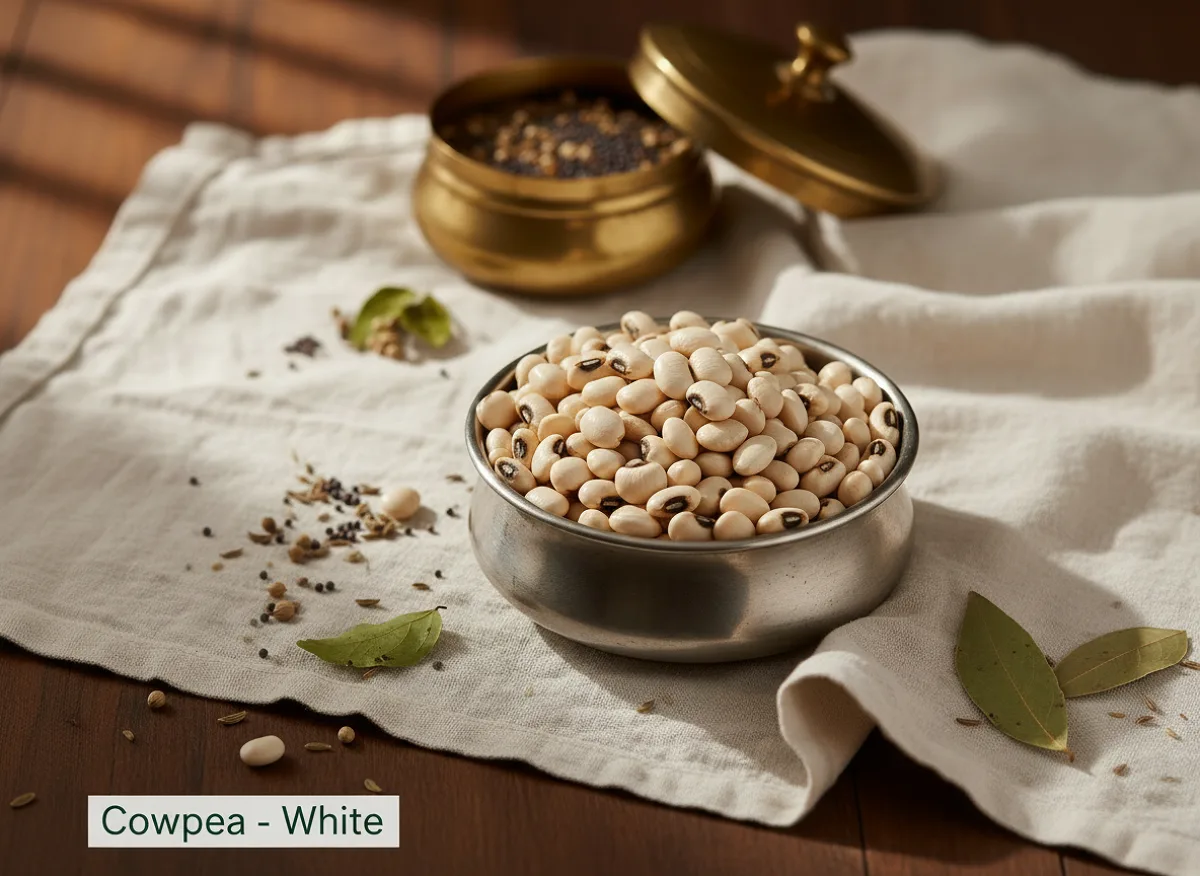
Cowpea - White
Vigna catjang · Also known as lobia, chawli, white lobia, dried white cowpea
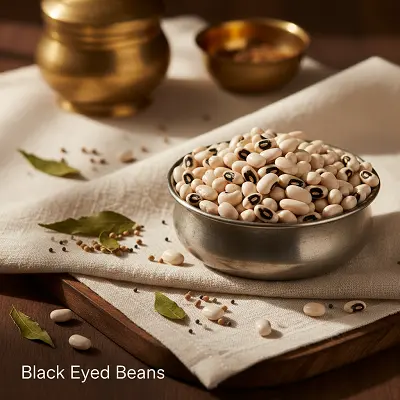
White cowpea (लोबिया, lobia) is a creamy, mild-flavoured legume with a soft texture when cooked. Whole dried beans are small and oval with a characteristic dark eye marking. A staple in North Indian dal curries, sambar, and regional stews, white lobia cooks quickly and pairs beau...
Nutrition per 100 g
Edible portion values from the master catalog.
More macros
Classification
About Cowpea - White
What it is
White cowpea, known as लोबिया (lobia) or चावली (chawli) in Hindi, is a small dried legume with a smooth, creamy texture and mild, slightly earthy flavour. The whole beans are pale ivory to white with a small dark eye or spot on one side - a distinctive mark that makes them easy to identify. Sold dried and whole, white lobia is quick-cooking compared to larger beans and absorbs flavours readily in curries and dal preparations. (IFCT 2017, Ref #B006)
Use in Indian Kitchen
White lobia is beloved across North India in everyday dal curries, sambar, and regional vegetable stews. In Rajasthan and Gujarat, it features in spiced dal tadka with cumin, asafoetida, and dried chilli; in South India, it appears in sambar and kootu alongside coconut and tamarind. The beans are also popular in quick weeknight khichdi, mixed vegetable curries, and occasionally in salads when cooked until just tender. A practical tip: soak overnight before cooking to reduce the cooking time to 30-40 minutes and improve digestibility; discard the soak water and rinse well before cooking.
Key Nutrients
White cowpea is a good source of plant-based protein, dietary fibre, and carbohydrates. It contains B vitamins (especially folate), iron, magnesium, and phosphorus. The exact nutrient profile per 100g cooked or raw is documented in IFCT 2017 (Ref #B006); values vary slightly depending on whether the beans are soaked, cooked, or dried.
Health Benefits (Evidence-based)
- High in plant protein and fibre, supporting sustained energy and digestive health.
- May help maintain steady blood sugar levels due to its low glycaemic index and fibre content.
- Good source of folate and iron, traditionally valued in Indian vegetarian diets for supporting overall wellness.
- Contains polyphenols and antioxidants linked to general anti-inflammatory support.
- Fibre content may support heart health and cholesterol management as part of a balanced diet.
Culinary Uses (Vegetarian)
- Dal tadka: tempered with cumin, asafoetida, dried chilli, and ghee.
- Sambar: cooked with tamarind, coconut, and sambar powder.
- Khichdi: mixed with rice and mild spices for comfort food.
- Vegetable curry: combined with tomato, onion, and ginger-garlic paste.
- Salads: cooled cooked beans tossed with lemon, coriander, and raw vegetables.
- Kootu: South Indian preparation with coconut and spices.
Caution
- Always soak and cook thoroughly; raw or undercooked legumes contain compounds that may cause digestive discomfort.
- Those with a history of gout or uric acid sensitivity should consume in moderation, as legumes are purine-rich.
- May cause bloating or gas in sensitive individuals; cooking with asafoetida (hing) and ginger helps reduce this.
References
- Indian Council of Medical Research - National Institute of Nutrition (ICMR-NIN). Indian Food Composition Tables (IFCT 2017). Reference #B006 - Grain Legumes category.
- Nutritional composition and health benefits of cowpea (Vigna unguiculata L. Walp): A review. Journal of Food Science and Technology, peer-reviewed literature on legume nutrition and traditional use in Indian diets.
Health Benefits
- Supports Digestion
- Supports Heart Health
- Helps Blood Sugar Control
- Provides Iron
- Provides Satiety
Sourcing & Storage
Storage
Store dried white lobia in an airtight container in a cool, dry place away from direct sunlight and moisture. In Indian kitchens, a sealed glass jar or metal tin kept in the pantry or a cool cupboard works well. Keep away from strong-smelling spices and foods, as dried legumes can absorb odours. In humid climates, store in the refrigerator or freezer to prevent moisture absorption and insect infestation.
Shelf Life
Dried white lobia keeps for 6-12 months when stored in an airtight container in a cool, dry place. After opening, transfer to an airtight container and use within 3-4 months for best quality and cooking time. Cooked lobia, when refrigerated in an airtight container, lasts 3-4 days; frozen cooked beans keep for up to 3 months.
Check Before You Buy
When buying white lobia from a mandi or kirana store, look for beans that are uniform in colour (pale ivory to white), whole, and free from cracks, discolouration, or dark spots beyond the natural eye marking. Avoid beans that feel soft, damp, or smell musty - signs of moisture or age. Check the packaging date on pre-packed lobia and choose the most recent batch. Reputable sellers will allow you to inspect a handful before buying; feel for uniform size and absence of debris or broken pieces.
In Ayurveda
In classical Ayurvedic texts, cowpeas (लोबिया) are recognized as a light, easily digestible legume with a sweet taste (madhura rasa) and warming quality (ushna virya). They are traditionally considered beneficial for balancing Vata dosha when prepared with warming spices and ghee, and are often recommended in Ayurvedic dietary guidance for those seeking plant-based protein without heaviness. However, like all legumes, they are best consumed cooked thoroughly and with digestive spices such as ginger, cumin, or asafoetida to enhance assimilation.