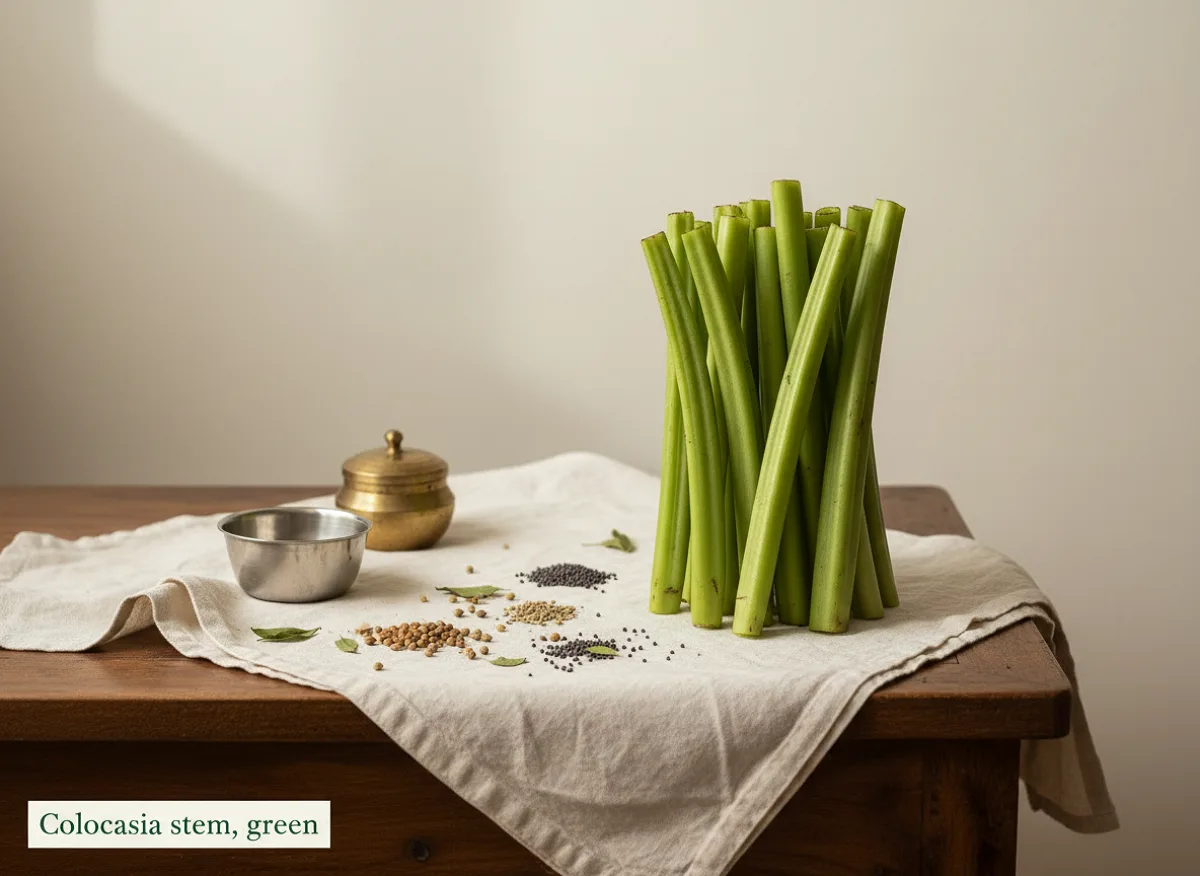
Colocasia stem, green
Colocasia antiquorum · Also known as Arbi ke patte, arbi ke sar, colocasia leaves and petiole, taro stem, elephant ear stem
Colocasia stem (अरबी के पत्ते, arbi ke patte) is the tender green petiole and leaf stalk of the taro plant, prized in Indian kitchens for its mild, slightly earthy flavour and soft texture when cooked. The hollow, ridged stems turn creamy and delicate when sautéed or curried, mak...
Nutrition per 100 g
Mean values ± IFCT published SD (edible portion).
More macros
Classification
About Colocasia stem, green
Colocasia Stem, Green / अरबी के पत्ते
What it is
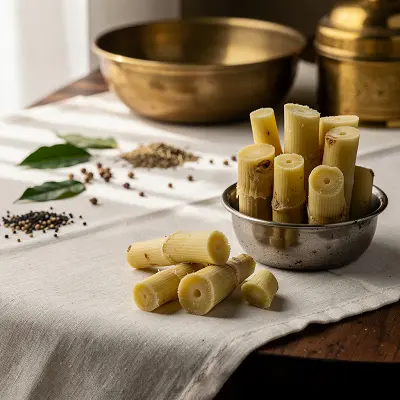
Colocasia stem (अरबी के पत्ते, arbi ke patte) is the tender green petiole and leaf stalk harvested from the taro plant. The stems are hollow, ridged, and pale to medium green, with a mild, slightly earthy taste and a soft, spongy texture that becomes creamy when cooked. Fresh colocasia stems are sold in bundles at Indian markets and are a seasonal vegetable, particularly abundant during the monsoon and early winter months. (IFCT 2017, Ref #D041)
Use in Indian Kitchen
Colocasia stem is a versatile sabzi across North and Central India. It is commonly stir-fried with onion, tomato, and spices (arbi fry or arbi ki sabzi), curried into a mild dal-based gravy, or rolled with a spiced besan-onion filling and pan-fried into crispy rolls (arbi ke patte ki sabzi). In some households, the stems are blanched, then added to sambar or mixed vegetable curries. A practical tip: soak cut stems in water for 15-20 minutes before cooking to reduce any mild itching sensation on the lips and throat, a trait common to taro family plants. Pair with warm rotis or rice for a comforting meal.
Key Nutrients
Colocasia stem is a source of dietary fibre, carbohydrates, and small amounts of protein. It contains vitamin C, potassium, and trace minerals including manganese and copper. Exact nutrient composition per 100 g is available in IFCT 2017 tables.
Health Benefits (Evidence-based)
- May support digestive health due to its dietary fibre content, which aids regular bowel movement.
- Linked to steady blood sugar management when prepared without excess oil, owing to its moderate glycaemic index.
- Provides potassium, which is traditionally valued for heart and muscle function support.
- Contains antioxidants and vitamin C, which may help support immune function and skin health.
- Low in calories and fat, making it a light vegetable choice for weight-conscious home cooks.
Culinary Uses (Vegetarian)
- Stir-fried with onion, tomato, and green chilli (arbi fry).
- Rolled with spiced besan-onion filling and pan-fried into crispy rolls.
- Added to mild curries and sambar.
- Blanched and mixed into vegetable dal or khichdi.
- Pickled with mustard seeds and turmeric for long-term storage.
Caution
Colocasia stem contains calcium oxalate crystals, which can cause a mild itching or tingling sensation in the mouth and throat if eaten raw or undercooked. Always cook thoroughly and soak cut stems in water before cooking to reduce this effect. Individuals with kidney stones or a history of oxalate sensitivity should consume in moderation and consult a healthcare provider if concerned.
References
- Indian Council of Medical Research - National Institute of Nutrition (ICMR-NIN). Indian Food Composition Tables (IFCT 2017). Reference #D041 (Other Vegetables - Colocasia stem).
- Gopalan, C., Rama Sastri, B. V., & Balasubramanian, S. C. (2016). Nutritive Value of Indian Foods. National Institute of Nutrition, ICMR, Hyderabad.
Sourcing & Storage
Storage
Store fresh colocasia stems in a cool, well-ventilated place or in the refrigerator's vegetable compartment wrapped loosely in a damp cloth or paper towel. Avoid plastic bags, which trap moisture and encourage rot. In warm, humid climates, refrigerate immediately after purchase. Do not wash before storage; wash only when ready to cook. Keep away from direct sunlight and ethylene-producing fruits (bananas, apples) to slow yellowing and decay.
Shelf Life
Fresh colocasia stems keep for 3-5 days at room temperature in a cool, dry place, and 5-7 days in the refrigerator when stored in a ventilated container or wrapped in a damp cloth. Once cooked, store in an airtight container in the refrigerator for up to 2-3 days. Colocasia stems do not freeze well due to their delicate texture; pickling or drying are better preservation methods for longer storage.
Check Before You Buy
Choose firm, crisp stems with a bright green colour and no soft spots, yellowing, or dark blemishes. The stems should snap cleanly when bent and feel heavy for their size, indicating freshness and good water content. Avoid stems that are wilted, slimy, or have a musty smell. At the mandi or kirana, select bundles with intact leaves attached when possible, as this is a sign of recent harvest. Avoid pre-cut or packaged stems that show browning at the cut ends or excessive moisture in the pack.
In Ayurveda
In Ayurvedic tradition, colocasia leaves are considered a light, nourishing vegetable with mild astringent properties. They are believed to support digestion and are often recommended as a gentle food for maintaining balanced digestion. However, raw leaves contain calcium oxalate crystals that create an astringent sensation, so thorough cooking is essential in classical practice to neutralize this quality.