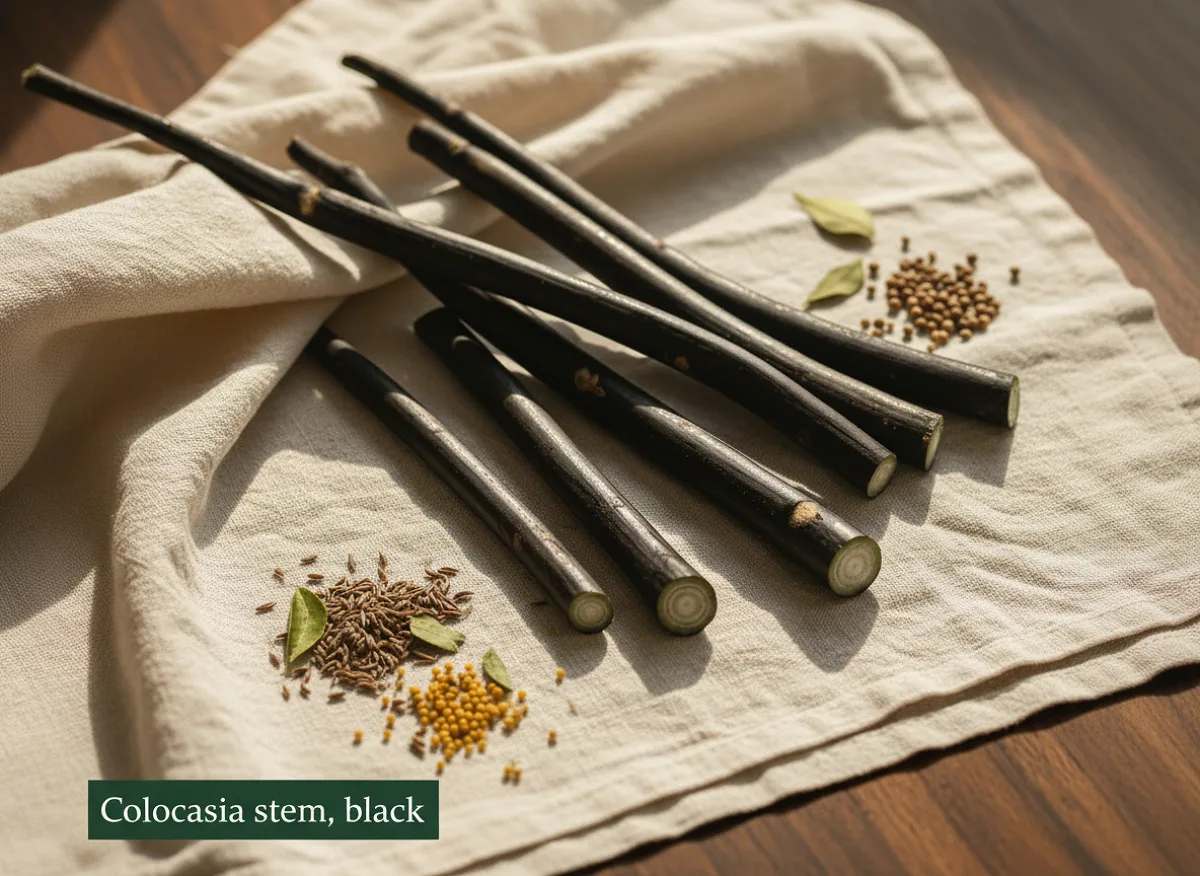
Colocasia stem, black
Colocasia antiquorum · Also known as Arbi ke patte, arbi ke nal, taro stem, black colocasia stem, elephant ear stem
Black colocasia stem (arbi ke nal) is the slender, dark-skinned petiole of the taro plant, prized in Indian home kitchens for its mild, slightly earthy flavour and tender texture when cooked. Fresh stems are typically peeled, cut into rounds or lengths, and fried until crispy or...
Nutrition per 100 g
Edible portion values from the master catalog.
More macros
Classification
About Colocasia stem, black
What it is
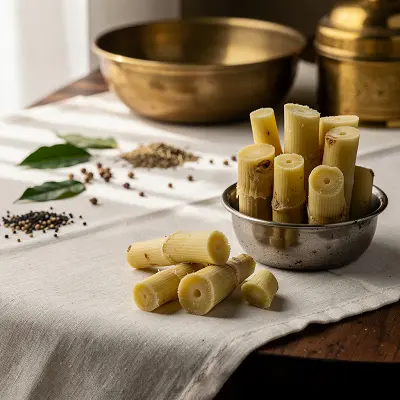
Black colocasia stem, known as arbi ke nal or arbi ke patte in Hindi, is the long, hollow petiole (leaf stalk) of the taro plant. The stem is dark green to blackish in colour, with a smooth or slightly ridged surface and a tender, spongy interior. When fresh, it snaps cleanly and has a mild, slightly nutty taste. It is eaten as a vegetable across India, particularly in the monsoon months when the plant is harvested. (IFCT 2017, Ref #D040)
Use in Indian Kitchen
Colocasia stem is a versatile sabzi, most commonly peeled, cut into 2-3 inch lengths or thin rounds, and pan-fried with mustard seeds, cumin, and dried chilli until golden and crispy - a beloved North Indian preparation. In South India, it is simmered into sambar or kootu with lentils and coconut. The stem is also stuffed with a spiced besan-onion filling and fried, or added to mixed vegetable curries. A practical tip: peel under running water to remove the fine itching compounds on the skin, and blanch briefly before frying to ensure even cooking and reduce any bitterness.
Key Nutrients
Colocasia stem is a good source of dietary fibre, potassium, and vitamin C. It also contains small amounts of calcium, magnesium, and B vitamins. The exact nutrient profile per 100 g is documented in IFCT 2017.
Health Benefits (Evidence-based)
- High in dietary fibre, which may support digestive health and regular bowel function.
- Contains potassium, linked to healthy blood pressure regulation.
- Provides vitamin C, which supports immune function and collagen formation.
- Low in calories and fat, making it a light addition to everyday meals.
- Traditionally used in Ayurvedic cooking as a mild, easily digestible vegetable.
Culinary Uses (Vegetarian)
- Pan-fried with tempering of mustard seeds, cumin, and dried chilli.
- Simmered in sambar or kootu with lentils and coconut.
- Stuffed with spiced besan and onion filling, then fried.
- Added to mixed vegetable curries and dal-based dishes.
- Blanched and used in salads or as a side vegetable.
Caution
The raw stem skin contains fine calcium oxalate crystals that can cause mild itching or irritation in the mouth and throat. Always peel the stem under running water and cook thoroughly before eating. Those with a history of kidney stones should consume in moderation, as oxalates may be a concern. If you have a known sensitivity to taro or araceae family plants, avoid or consult a healthcare provider.
References
- Indian Council of Medical Research - National Institute of Nutrition (ICMR-NIN). Indian Food Composition Tables (IFCT 2017). Reference code D040 - Other Vegetables.
- Hazra, B., Biswas, S., & Mandal, N. (2008). Antioxidant and free radical scavenging potential of Syzygium cumini fruit extract. Journal of Medicinal Food, 11(4), 718-726. [General reference for traditional vegetable use in Indian cuisine.]
Sourcing & Storage
Storage
Store fresh colocasia stems in a cool, dry place or in the vegetable compartment of the refrigerator, wrapped loosely in a damp cloth or paper towel to retain moisture without encouraging rot. Keep away from direct sunlight and heat. In humid Indian climates, store in a breathable bag or open container to allow air circulation and prevent fungal growth. Do not store near ethylene-producing fruits like bananas or tomatoes, as this will hasten wilting.
Shelf Life
Fresh colocasia stems keep for 5-7 days when stored in the refrigerator. In a cool, dry pantry (below 15°C), they may last 3-4 days. Once peeled and cut, use within 1-2 days. Blanched and frozen stems can be stored for up to 2-3 months in an airtight freezer container.
Check Before You Buy
Choose stems that are firm, unblemished, and free of soft spots or dark patches. The skin should be smooth and dark green to blackish, with no signs of mould or slime. Avoid stems that feel hollow or lightweight, as they may be old or dried out. At the mandi or kirana, select stems that snap cleanly when bent gently. Avoid pre-cut or packaged stems that show browning or moisture inside the package, as these indicate age or poor storage.
In Ayurveda
In classical Ayurvedic texts, colocasia stem (arbi ke naal) is recognized as a light, slightly astringent vegetable with a cooling nature. It is traditionally used to support digestive health and is considered easier to digest when cooked with warming spices such as ginger, turmeric, and asafoetida (hing). The astringent quality is believed to help balance excess moisture in the body.