Cluster Beans
Cyamopsis tetragonobola · Also known as Ganvaar phalee, guar, gwar, guvar, guwar ki phalee, guvar ki phalli
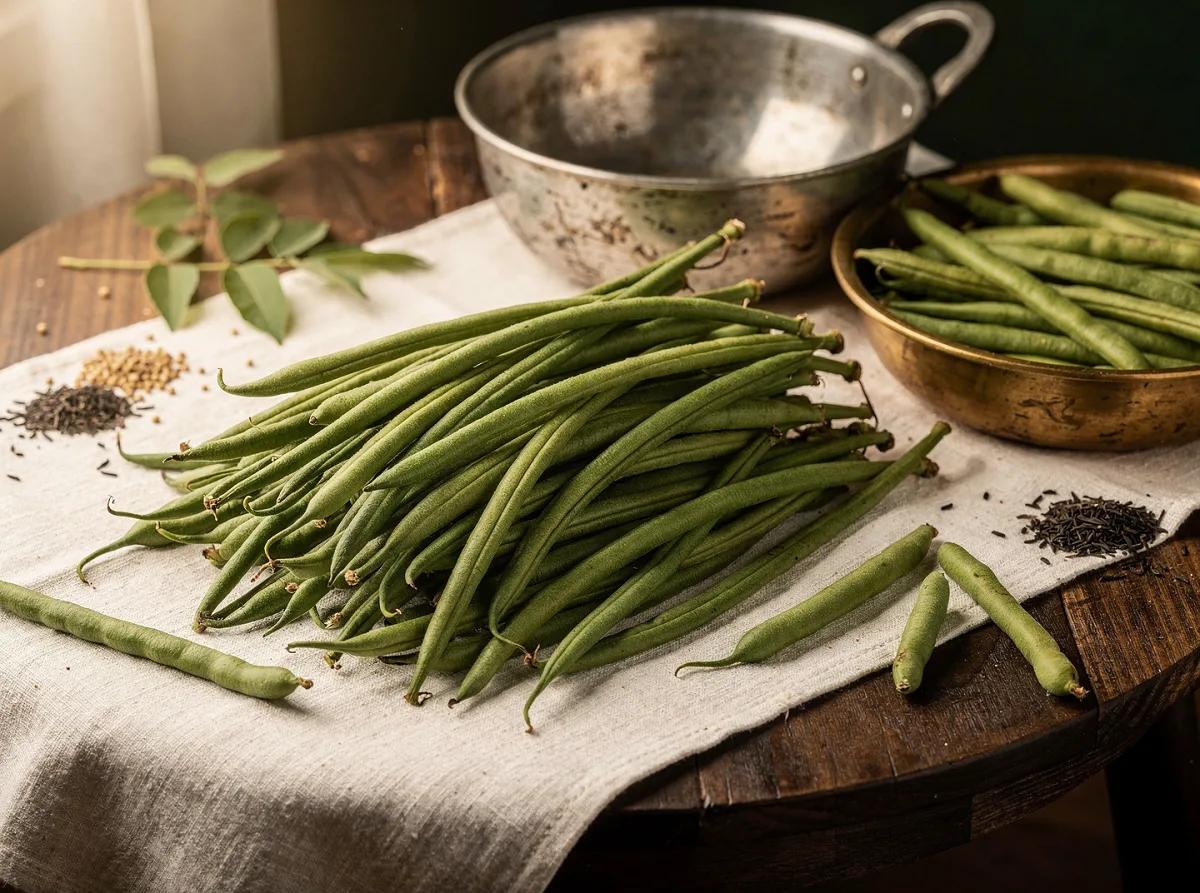
Cluster beans (गुवार की फली, guvar ki phalli) are slender, ridged green pods with a mild, slightly nutty flavour and tender, crisp texture when young. Fresh and commonly used across Indian home kitchens, they are stir-fried with onions and spices, stuffed with besan, or added to...
Nutrition per 100 g
Mean values ± IFCT published SD (edible portion).
More macros
Classification
About Cluster Beans
What it is
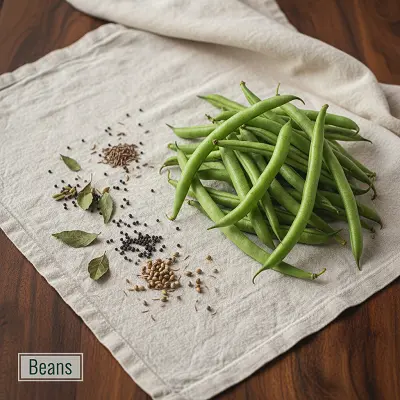
Cluster beans are long, slender green pods with fine lengthwise ridges, harvested when tender and young. Native to arid regions and widely grown across India, they have a mild, slightly earthy and nutty flavour with a pleasant crunch when cooked briefly. The pods are eaten whole - seeds, pod, and all - making them a quick, nutrient-dense vegetable for everyday family meals. (IFCT 2017, Ref #D039)
Use in Indian Kitchen
Cluster beans are a beloved sabzi across North and South Indian home cooking. In the North, they are commonly dry-fried (sukha bhaji) with onions, ginger, and green chilli, or stuffed with a spiced besan filling and pan-fried until golden. Southern kitchens add them to sambar and kootu curries, where their mild flavour absorbs the tamarind and spice base beautifully. A simple tadka of mustard seeds, curry leaves, and a pinch of asafoetida lifts their delicate taste. Tip: slice them thinly and cook on high heat to keep them crisp; overcooking makes them mushy and bitter.
Key Nutrients
Cluster beans are a good source of dietary fibre, vitamin C, and folate. They also contain plant-based protein, iron, and calcium. Exact nutrient composition per 100 g is available in IFCT 2017.
Health Benefits (Evidence-based)
- High in dietary fibre, which may support digestive health and regular bowel function.
- Good source of vitamin C, linked to immune support and collagen formation.
- Contains folate, important for cell division and traditionally valued during pregnancy.
- Low in calories and fat, making them a light addition to everyday meals.
- Plant-based protein content may contribute to satiety and muscle maintenance.
Culinary Uses (Vegetarian)
- Dry-fried (sukha bhaji) with onions, ginger, and green chilli.
- Stuffed with spiced besan and pan-fried.
- Added to sambar and kootu curries.
- Tossed into vegetable pulao or biryani.
- Pickled or preserved as achaar.
- Lightly blanched and added to salads or mixed vegetable dishes.
Caution
- Raw cluster beans contain compounds that may cause mild digestive discomfort in some people; always cook thoroughly.
- Those with a history of kidney stones may wish to moderate intake, as they contain oxalates.
- Overcooking can destroy vitamin C and make the pods mushy; cook briefly on high heat for best texture and nutrition.
References
- Indian Council of Medical Research - National Institute of Nutrition (ICMR-NIN). Indian Food Composition Tables (IFCT 2017). Reference #D039 - Other Vegetables.
- Gopalan, C., Rama Sastri, B. V., & Balasubramanian, S. C. (2007). Nutritive Value of Indian Foods. National Institute of Nutrition, ICMR, Hyderabad.
Health Benefits
- Supports Digestion
- Boosts Immunity
- Weight Management Support
- Heart Health Support
- Regulates Blood Sugar
Sourcing & Storage
Storage
Store fresh cluster beans in a perforated plastic bag or cloth pouch in the refrigerator crisper drawer at 4-7°C. Keep them away from direct moisture and ethylene-producing fruits (like apples and bananas). In warm Indian climates, use within 2-3 days of purchase. Do not wash before storing; wash just before cooking to prevent premature wilting and mould.
Shelf Life
Fresh cluster beans keep for 3-5 days in the refrigerator when stored in a cool, dry crisper. In a cool pantry or during winter, they may last 1-2 days. Once cooked, store in an airtight container in the fridge for up to 2 days. They do not freeze well due to their delicate texture.
Check Before You Buy
Choose bright green, firm pods with no yellowing, soft spots, or blemishes. Snap one gently - it should break cleanly and feel crisp, not limp or rubbery. Avoid pods that are too thick or mature (they become stringy and tough). At the mandi or kirana, pick bundles harvested the same day if possible; older bundles wilt quickly in heat. Check for any signs of insect damage or mould, especially in the creases of the ridges.
In Ayurveda
In classical Ayurvedic texts, cluster beans (गवार फली) are recognized as a light, easily digestible vegetable with a mild, slightly sweet taste (madhura rasa). The ingredient is considered to have a cooling (sheeta virya) quality and is traditionally used to support digestive health and balance Pitta dosha.
Ayurvedic practitioners often recommend cluster beans as a nourishing addition to seasonal diets, particularly during warmer months. The vegetable's natural fibre content aligns with classical views on promoting healthy digestion and regular elimination.