Cho-cho-marrow
Sechium edule · Also known as Chayote, Chow-chow, Christophine, Mirliton, Squash pear, Vegetable pear
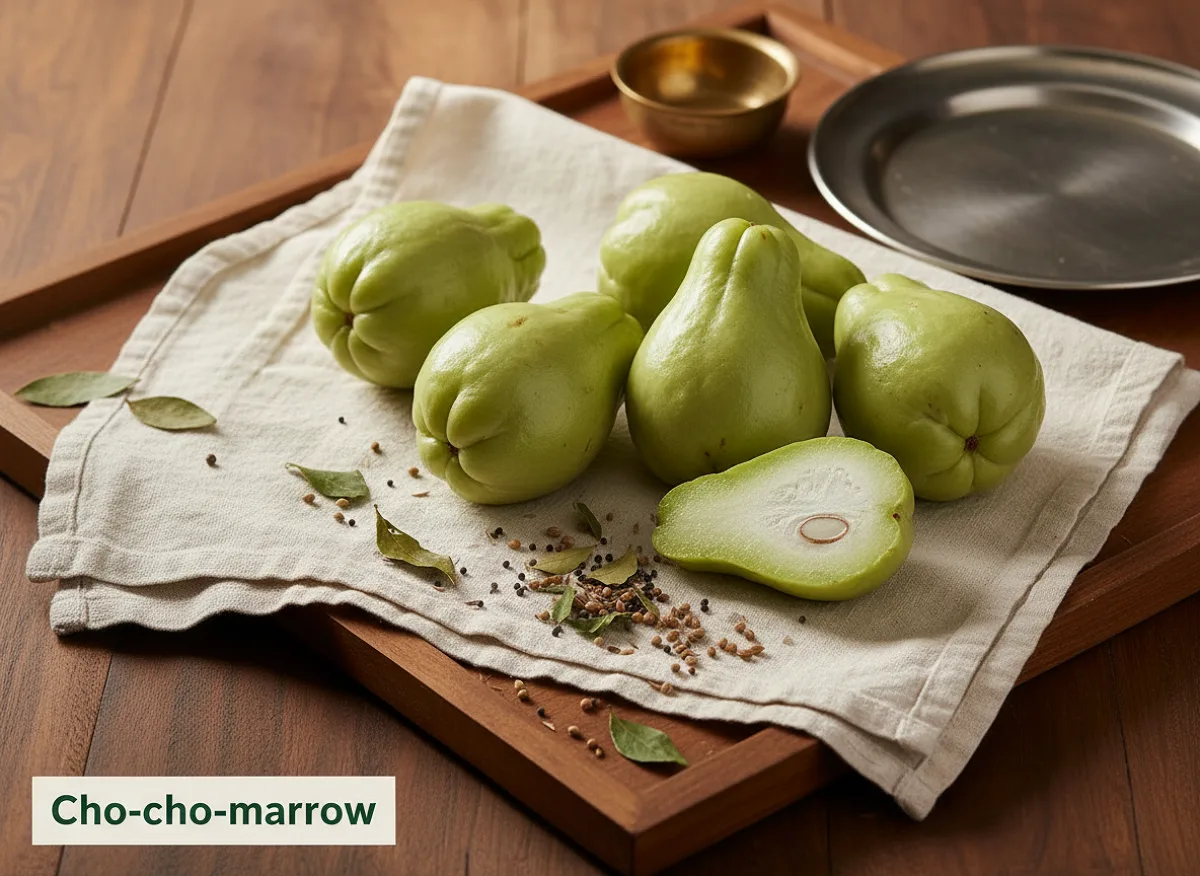
Cho-cho-marrow (chayote) is a pale green, pear-shaped squash with a single flat seed and delicate, watery flesh. Mild and slightly sweet, it absorbs flavours beautifully in curries, stir-fries, and light gravies. Popular in South Indian kitchens, it is often cooked with coconut a...
Nutrition per 100 g
Mean values ± IFCT published SD (edible portion).
More macros
Classification
About Cho-cho-marrow
What it is
Cho-cho-marrow, commonly called chayote or chow-chow in Indian markets, is a pale green, pear-shaped squash belonging to the gourd family. It has thin, smooth skin, watery white flesh, and a single large flat seed in the centre. The vegetable is mild and slightly sweet, with a tender texture that cooks quickly. Fresh cho-cho-marrow is available year-round in most Indian cities and is especially valued in South Indian and coastal kitchens for its versatility and light digestibility. (IFCT 2017, Ref #D038)
Use in Indian Kitchen
Cho-cho-marrow is a staple in South Indian vegetable curries and stir-fries. It is commonly cooked in sambar with lentils and tamarind, added to coconut-based thoran or stir-fry with mustard seeds and curry leaves, or simmered gently in light gravies with turmeric and chilli. In North Indian kitchens, it appears in mixed vegetable sabzi and is sometimes stuffed with spiced potato and gram flour. The vegetable pairs well with coconut, tamarind, and asafoetida. A practical tip: peel and cube just before cooking to prevent browning, and add to the pan only when other ingredients are nearly done, as it cooks very quickly and can turn mushy if overcooked.
Key Nutrients
Cho-cho-marrow is predominantly water (around 90%), making it very low in calories. It contains small amounts of dietary fibre, vitamin C, and B vitamins. Minerals include potassium and magnesium. Exact nutrient composition is documented in IFCT 2017.
Health Benefits (Evidence-based)
- Low in calories and high in water content, making it suitable for weight-conscious diets and hydration.
- Contains dietary fibre, which may support digestive health and regular bowel function.
- Provides vitamin C, linked to immune support and collagen formation.
- Potassium content may help maintain healthy blood pressure and heart function.
- Light and easily digestible, traditionally favoured in convalescent and light diets.
Culinary Uses (Vegetarian)
- Sambar - cooked with lentils, tamarind, and spice powder.
- Thoran - stir-fried with grated coconut, mustard seeds, and curry leaves.
- Vegetable curry - simmered in coconut milk or yoghurt-based gravy.
- Stir-fry - pan-fried with onions, green chillies, and tempering spices.
- Mixed vegetable sabzi - combined with potatoes, peas, and beans.
- Stuffed preparation - halved, seeded, and filled with spiced potato and gram flour mixture.
Caution
Cho-cho-marrow is generally well-tolerated and safe for most people, including children and pregnant women. Those with a known allergy to gourds should exercise caution. The vegetable is very mild and unlikely to cause digestive upset, though excessive consumption of raw or undercooked marrow may cause mild bloating in sensitive individuals.
References
- Indian Council of Medical Research - National Institute of Nutrition (ICMR-NIN). Indian Food Composition Tables (IFCT) 2017. Reference #D038 (Other Vegetables category).
- Nutritive Value of Indian Foods, ICMR-NIN, New Delhi - standard reference for Indian vegetable composition and culinary use.
Sourcing & Storage
Storage
Store cho-cho-marrow in a cool, dry place or in the vegetable compartment of the refrigerator. Keep away from direct sunlight and moisture. If storing at room temperature (in a cool kitchen or during winter), place in a well-ventilated basket or paper bag. In humid climates or during summer, refrigerate in a perforated plastic bag to allow air circulation and prevent condensation, which can cause rot.
Shelf Life
When stored in a cool, dry place, cho-cho-marrow keeps for 2 to 3 weeks. In the refrigerator, it lasts 3 to 4 weeks if kept in the vegetable drawer. Once cut, wrap the unused portion in cling film and use within 2 to 3 days. The vegetable does not freeze well due to its high water content; freezing causes mushiness upon thawing.
Check Before You Buy
Choose cho-cho-marrow that is firm to the touch, with unblemished pale green skin and no soft spots or wrinkles. Avoid vegetables that feel hollow or very light, as they may be old or dried out. The skin should be smooth and free of mould or dark patches. If buying from a mandi or kirana store, select vegetables that have been stored in a cool area, not in direct sun. Packed or pre-cut cho-cho-marrow should show no browning or slime; check the date and ensure the packaging is intact.
In Ayurveda
Cho-cho is not extensively documented in classical Ayurvedic texts as a primary ingredient. However, it is traditionally regarded in Indian home kitchens as a light, cooling vegetable with mild digestive properties. Its high water content and gentle nature make it suitable for balancing constitutions that benefit from cooling, easily digestible foods. Modern Ayurvedic practitioners sometimes recommend it as a supportive vegetable in light, nourishing preparations.