Chinese Cabbage
Brassica rupa · Also known as Napa cabbage, Peking cabbage, celery cabbage, पत्तागोभी (pattaagobi), चीनी पत्तागोभी (chini pattaagobi)
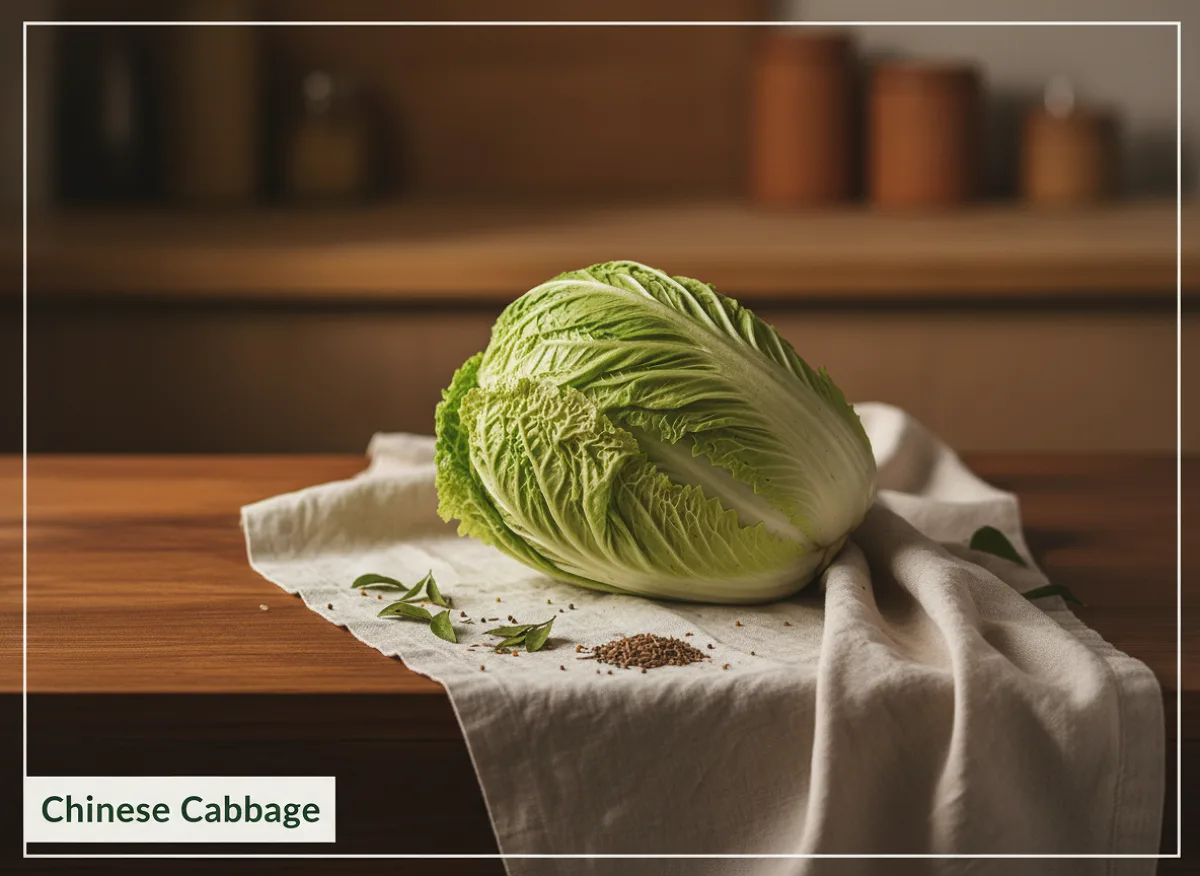
Chinese cabbage (पत्तागोभी, pattaagobi) is an elongated, pale green leafy vegetable with tightly packed, crinkled leaves and a mild, slightly sweet flavour. Crisp and tender, it is lighter and more delicate than regular cabbage, making it ideal for quick stir-fries, soups, and fr...
Nutrition per 100 g
Edible portion values from the master catalog.
More macros
Classification
About Chinese Cabbage
What it is
Chinese cabbage (पत्तागोभी, pattaagobi) is an elongated, pale green leafy vegetable with tightly packed, crinkled leaves and a mild, slightly sweet flavour. Unlike regular cabbage, its leaves are tender and crisp with a delicate texture, and the inner core is creamy white and juicy. Fresh Chinese cabbage is sold whole or pre-cut in Indian markets and is increasingly popular in urban kitchens for its versatility and quick cooking time. (IFCT 2017, Ref #C013)
Use in Indian Kitchen
Chinese cabbage shines in quick vegetable stir-fries (sabzi) with ginger, garlic, and green chilli, and is a favourite in Indo-Chinese noodle dishes and fried rice. In North Indian homes, it is often added to vegetable soups, mixed vegetable curries, and fresh salads for a crisp, refreshing crunch. A practical tip: slice it just before cooking to retain its crispness, and add it towards the end of cooking to preserve the tender texture and mild flavour. It pairs beautifully with sesame oil, soy sauce, and aromatic tempering of mustard seeds and curry leaves.
Key Nutrients
Chinese cabbage is rich in vitamin C, dietary fibre, and folate. It also contains vitamin K, potassium, and small amounts of calcium and iron. The high water content (around 95%) makes it a low-calorie, hydrating vegetable ideal for everyday meals.
Health Benefits (Evidence-based)
- May support digestive health through its dietary fibre content and gentle action on the gut.
- Linked to immune support due to its vitamin C and antioxidant compounds.
- May help maintain bone health with its vitamin K content, which plays a role in bone mineralisation.
- Low in calories and high in water, making it a good choice for weight management and hydration.
- Contains compounds traditionally associated with anti-inflammatory properties in classical Indian and Asian food traditions.
Culinary Uses (Vegetarian)
- Stir-fried with ginger, garlic, and green chilli as a quick side dish (sabzi).
- Added to vegetable soups, clear broths, and light curries.
- Mixed into Indo-Chinese noodle dishes, fried rice, and hakka noodles.
- Fresh in salads, coleslaw, and cold vegetable preparations.
- Steamed or blanched and served with a light tempering of mustard seeds, curry leaves, and coconut.
Caution
- Those with thyroid conditions should consume in moderation, as cruciferous vegetables contain compounds that may interfere with iodine absorption when eaten in very large quantities raw.
- Individuals on blood-thinning medications should maintain consistent intake due to its vitamin K content.
- May cause mild bloating or gas in sensitive individuals if eaten in large raw quantities; cooking reduces this effect.
References
- Indian Council of Medical Research - National Institute of Nutrition (ICMR-NIN). Indian Food Composition Tables (IFCT 2017). Reference #C013 - Green Leafy Vegetables category.
- Nutritive Value of Indian Foods, National Institute of Nutrition, ICMR, Hyderabad (2017 edition).
Sourcing & Storage
Storage
Store Chinese cabbage in the refrigerator's vegetable compartment, wrapped loosely in a damp cloth or paper towel inside a perforated plastic bag to retain moisture while allowing air circulation. Keep it away from ethylene-producing fruits like apples and bananas. In Indian climates, ensure the fridge temperature is set to 4-7°C for best results. Do not wash before storage; wash only when ready to use.
Shelf Life
When stored properly in the refrigerator, whole Chinese cabbage will keep for 2-3 weeks. Once cut, use within 5-7 days for best quality and crispness. In warm or humid climates, consume within 1-2 weeks. Freezing is not recommended for whole leaves, as they become mushy upon thawing, though blanched and frozen pieces may be used in cooked dishes within 2-3 months.
Check Before You Buy
Choose heads that feel firm and heavy for their size, with crisp, pale green outer leaves free from brown spots, yellowing, or soft patches. The leaves should snap cleanly when bent. Avoid heads that feel light, wilted, or have a slimy texture. Check the base for any signs of rot or decay. In Indian markets and mandis, look for freshly stocked bundles; pre-packed varieties should have a clear date and no condensation inside the pack, which indicates age or improper storage.
In Ayurveda
Chinese cabbage is not extensively documented in classical Ayurvedic texts, as it is a relatively modern introduction to Indian kitchens. However, based on its properties, it shares qualities with other leafy greens traditionally valued in Ayurveda. Its high water content and cooling nature suggest a balancing effect on Pitta dosha, while its light and easy-to-digest character makes it suitable for most constitutions when prepared with warming spices and ghee.