Chickpeas
Cicer arietinum · Also known as chane, kabuli chana, white chickpeas, garbanzo beans, chhola
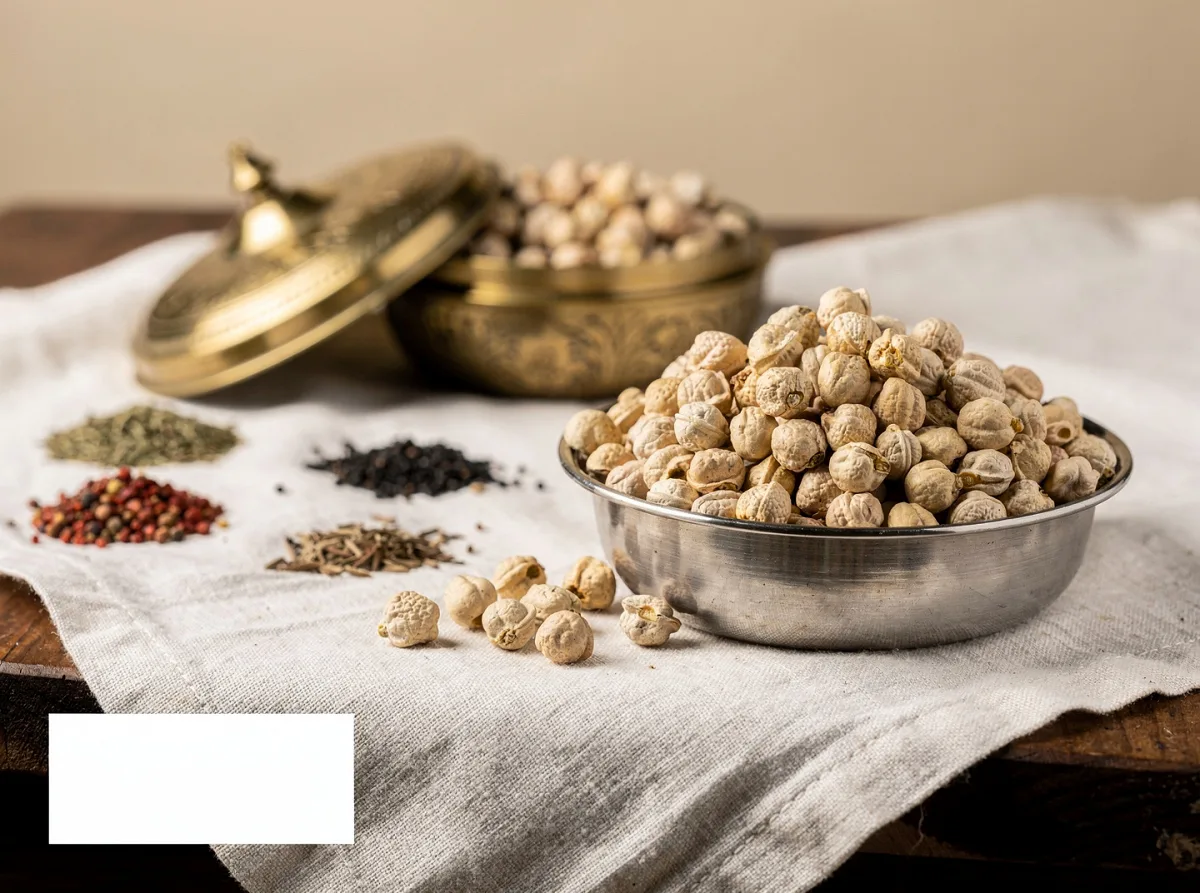
Chickpeas (chane) are round, cream-coloured dried legumes with a nutty, slightly earthy flavour and firm texture when cooked. A cornerstone of Indian vegetarian cooking, they appear whole in curries like chole bhature and chana masala, or ground into besan flour for batters, pako...
Nutrition per 100 g
Mean values ± IFCT published SD (edible portion).
More macros
Classification
About Chickpeas
What it is
Chickpeas (chane in Hindi) are round, pale cream-coloured dried legumes belonging to the Cicer arietinum species. They have a firm, slightly wrinkled skin and a dense, starchy interior that softens to a creamy texture when cooked. Available whole or ground into flour (besan), chickpeas are a staple protein source across North, South, East, and West Indian kitchens. (IFCT 2017, Ref #B002)
Use in Indian Kitchen
Whole chickpeas are the soul of chole bhature (North India's beloved breakfast pairing), chana masala (spiced curry), and sambar (South Indian lentil-vegetable stew). Ground into besan, they form the base for pakora, chikhalwali (gram flour dumplings in yoghurt), and many sweets like laddu and barfi. A practical tip: soak overnight, then boil with a pinch of baking soda to soften quickly and reduce the gassy effect. In the South, roasted chickpea flour is tempered with mustard seeds and curry leaves; in the North, whole chickpeas are often cooked with onions, tomatoes, and warm spices like cumin and garam masala.
Key Nutrients
Chickpeas are rich in plant-based protein, dietary fibre, and complex carbohydrates. They also contain folate, iron, magnesium, phosphorus, and manganese. According to IFCT 2017, a 100 g serving of cooked chickpeas provides approximately 19 g protein, 27 g carbohydrates, and 8 g fibre, making them one of the most nutrient-dense legumes in the Indian pantry.
Health Benefits (Evidence-based)
- May support steady blood sugar levels due to low glycaemic index and high fibre content.
- Linked to improved digestive health and regular bowel function through soluble and insoluble fibre.
- Plant-based protein makes them valuable for vegetarian and vegan diets, supporting muscle maintenance and satiety.
- Iron and folate content may help prevent anaemia, particularly important in Indian vegetarian populations.
- Traditionally used in Ayurvedic cooking to build strength and stamina without excess heat.
- May help reduce cholesterol levels when included regularly in a balanced diet.
Culinary Uses (Vegetarian)
- Whole cooked chickpeas in curries (chole bhature, chana masala, sambar, kootu, curry).
- Roasted and spiced as a crunchy snack (bhuna chana).
- Ground into besan flour for batters, pakora, chikhalwali, and gram flour-based sweets.
- Sprouted chickpeas in salads and light breakfast dishes.
- Blended into hummus-style dips and spreads (less common in traditional Indian homes but increasingly popular).
Caution
- Raw or undercooked chickpeas contain enzyme inhibitors and lectins; always soak and cook thoroughly.
- High fibre content may cause bloating or gas in people unaccustomed to legumes; introduce gradually and drink plenty of water.
- Those with IBS or sensitive digestion may benefit from removing the outer skin after cooking.
- Individuals on certain medications (e.g. blood thinners) should consult a healthcare provider, as chickpeas contain vitamin K.
References
- Indian Council of Medical Research - National Institute of Nutrition (ICMR-NIN). Indian Food Composition Tables (IFCT) 2017. Hyderabad: NIN; 2017. Reference #B002 (Grain Legumes - Chickpeas).
- Jukanti AK, Gaur PM, Gowda CLL, Chibbar RN. Nutritional quality and health benefits of chickpea (Cicer arietinum L.): a review. British Journal of Nutrition. 2012;108(S1):S11-S26.
Health Benefits
- Supports Digestion
- Supports Heart Health
- Helps Blood Sugar Control
- Provides Iron
- Provides Satiety
Sourcing & Storage
Storage
Store dried chickpeas in an airtight container (glass jar, metal tin, or sealed cloth bag) in a cool, dry place away from direct sunlight and moisture. Keep away from strong-smelling foods, as legumes absorb odours easily. In humid Indian climates, store in the refrigerator or freezer to prevent insect infestation and mould. Cooked chickpeas should be refrigerated in an airtight container and used within 3-4 days, or frozen for up to 3 months.
Shelf Life
Dried chickpeas stored properly in a cool, dry place remain good for 1-2 years, though they cook best within the first year. After opening a packet, transfer to an airtight container to maintain freshness for up to 6 months. Cooked chickpeas keep refrigerated for 3-4 days and frozen for up to 3 months. Sprouted chickpeas should be consumed within 2-3 days of sprouting and stored in the refrigerator.
Check Before You Buy
When buying dried chickpeas from a mandi or kirana store, look for uniform cream or pale yellow colour with no dark spots, discolouration, or visible damage. The beans should feel hard and dense; soft or shrivelled chickpeas indicate age or poor storage. Smell the packet - fresh chickpeas have a mild, clean legume aroma with no musty or off odours. Avoid chickpeas with insect holes, debris, or signs of moisture. If buying from bulk bins, ensure the shop has good turnover and the container is clean and dry. Pre-packed chickpeas should have a clear expiry date and no visible moisture inside the packet.
In Ayurveda
In classical Ayurveda, chickpeas (छोले) are considered light and dry in nature, with a sweet taste (madhura rasa) and astringent post-digestive effect (kashaya vipaka). They are traditionally used to balance Kapha and Pitta doshas, though in excess they may increase Vata due to their drying quality. Chickpeas are valued in Ayurvedic cooking for their grounding, nourishing properties and are often recommended as a staple protein source in vegetarian Ayurvedic diets.