Celery
Apium graveolens · Also known as Ajavaayan, Ajamoda, celery leaves, celery stalks, सेलरी
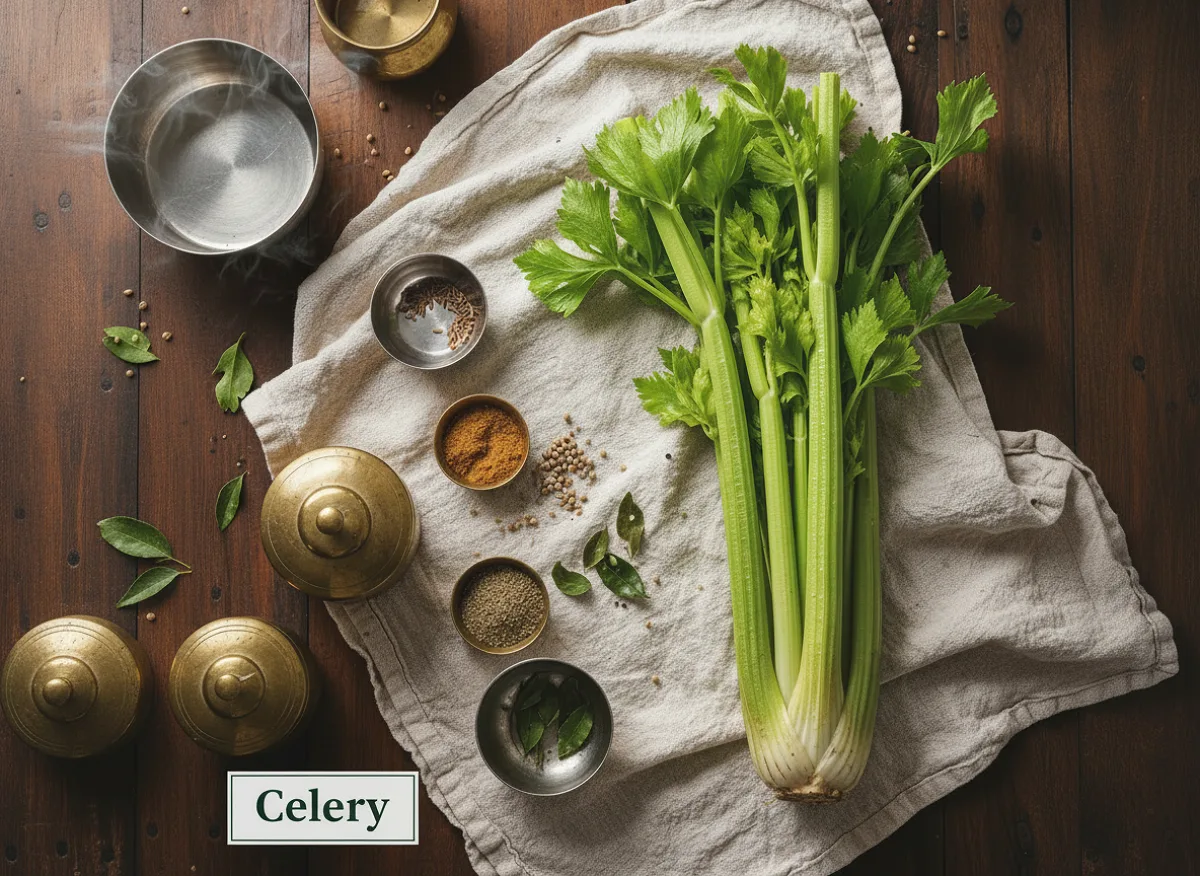
Celery (अजवायन, ajavaayan) is a crisp, pale green vegetable with long hollow stalks and feathery leaves, prized in Indian kitchens for its fresh, slightly peppery flavour and crunchy texture. Fresh celery is used whole or chopped in vegetable curries, soups, and as a tempering ba...
Nutrition per 100 g
Mean values ± IFCT published SD (edible portion).
More macros
Classification
About Celery
What it is
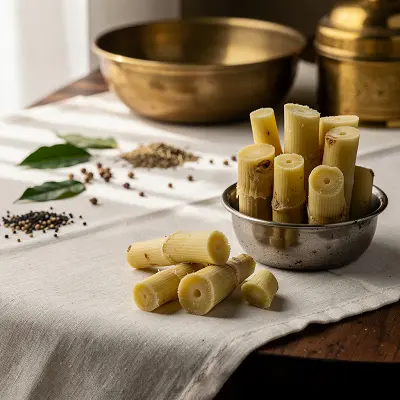
Celery is a leafy green vegetable with long, slender, hollow stalks that are pale to bright green, topped with feathery, aromatic leaves. The stalks are crisp and juicy with a mild, slightly peppery taste, while the leaves carry a more concentrated herbal flavour. Fresh celery is used whole, sliced, or chopped in Indian home cooking, and is increasingly available in urban markets and organised retail. (IFCT 2017, Ref #D037)
Use in Indian Kitchen
Celery is a versatile addition to vegetable curries, dal preparations, and light broths. In South Indian kitchens, chopped celery is often included in sambar and rasam as part of the vegetable base, lending a fresh crunch and subtle flavour. North Indian home cooks add it to mixed vegetable sabzi, khichdi, and clear soups. The leaves are particularly aromatic and can be used as a garnish or stirred into curd-based raita. A practical tip: blanch celery stalks briefly in salted water before adding to curries if you prefer a softer texture, or keep them raw in salads and as a crunchy side with meals. Celery pairs well with turmeric, cumin, and asafoetida in tempering.
Key Nutrients
Celery is low in calories and provides dietary fibre, potassium, and vitamin K. It also contains small amounts of vitamin C, folate, and manganese. The leaves are more nutrient-dense than the stalks. Exact nutrient composition per serving is available in IFCT 2017.
Health Benefits (Evidence-based)
- May support hydration and electrolyte balance due to high water content and potassium.
- Dietary fibre content may aid digestive regularity and support gut health.
- Vitamin K contributes to bone health and blood clotting function.
- Low glycaemic index makes it suitable for balanced blood sugar management.
- Antioxidants and phytonutrients in celery may help reduce inflammation.
Culinary Uses (Vegetarian)
- Chopped stalks in sambar, rasam, and vegetable curries.
- Blanched or raw in mixed vegetable sabzi and khichdi.
- Leaves as a fresh garnish for soups, dal, and raita.
- Sliced stalks in salads and as a crunchy side with meals.
- Part of the vegetable base for clear broths and light soups.
Caution
- Celery contains compounds that may trigger allergic reactions in sensitive individuals; wash thoroughly before use.
- Those with kidney issues should consume in moderation due to potassium content; consult a healthcare provider if concerned.
- Pesticide residues may be present on conventionally grown celery; wash well under running water.
References
- Indian Council of Medical Research - National Institute of Nutrition (ICMR-NIN). Indian Food Composition Tables (IFCT 2017). Reference #D037 - Other Vegetables category.
- National Institute of Nutrition, ICMR. Dietary Guidelines for Indians - A Manual. New Delhi: NIN Publications.
Health Benefits
- Anti Inflammatory
- Hydration
- Detox Support
- Weight Management Support
- Heart Health Support
Sourcing & Storage
Storage
Store fresh celery in the refrigerator in a sealed plastic bag or airtight container to retain moisture and crispness. Keep it in the crisper drawer away from ethylene-producing fruits like apples and bananas. Wrap the base of the stalks in a damp paper towel if storing for more than a few days. In warm Indian climates, ensure the fridge temperature is consistently cool (4-5°C) to prevent wilting.
Shelf Life
Fresh celery stalks and leaves keep for 1-2 weeks when stored properly in the refrigerator. Once cut or chopped, use within 2-3 days for best flavour and texture. Celery does not freeze well due to its high water content, though blanched pieces can be frozen for up to 3 months for use in cooked dishes only.
Check Before You Buy
Choose celery bunches with firm, crisp stalks that snap cleanly when bent; avoid limp, yellowing, or browning stalks. The leaves should be fresh and green, not wilted or discoloured. Look for bunches without visible bruises, cracks, or soft spots. If buying pre-packed celery, check the packaging date and ensure no moisture or slime is visible inside the bag, which indicates decay.
In Ayurveda
Celery is not extensively documented in classical Ayurvedic texts as a primary therapeutic ingredient. However, its light, cooling properties and high water content align with Ayurvedic principles of supporting digestion and hydration. In modern Ayurvedic practice, celery is sometimes recommended as a gentle, easily digestible vegetable for balancing excess pitta (heat) due to its mild nature and lack of heating spices.