Cauliflower Leaves
Brassica oleracea var. botrytis · Also known as gobhee ke patte, cauliflower greens
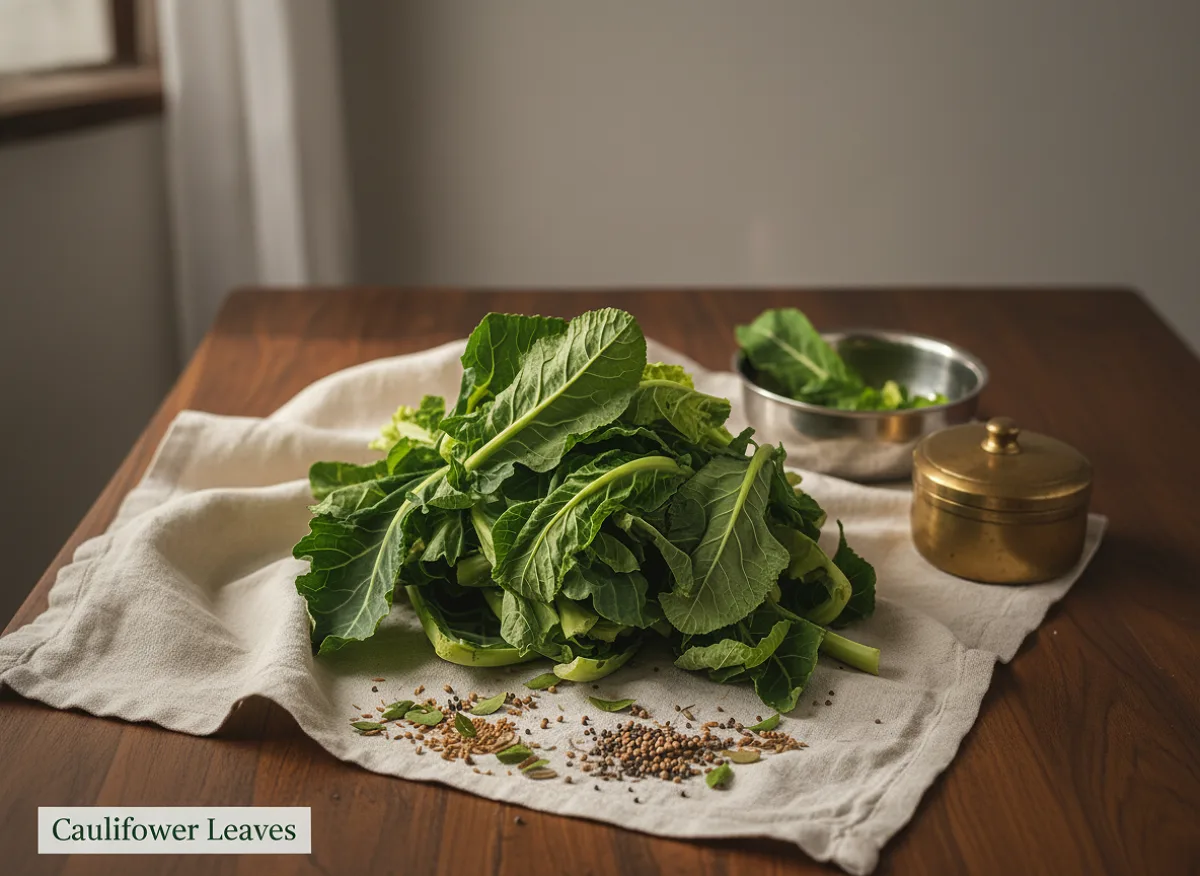
Cauliflower leaves (gobhee ke patte) are the tender green outer and inner leaves of the cauliflower plant, often discarded but highly nutritious. A humble green leafy vegetable common across Indian kitchens, rich in fibre, vitamins, and minerals (IFCT 2017, Ref #C017).
Nutrition per 100 g
Mean values ± IFCT published SD (edible portion).
More macros
Classification
About Cauliflower Leaves
What it is
Cauliflower leaves are the edible green foliage that wraps and grows around the cauliflower head. Often trimmed away and discarded at the market or in the kitchen, they are a nutrient-dense green leafy vegetable in their own right. Botanically part of the Brassica oleracea family, these leaves are tender when young and become tougher as the plant matures. Composition data is documented in IFCT 2017 under the green leafy vegetables category (Ref #C017).
Use in Indian Kitchen
Cauliflower leaves have quietly held a place in Indian home cooking, especially in North India and parts of the South, where nothing goes to waste. In many households, they are chopped and added to sabzi (dry vegetable curry), mixed into dal, or cooked as a simple greens dish with onion, garlic, and spices. In some regions, they are blanched and added to chutneys or ground into pastes for flavour and nutrition. Seasonal availability peaks when cauliflower is in season (winter months), making them a budget-friendly way to stretch a single vegetable purchase. There is a quiet nostalgia to using them - the kind of thrift and resourcefulness that grandmothers practised without fanfare.
Key Nutrients
Cauliflower leaves are a good source of dietary fibre, vitamin C, vitamin K, and folate. They also contain calcium, iron, and potassium, along with antioxidant compounds typical of cruciferous greens. Exact nutrient composition per 100 g is documented in IFCT 2017, Ref #C017.
Health Benefits (Evidence-based)
- May support bone health through their vitamin K and calcium content, which play roles in bone mineralisation and strength.
- Linked to digestive wellness due to high dietary fibre, which supports regular bowel function and gut microbiota.
- May help maintain healthy blood pressure and cardiovascular function, supported by potassium and antioxidant compounds.
- Vitamin C content may support immune function and collagen synthesis in the body.
- Traditionally used in Indian home remedies as a mild detoxifying green, though clinical evidence is limited.
Culinary Uses (Vegetarian)
- Chopped and cooked into dry sabzi with onion, tomato, and tempering of cumin and mustard seeds.
- Mixed into dal (moong, masoor, or chana dal) for added nutrition and mild flavour.
- Blanched, chopped, and stirred into curd-based raita or mixed vegetable salads.
- Ground into green chutneys or pastes for sambar, rasam, or as a side condiment.
- Sautéed with garlic, ginger, and green chilli as a simple side dish (subzi).
- Added to vegetable soups, khichdi, or mixed vegetable curries.
Caution
Cauliflower leaves, like other cruciferous greens, contain compounds that may interfere with thyroid function if consumed in very large quantities raw or undercooked, though normal cooking amounts in a balanced diet are safe. Those on blood-thinning medications should maintain consistent intake of vitamin K-rich foods and consult their healthcare provider. Always wash thoroughly before use to remove soil and any residues.
References
- Indian Council of Medical Research - National Institute of Nutrition. Indian Food Composition Tables (IFCT 2017). Reference #C017 - Green Leafy Vegetables category.
- National Institute of Nutrition, ICMR. Dietary Guidelines for Indians - A Manual. New Delhi: NIN Publications.
Health Benefits
- Supports Bone Health
- Supports Digestion
- Boosts Immunity
- Detox Support
Sourcing & Storage
Storage
Store cauliflower leaves in a breathable cloth bag or perforated plastic bag in the vegetable compartment of the refrigerator, away from ethylene-producing fruits like apples and tomatoes. Keep them dry - excess moisture encourages wilting and decay. In warm Indian climates, use the coldest part of your fridge and consume within 2-3 days for best quality. If you have a cool, dark pantry (below 15°C), they may last slightly longer, but refrigeration is preferred.
Shelf Life
When stored properly in the refrigerator, fresh cauliflower leaves will keep for 3-4 days. Once cooked, they will last 2-3 days in an airtight container in the fridge. For longer storage, blanch and freeze them in airtight bags or containers for up to 2-3 months; thaw in the fridge before cooking.
Check Before You Buy
Choose cauliflower leaves that are bright green, tender, and free of yellowing, brown spots, or slime. The stems should snap cleanly when bent, indicating freshness. Avoid leaves that are wilted, discoloured, or have a strong sulphurous smell (a sign of age or poor storage). If buying from a mandi or kirana store, ask for the tender inner leaves rather than the tough outer ones. Packed leaves should have no condensation inside the bag and should feel crisp to the touch. Reject any bundles with visible insect damage or mould.
In Ayurveda
Cauliflower leaves are an important part of the vegetable, often overlooked but highly nutritious. They are rich in vitamins A, C, and K, as well as essential minerals like calcium and iron. Incorporating cauliflower leaves into your diet can enhance overall health, providing dietary fiber and antioxidants that support digestion and immune function. In addition to their culinary uses, cauliflower leaves are known for their anti-inflammatory properties and can be used in poultices for soothing skin irritations. Additionally, a juice made from these cauliflower leaves is sometimes consumed for its detoxifying effects.