Cauliflower
Brassica oleracea · Also known as गोभी, gobhee
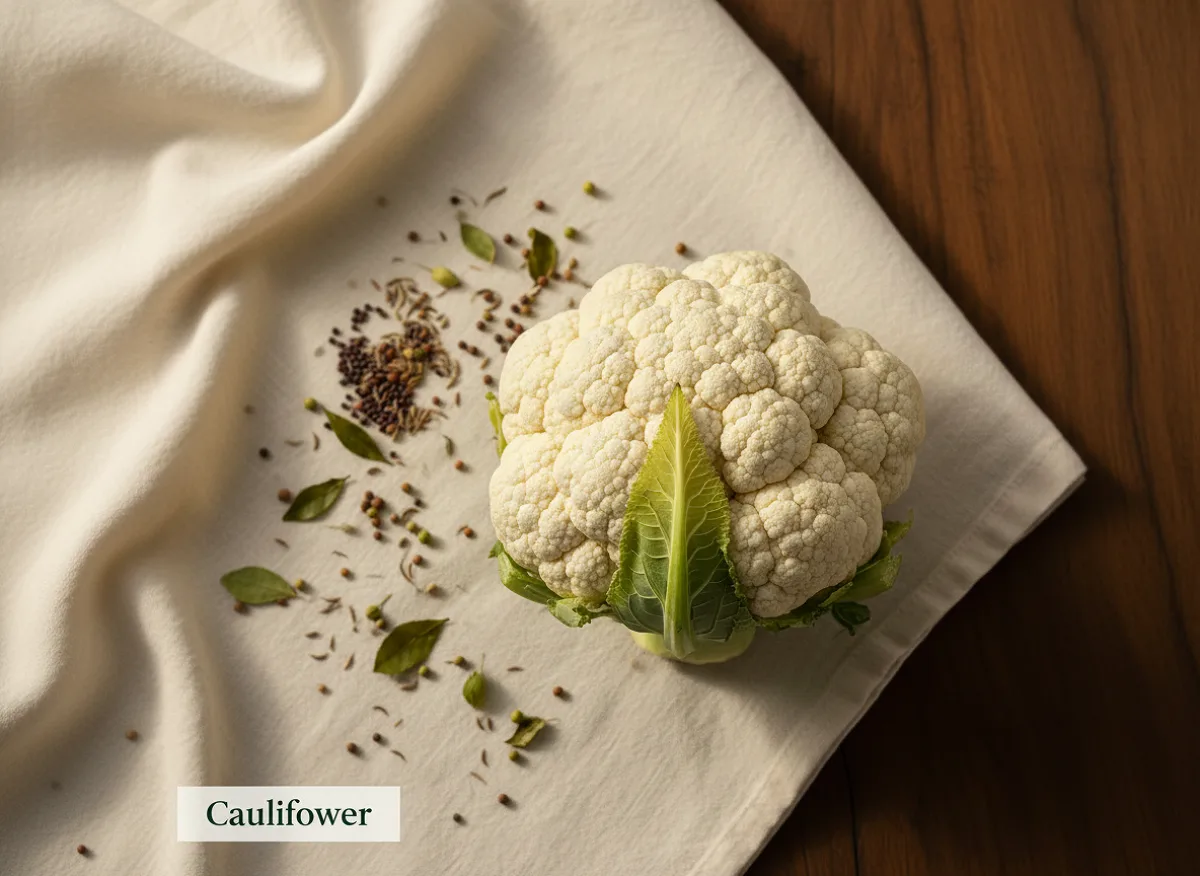
Cauliflower (गोभी, gobhee) is a cruciferous vegetable with a dense, creamy-white head made of tightly clustered florets. A staple across Indian kitchens, it is eaten raw, fried, curried, or steamed, and is valued for its mild flavour and versatility (IFCT 2017, Ref #D036).
Nutrition per 100 g
Mean values ± IFCT published SD (edible portion).
More macros
Classification
About Cauliflower
What it is
Cauliflower is a cruciferous vegetable belonging to the cabbage family, prized for its compact head of unopened flower buds. It has a mild, slightly sweet taste and a tender texture when cooked. Widely grown across India in winter months, it is a cool-season crop that thrives in temperate regions and is now available year-round in many markets (IFCT 2017, Ref #D036).
Use in Indian Kitchen
Cauliflower holds a cherished place in Indian home cooking, especially in North Indian and Punjabi kitchens where aloo gobi (potato and cauliflower curry) is a comfort-food classic. In the South, it appears in sambar, rasam, and dry vegetable fries. Bengali and Odia cuisines feature it in mustard-based curries and stir-fries. Winter markets overflow with fresh heads, and families often buy whole florets to fry as gobi 65 or steam for lunch boxes. Its neutral flavour makes it a canvas for bold spices - from cumin and coriander to ginger, garlic, and green chilli - and it pairs beautifully with ghee, mustard oil, and coconut. For many, a warm plate of crispy fried cauliflower with a squeeze of lemon is pure nostalgia.
Key Nutrients
Cauliflower is low in calories and rich in vitamin C, which supports immunity and collagen formation. It contains folate (important for cell division), potassium (for heart health), and dietary fibre (for digestive wellness). It also provides phytonutrients such as sulforaphane and indoles, compounds found in cruciferous vegetables. Exact nutrient composition per 100 g is documented in IFCT 2017, Ref #D036.
Health Benefits (Evidence-based)
- May support digestive health through dietary fibre and prebiotic compounds that nourish beneficial gut bacteria.
- Linked to antioxidant activity, helping the body manage oxidative stress.
- Contains compounds traditionally associated with liver and detoxification support in Ayurvedic and folk medicine.
- Low glycaemic index makes it suitable for balanced blood sugar management in everyday meals.
- Vitamin C content supports immune function and skin health.
- May contribute to bone health through vitamin K and minerals like potassium and magnesium.
Culinary Uses (Vegetarian)
- Aloo gobi - dry curry with potatoes, onions, and spices.
- Fried florets - gobi 65, pakora, or simple pan-fried with mustard seeds and curry leaves.
- Sambar and rasam - added as a vegetable component in South Indian lentil-based broths.
- Curries - cooked in tomato-based gravies, coconut milk, or mustard oil with ginger and garlic.
- Steamed or boiled - served with curd, pickle, or as a side with dal and rice.
- Stir-fries - tossed with soy sauce, ginger, and green chilli for a quick weeknight dish.
- Raw - sliced finely in salads or served with hummus or peanut chutney as a snack.
Caution
- Cruciferous vegetables contain goitrogens, compounds that may interfere with thyroid function if consumed in very large quantities raw; cooking inactivates most of these compounds.
- High fibre content may cause bloating or gas in sensitive individuals if eaten in excess; introduce gradually and chew well.
- Those on blood-thinning medications should maintain consistent intake of vitamin K-rich vegetables and consult their healthcare provider.
References
- Indian Council of Medical Research - National Institute of Nutrition (ICMR-NIN). Indian Food Composition Tables 2017. Reference #D036 (Other Vegetables - Cauliflower).
- National Institute of Nutrition, ICMR. Dietary Guidelines for Indians - A Manual. Hyderabad: NIN Publications.
Health Benefits
- Anti Inflammatory
- Supports Digestion
- Boosts Immunity
- Detox Support
- Weight Management Support
Sourcing & Storage
Storage
Store cauliflower in the refrigerator's vegetable compartment, ideally in a perforated plastic bag or paper bag to allow air circulation and prevent moisture buildup. Keep it away from ethylene-producing fruits like apples and bananas. In Indian kitchens during winter, a cool, well-ventilated corner of the kitchen or a cool shelf works well. Avoid direct sunlight and damp conditions, which encourage mould and yellowing.
Shelf Life
Fresh, whole cauliflower keeps for 5 to 7 days in the refrigerator when stored properly. Once cut into florets, use within 3 to 4 days. In a freezer (at -18°C or below), blanched florets last 8 to 12 months. Cooked cauliflower curry or fried florets should be consumed within 2 to 3 days when refrigerated in an airtight container.
Check Before You Buy
Choose cauliflower heads that are firm, compact, and creamy white or pale yellow with no brown spots, blemishes, or soft patches. The florets should be tightly clustered and feel heavy for their size. Avoid heads with yellowing, loose florets, or a musty smell, which indicate age or mould. Check that the stem is fresh and pale, not dark or woody. At the mandi or kirana shop, gently press the head - it should not yield easily. Avoid pre-cut florets that look dry or discoloured; whole heads are fresher and last longer. If buying packaged cauliflower, check the date and ensure the pack is cool and free of condensation.
In Ayurveda
In Indian Ayurveda, cauliflower is recognized for its cooling properties and nutritional benefits. It is considered beneficial for balancing **Kapha** dosha due to its lightness and detoxifying effects. Its high fiber content supports digestion and overall health.
In home remedies, cauliflower is often used to promote digestive health and may be included in preparations to reduce inflammation. Additionally, its antioxidant properties are believed to help in detoxification and support immune function, making it a valuable ingredient in both culinary and medicinal applications.