Cabbage - Violet
Brassica oleracea var. capitata f. rubra · Also known as Purple Cabbage, Red Cabbage, नीलम पत्तागोभी (nilam pattagobhi), बैंगनी गोभी (baingani gobhi)
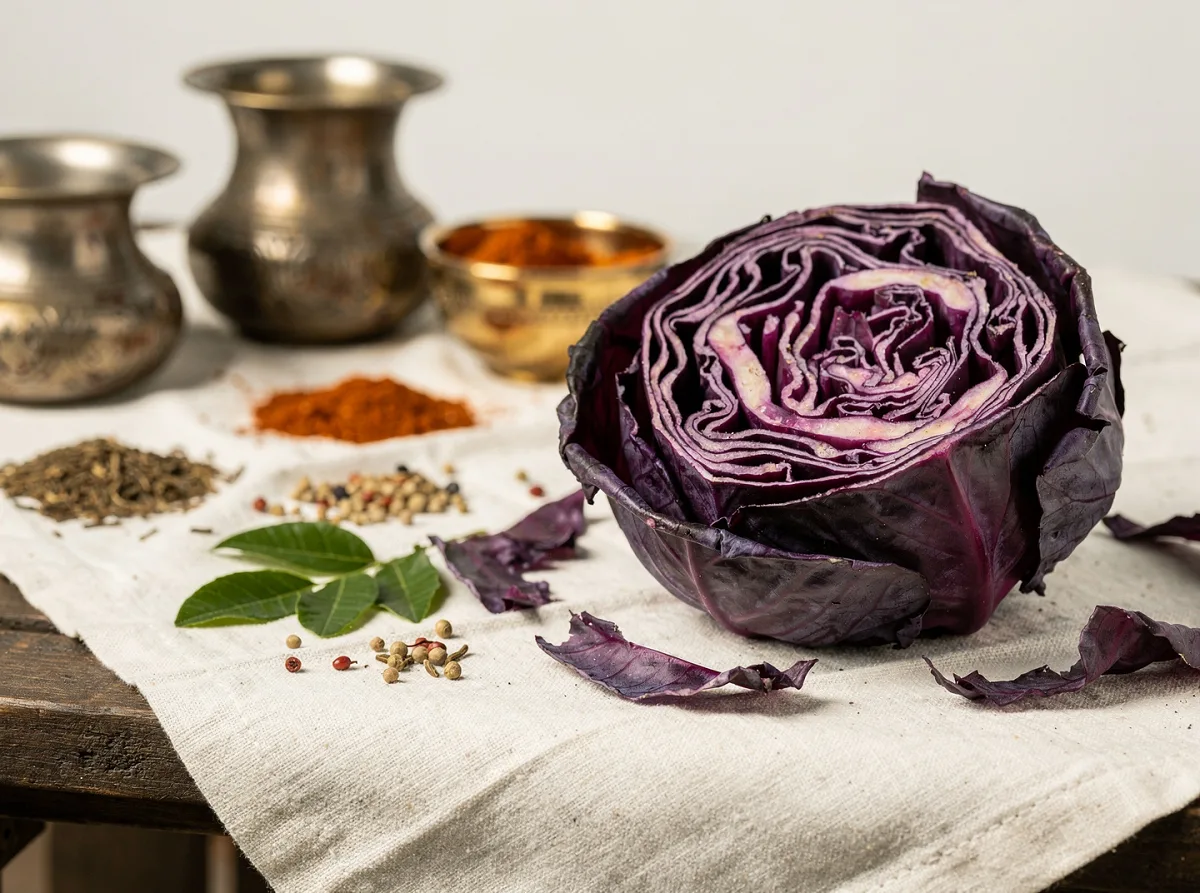
Violet or purple cabbage is a dense, round head of deep purple-red leaves with a crisp, slightly sweet flavour and tender texture when cooked. Fresh and raw, it brings colour and crunch to slaws, salads, and pickles across Indian kitchens. Lightly pan-fried with mustard seeds and...
Nutrition per 100 g
Edible portion values from the master catalog.
More macros
Classification
About Cabbage - Violet
What it is
Violet or purple cabbage (नीलम पत्तागोभी, nilam pattagobhi) is a firm, round head of tightly layered leaves in deep purple-red tones, often with a pale green or white core. The leaves are crisp and slightly sweet, with a tender bite when cooked. It is sold fresh year-round in most Indian markets and mandi, and is equally at home raw in slaws or gently cooked in curries and stir-fries. (IFCT 2017, Ref #C016)
Use in Indian Kitchen
Purple cabbage is a versatile vegetable in South and North Indian home cooking. Shredded finely, it makes a vibrant, crunchy slaw to serve alongside dosa, idli, or rice meals. Chopped and pan-fried with mustard seeds, curry leaves, and a pinch of turmeric, it becomes a simple, everyday sabzi. It is also added to sambhar and kootu for colour and mild sweetness, and features in quick pickles (achar) with turmeric, chilli, and salt. A practical tip: if the cabbage tastes slightly bitter or tough, blanch it briefly in salted water or toss it with a little salt and let it rest for 10 minutes before cooking to soften and mellow the flavour.
Key Nutrients
Purple cabbage is rich in vitamin C, fibre, and antioxidants, particularly anthocyanins (the pigment that gives it its deep colour). It also contains folate, potassium, and small amounts of calcium and iron. Exact nutrient composition is documented in IFCT 2017.
Health Benefits (Evidence-based)
- High in antioxidants, particularly anthocyanins, which may help protect cells from oxidative stress.
- Good source of vitamin C, linked to immune support and collagen formation.
- Contains fibre, which may support digestive health and regular bowel function.
- Traditionally used in Indian home cooking as a cooling, light vegetable suitable for most constitutions.
- Low in calories and fat, making it a practical choice for everyday family meals.
Culinary Uses (Vegetarian)
- Raw shredded slaw with lemon juice, salt, and a touch of jaggery or sugar.
- Pan-fried sabzi with mustard seeds, curry leaves, and turmeric.
- Added to sambhar, kootu, and vegetable curries for colour and mild sweetness.
- Quick pickles (achar) with turmeric, green chilli, and salt.
- Chopped into vegetable pulao or biryani.
- Steamed or boiled and mixed into curd rice or served as a side with dal and rice.
Caution
- People with thyroid conditions who consume large quantities of raw cabbage regularly should be aware that it contains goitrogens; cooking reduces this concern significantly.
- Those with sensitive digestion may find raw cabbage harder to digest; cooking it makes it gentler on the stomach.
- Always wash thoroughly under running water before use to remove any soil or residue.
References
- Indian Council of Medical Research - National Institute of Nutrition (ICMR-NIN). Indian Food Composition Tables (IFCT 2017). Reference #C016 - Green Leafy Vegetables (Cabbage, Purple).
- National Institute of Nutrition, ICMR. Dietary Guidelines for Indians - A Manual. New Delhi: NIN Publications.
Health Benefits
- Antioxidant
- Anti Inflammatory
- Supports Digestion
- Boosts Immunity
- Supports Heart Health
Sourcing & Storage
Storage
Store purple cabbage in the vegetable crisper drawer of the refrigerator, wrapped loosely in a damp cloth or paper towel to retain moisture without trapping excess water. Keep it away from direct light and strong-smelling foods. In warm Indian climates, store in the coldest part of the fridge to slow wilting. Do not wash before storage; wash only when you are ready to use it.
Shelf Life
A whole head of purple cabbage will keep for 3 to 4 weeks in the refrigerator when stored properly. Once cut, wrap the remaining portion tightly in cling film or place it in an airtight container; it will stay fresh for 1 to 2 weeks. Do not freeze raw cabbage, as it becomes mushy when thawed; however, blanched and cooled cabbage can be frozen in airtight containers for up to 3 months.
Check Before You Buy
Choose a head that feels heavy and firm for its size, with no soft spots, bruises, or yellowing leaves. The outer leaves should be vibrant purple-red and crisp; peel away any damaged outer layers to check the colour underneath. Avoid heads that feel light or hollow, or show signs of mould or rot at the base. At the mandi or kirana, tap the cabbage gently - a firm, dense head will sound solid. Packed cabbage should have a clear date and show no condensation inside the bag, which indicates moisture and early spoilage.
In Ayurveda
In Ayurvedic tradition, cabbage is considered a vegetable that helps balance Vata and Kapha doshas. The deep purple colour of this variety is attributed to anthocyanins, which classical texts associate with cooling and anti-inflammatory properties. Purple cabbage is traditionally recommended to be lightly cooked with warming spices (such as cumin, ginger, or turmeric) to aid digestion and reduce the risk of gas formation that can occur when eaten raw in excess.