Cabbage, collard greens
Brassica oleracea var. viridis · Also known as Patta gobhi, band gobhi, cabbage leaves, collard, kale-like greens, spring greens
Cabbage and collard greens are sturdy, leafy cruciferous vegetables with a mild, slightly sweet flavour when cooked. Cabbage forms tight, layered heads in green or purple; collards are loose, flat, dark-green leaves with a tender bite. Both are staples in Indian home cooking - sh...
Nutrition per 100 g
Edible portion values from the master catalog.
More macros
Classification
About Cabbage, collard greens
What it is
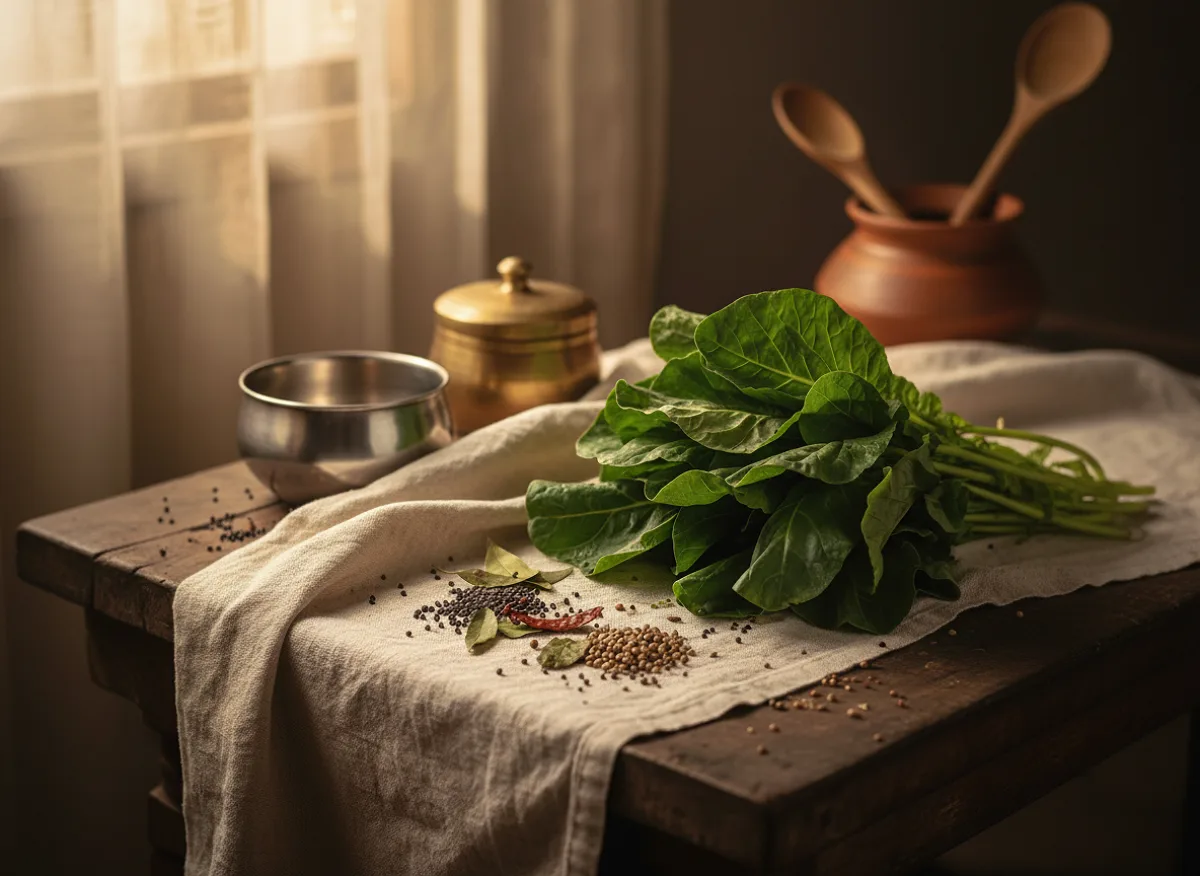
Cabbage (पत्ता गोभी, patta gobhi) and collard greens are leafy cruciferous vegetables belonging to the Brassica family. Cabbage forms dense, compact heads with tightly wrapped leaves in shades of pale green, dark green, or purple; collards are looser, broader, dark-green leaves with prominent veins and a tender texture. Both are mild-flavoured when cooked, turning soft and slightly sweet. Fresh cabbage and collards are available year-round in Indian markets, though they thrive in cooler seasons. (IFCT 2017, Ref #C014)
Use in Indian Kitchen
Cabbage is a workhorse vegetable in Indian home cooking. Shredded cabbage is pan-fried with mustard seeds, curry leaves, and green chilli for a quick sabzi; stuffed into parathas with spiced potato and onion; or simmered into sambar and vegetable kootu. In South Indian kitchens, cabbage thoran (dry stir-fry with grated coconut) is a festival favourite. Collard greens are less common but equally versatile - cooked as a leafy curry with onion, tomato, and tempering, or added to dal and rice dishes for extra greens. A pinch of turmeric and a squeeze of lemon or tamarind brightens both, cutting any sulphurous edge and aiding digestion.
Key Nutrients
Cabbage and collard greens are rich in vitamin C, vitamin K, and dietary fibre. They also contain folate, potassium, and small amounts of calcium and iron. Collards are particularly high in calcium and vitamin K, supporting bone health. Both are very low in calories and fat, making them ideal for everyday family meals.
Health Benefits (Evidence-based)
- High in vitamin C, supporting immune function and collagen formation.
- Rich in vitamin K, linked to bone mineralisation and blood clotting regulation.
- Good source of dietary fibre, which may support digestive health and satiety.
- Contain sulphur compounds (glucosinolates) that are being studied for potential antioxidant and anti-inflammatory effects.
- Low in calories and high in water content, making them suitable for weight-conscious meals.
- Folate content may support red blood cell formation and fetal development during pregnancy.
Culinary Uses (Vegetarian)
- Shredded cabbage sabzi - pan-fried with tempering and spices.
- Cabbage paratha - stuffed flatbread with spiced cabbage and potato.
- Sambar and vegetable kootu - added as a key vegetable.
- Cabbage thoran - South Indian dry stir-fry with grated coconut and tempering.
- Collard greens curry - simmered with onion, tomato, and dal.
- Pickles and fermented preparations - sliced cabbage with mustard seeds and turmeric.
- Soups and broths - added to vegetable khichdi or light broths.
Caution
- Those with thyroid conditions should not consume raw cabbage or collards in very large quantities, as they contain goitrogens; cooking inactivates most of these compounds.
- People on blood-thinning medications (e.g. warfarin) should maintain consistent intake of vitamin K-rich greens and consult their doctor.
- Cabbage may cause bloating or gas in sensitive individuals; cooking thoroughly and adding digestive spices (ginger, cumin, asafoetida) can help.
References
- Indian Council of Medical Research - National Institute of Nutrition (ICMR-NIN). Indian Food Composition Tables (IFCT 2017). Hyderabad: NIN; 2017. Reference #C014 (Green Leafy Vegetables - Cabbage).
- Kapoor, D., Bhardwaj, S., Lal, H., Kapoor, A. K., & Dhawan, K. (2013). Effects of high-dose supplementation of vitamin E in coronary artery disease and diabetes mellitus. Therapeutic Advances in Cardiovascular Disease, 7(6), 287-299. [General antioxidant and cardiovascular support from cruciferous vegetables.]
Sourcing & Storage
Storage
Store cabbage and collard greens in the refrigerator's vegetable drawer or a perforated plastic bag to maintain humidity while allowing air circulation. Keep them away from ethylene-producing fruits (apples, bananas) which can speed wilting. Collard greens are more delicate than cabbage; wrap them loosely in damp kitchen paper if storing for more than a few days. In warm Indian climates, use the coldest part of your fridge and consume within 3-5 days for best quality.
Shelf Life
Fresh cabbage, when stored properly in the refrigerator, keeps for 1-2 weeks. Collard greens are more perishable and are best used within 3-5 days of purchase. Once cooked, both vegetables should be refrigerated in an airtight container and consumed within 2-3 days. Freezing is not recommended for raw cabbage or collards as it affects texture, though cooked preparations (sabzi, curry) can be frozen for up to 1 month.
Check Before You Buy
Choose cabbage heads that feel firm and heavy for their size, with no soft spots, bruising, or yellowing outer leaves. The leaves should be tightly wrapped and glossy. Avoid heads with a strong sulphurous smell (a sign of age or poor storage). For collard greens, select bunches with crisp, dark-green leaves free of yellowing, wilting, or insect damage. Avoid leaves that feel slimy or have a musty odour. In Indian markets, buy from vendors with good turnover; packaged greens should have a clear date and no condensation inside the bag.
In Ayurveda
In classical Ayurvedic texts, leafy greens including cabbage-like vegetables are recognized for their light, cooling (sheeta) qualities and are traditionally used to support digestive health. Cabbage is considered to have a slightly astringent (kashaya) taste and is believed to help balance excess heat in the body when cooked with warming spices such as ginger, turmeric, and asafoetida (hing).
Ayurvedic practitioners often recommend cooking cabbage with digestive spices and ghee to enhance its bioavailability and reduce any potential gas-forming properties. It is traditionally paired with cumin seeds, fenugreek, and mustard seeds in tempering to aid assimilation.