Cabbage
Brassica oleracea var. capitata f. alba · Also known as patta gobhee, band gobhee, cabbage (English), Brassica oleracea var. capitata f. alba
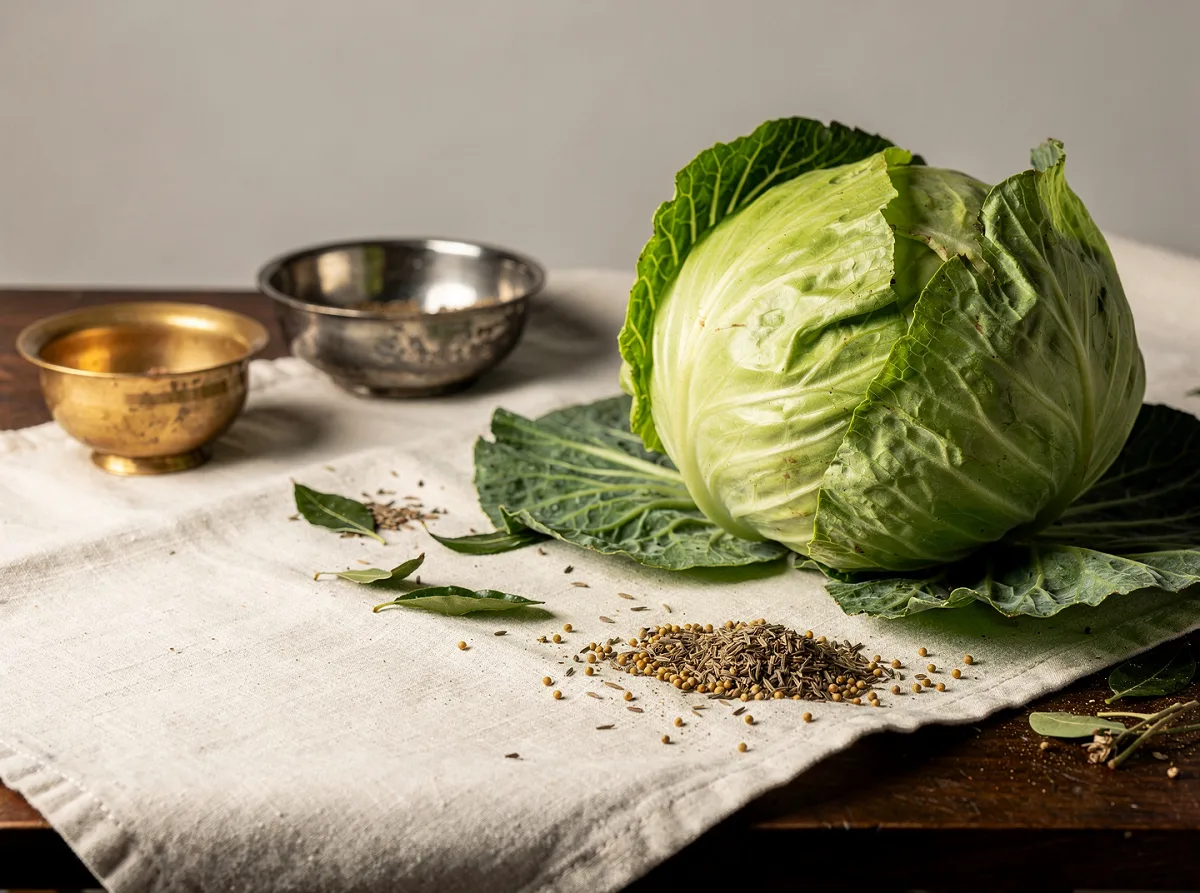
Cabbage (पत्ता गोभी, patta gobhee) is a firm, round head of tightly layered pale green or white leaves with a mild, slightly sweet flavour. Fresh and versatile, it is a staple in Indian home cooking - sliced thin for coleslaw, shredded into dal-based curries, or pan-fried with mu...
Nutrition per 100 g
Mean values ± IFCT published SD (edible portion).
More macros
Classification
About Cabbage
What it is
Cabbage (पत्ता गोभी, patta gobhee) is a firm, round head of tightly layered pale green or white leaves with a mild, slightly sweet flavour and crisp texture. Fresh and versatile, it is a staple in Indian home cooking - sliced thin for coleslaw, shredded into dal-based curries, or pan-fried with mustard seeds and turmeric. (IFCT 2017, Ref #C015)
Use in Indian Kitchen
Cabbage appears across Indian regional kitchens in many forms. In the South, it is shredded and cooked into sambar or mixed into kootu with lentils and coconut. In the North, thin slices are tossed into sabzi with onions, ginger, and green chilli, or stuffed into parathas. Across India, it is also pickled, fermented into achaar, or simply pan-fried as a side dish with mustard seeds, curry leaves, and a pinch of turmeric. A practical tip: salt the shreds lightly and let them rest a few minutes before cooking to soften them gently and reduce any raw bite.
Key Nutrients
Cabbage is a good source of vitamin C, dietary fibre, and folate. It also contains vitamin K, potassium, and small amounts of calcium and iron. (IFCT 2017, Ref #C015)
Health Benefits (Evidence-based)
- May support digestive health through its fibre content and traditional use in fermented preparations.
- Linked to immune support via vitamin C and antioxidant compounds.
- May help maintain healthy blood pressure due to potassium content.
- Traditionally used in Indian home remedies for general wellness and vitality.
- Low in calories, making it a practical choice for everyday family meals.
Culinary Uses (Vegetarian)
- Shredded into sambar, kootu, or mixed vegetable curries.
- Pan-fried as a simple sabzi with mustard seeds, curry leaves, and turmeric.
- Stuffed into parathas with spiced potato or paneer.
- Pickled or fermented into achaar for long-term storage.
- Sliced thin for fresh coleslaw or salads with lemon juice and salt.
- Steamed or boiled and mixed into dal for added texture and nutrition.
Caution
- Those with thyroid conditions should consume in moderation, as raw cabbage contains compounds that may interfere with iodine absorption when eaten in very large quantities.
- Cooking cabbage thoroughly reduces any potential digestive discomfort in sensitive individuals.
References
- Indian Council of Medical Research - National Institute of Nutrition (ICMR-NIN). Indian Food Composition Tables (IFCT 2017). Reference #C015 - Green Leafy Vegetables category.
- Gopalan, C., Rama Sastri, B. V., & Balasubramanian, S. C. (2016). Nutritive Value of Indian Foods. National Institute of Nutrition, ICMR, Hyderabad.
Health Benefits
- Antioxidant
- Supports Digestion
- Boosts Immunity
- Supports Heart Health
- Detox Support
Sourcing & Storage
Storage
Store whole cabbage heads in a cool, dark place (ideally 4-10°C) in a ventilated container or paper bag to allow air circulation and prevent moisture buildup. In warm Indian climates, keep in the vegetable drawer of a refrigerator if available. Once cut, wrap the remaining head tightly in a damp cloth or store in an airtight container in the fridge to slow browning and wilting.
Shelf Life
A whole, firm cabbage head keeps for 2-4 weeks when stored in a cool place or refrigerator. Once cut and stored in the fridge, use within 7-10 days for best quality and crispness. Shredded cabbage should be used within 3-5 days.
Check Before You Buy
Choose heads that feel firm and heavy for their size, with no soft spots, bruises, or yellowing leaves. The outer leaves should be crisp and tightly wrapped; avoid any with a strong sulphurous smell or visible insect damage. When buying from a mandi or kirana, gently squeeze the head - it should not yield to pressure. Packed cabbage in supermarkets should show no condensation or slime inside the bag.
In Ayurveda
In classical Ayurvedic texts, cabbage (पत्ता गोभी) is not extensively documented as a primary ingredient. However, it is considered a light, cooling vegetable with mild astringent qualities. Its high water content and gentle nature make it suitable for balancing Pitta dosha, particularly in its raw or lightly cooked form. Traditional home practice often pairs it with warming spices (turmeric, cumin, ginger) to aid digestion and reduce any potential gas-forming tendency.