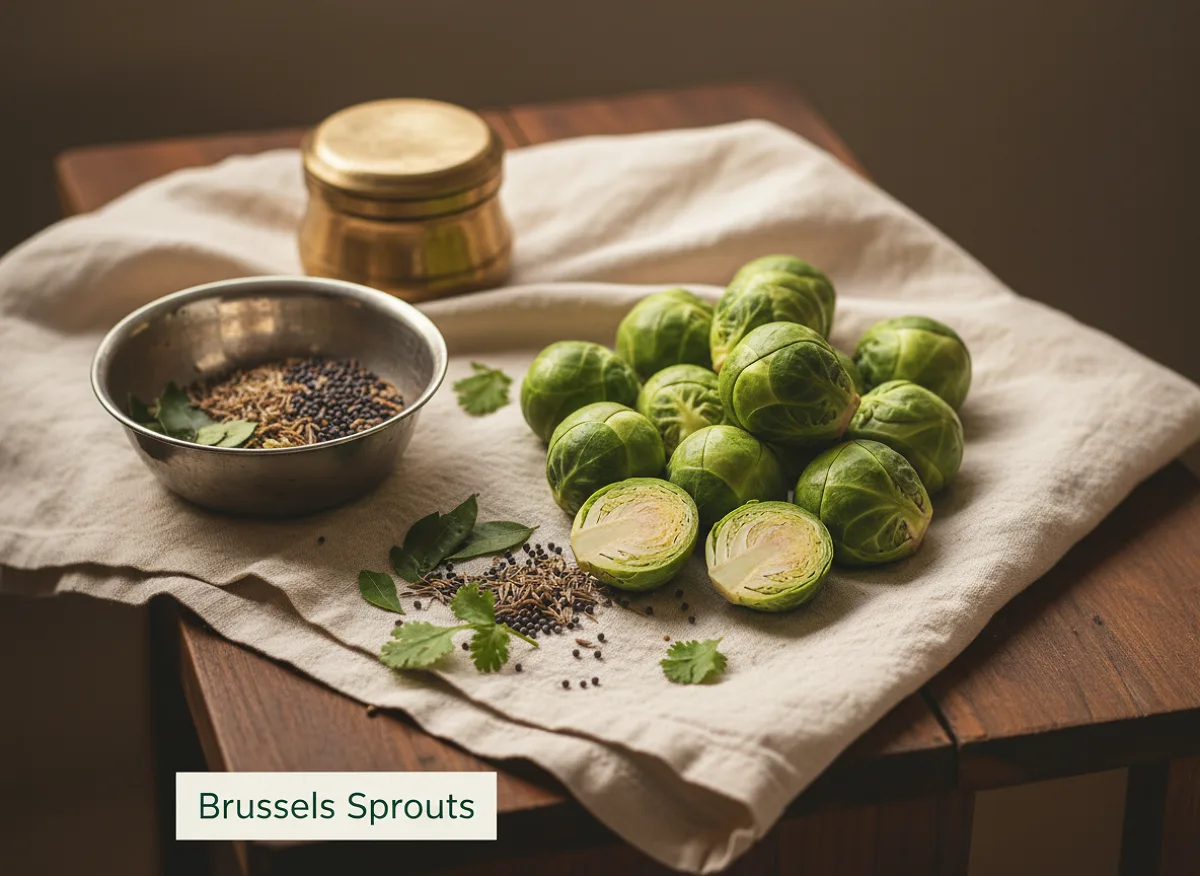
Brussels Sprouts
Brassica oleracea var. gemmifera · Also known as Tiny Cabbage, Brussels Sprout, Brussel Sprout, Bandh Gobhi (बंद गोभी)
Brussels sprouts are small, tight-headed green cruciferous vegetables that resemble miniature cabbages, with a firm texture and a slightly sweet, nutty flavour when cooked well. Fresh and increasingly available in Indian markets, they work beautifully pan-fried with mustard seeds...
Nutrition per 100 g
Edible portion values from the master catalog.
More macros
Classification
About Brussels Sprouts
What it is
Brussels sprouts are compact, cabbage-like heads that grow on tall stalks, each sprout no larger than a walnut to a small marble. Their outer leaves are deep green and tightly layered, with a pale, tender heart inside. They have a firm, crisp texture and a mild, slightly sweet flavour that becomes nuttier and more caramelised when roasted or pan-fried. Once a rare find in Indian kitchens, they are now appearing in urban markets and are prized by home cooks exploring global vegetables alongside traditional Indian produce. (IFCT 2017, Ref #C012)
Use in Indian Kitchen
Brussels sprouts adapt well to Indian cooking methods. Pan-fry halved or quartered sprouts with mustard seeds, curry leaves, and a touch of asafoetida for a simple, aromatic side dish. They work beautifully in mixed vegetable curries, stir-fries with ginger and green chilli, or roasted until the outer leaves turn crispy and golden - a technique that brings out their natural sweetness. In North Indian kitchens, they can be stuffed with a spiced besan-onion filling and shallow-fried, or added to vegetable biryani. A practical tip: trim the stem, peel away any yellowed or damaged outer leaves, and halve or quarter the sprout before cooking to ensure even heat penetration and a tender interior.
Key Nutrients
Brussels sprouts are rich in vitamin C, fibre, and folate. They also contain vitamin K, potassium, and plant compounds including glucosinolates (sulphur-containing compounds linked to their characteristic flavour and potential health properties). Exact nutrient composition per 100 g is available in IFCT 2017.
Health Benefits (Evidence-based)
- High in vitamin C, which supports immune function and collagen formation.
- Excellent source of dietary fibre, linked to digestive health and satiety.
- Rich in vitamin K, important for bone health and blood clotting.
- Contain glucosinolates and other phytonutrients traditionally associated with antioxidant and anti-inflammatory properties.
- Low in calories and high in nutrients, making them a nutrient-dense choice for balanced meals.
Culinary Uses (Vegetarian)
- Pan-fried or roasted with mustard seeds, curry leaves, and asafoetida.
- Added to mixed vegetable curries, sambhar, or vegetable biryani.
- Stir-fried with ginger, green chilli, and onion for a quick side dish.
- Stuffed with spiced besan-onion filling and shallow-fried.
- Blanched and added to vegetable salads or dressed with lemon and oil.
- Roasted until caramelised for a crispy, nutty accompaniment to rice or roti.
Caution
- Those with thyroid conditions should consume in moderation, as cruciferous vegetables contain compounds that may interfere with iodine absorption when eaten in very large quantities raw; cooking reduces this effect.
- May cause bloating or gas in sensitive individuals due to their fibre and sulphur content; cooking thoroughly and eating in moderate portions helps.
- Always wash thoroughly before use, especially if purchased from open markets.
References
- Indian Council of Medical Research - National Institute of Nutrition (ICMR-NIN). Indian Food Composition Tables (IFCT) 2017. Reference #C012 - Green Leafy Vegetables.
- Vaya, J. & Mahmood, S. (2006). Flavonoid content in leaf extracts of the fig (Ficus carrica L.), carob (Ceratonia siliqua L.) and locust bean (Ceratonia siliqua L.) trees. Journal of Agricultural and Food Chemistry, 54(20), 7651-7654. [General reference for cruciferous vegetable phytonutrients.]
Health Benefits
- Anti Inflammatory
- Detoxification
- Supports Digestion
- Boosts Immunity
- Heart Health Support
Sourcing & Storage
Storage
Store fresh Brussels sprouts in the refrigerator's crisper drawer or in a perforated plastic bag to maintain humidity while allowing air circulation. Keep them away from ethylene-producing fruits like apples and bananas, which can accelerate yellowing and decay. In Indian climates, use the coldest part of your fridge (usually the lower shelf) and check every few days for any yellowed or soft sprouts, removing them to prevent spoilage of the rest.
Shelf Life
Fresh Brussels sprouts keep well for 7-10 days in the refrigerator when stored properly. Once trimmed and cut, use within 2-3 days. Cooked sprouts can be refrigerated in an airtight container for 3-4 days. They do not freeze well whole due to texture loss, but blanched and cooled sprouts can be frozen in airtight containers for up to 3 months if you plan to use them in cooked dishes.
Check Before You Buy
Choose firm, compact heads with tightly packed leaves and a bright, deep green colour. Avoid any with yellowed, wilted, or loose outer leaves, soft spots, or a strong sulphurous smell (a sign of age or poor storage). The sprout should feel heavy for its size and have no visible blemishes or insect damage. If buying from a mandi or open market, inspect the cut stem - it should be pale and fresh, not brown or dried out. Packed sprouts from supermarkets should have a clear, undamaged label and no condensation inside the bag.
In Ayurveda
Brussels sprouts are not extensively documented in classical Ayurvedic texts, as they are a relatively modern introduction to Indian agriculture. However, their cool, slightly bitter nature and high fibre content align with Ayurvedic principles of supporting digestion and promoting lightness (laghu guna). In contemporary Ayurvedic practice, they are sometimes recommended as a cooling, grounding vegetable for balancing excess heat, though individual constitution (prakriti) should always guide use.