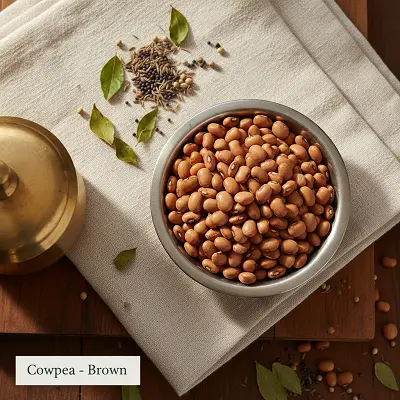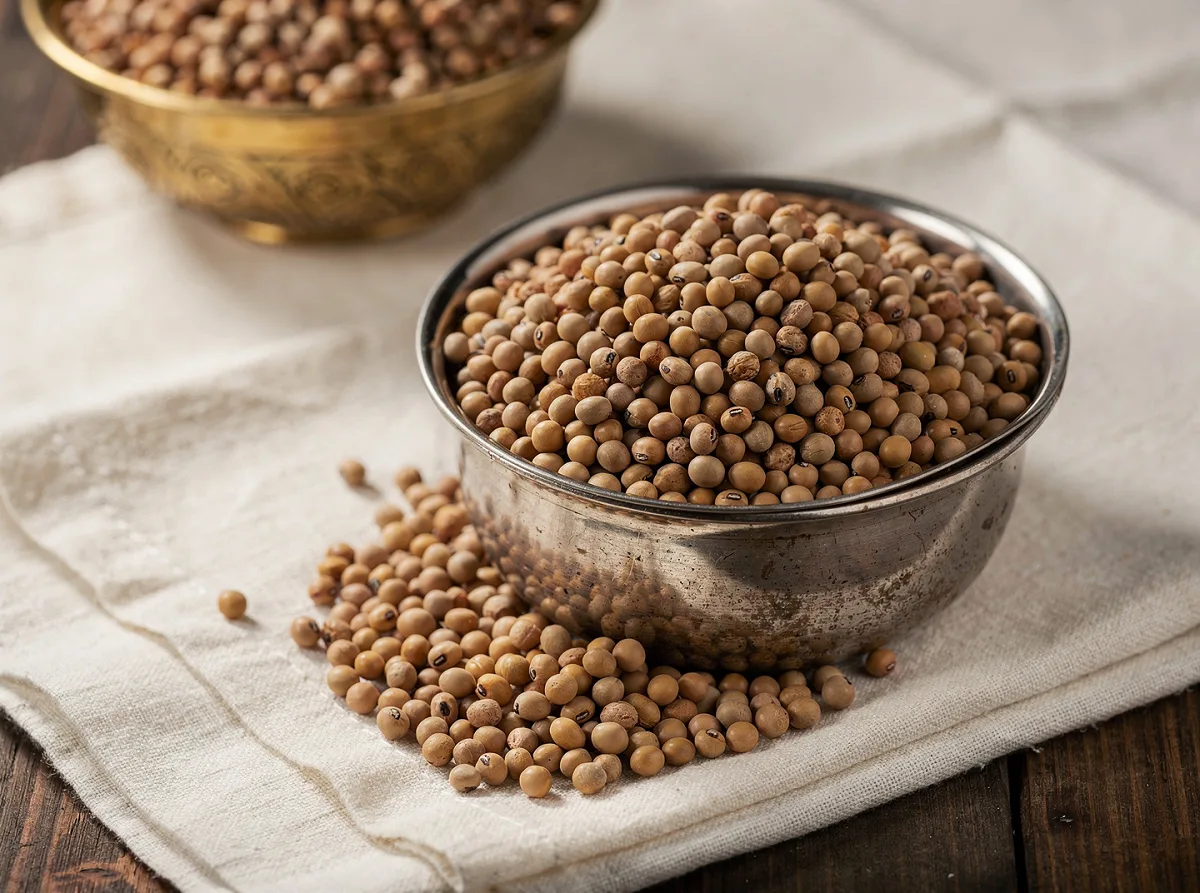
Brown soya bean
Glycine max · Also known as Soya bean, Garikalai, Soybean, Bhatmas, Muth, Toh rymbai, Nunghawai, Soya bean dal
Brown soya bean (सोयाबीन, soyabean) is a protein-rich legume with a firm, nutty flavour and earthy undertone. Whole dried beans are commonly sprouted, boiled into curries, or ground into flour for rotis and snacks. A staple in Indian vegetarian kitchens for dal preparations, samb...
Nutrition per 100 g
Mean values ± IFCT published SD (edible portion).
More macros
Classification
About Brown soya bean
What it is
Brown soya bean (सोयाबीन, soyabean) is a legume with small, round, brown pods containing cream-coloured seeds. The whole dried bean is firm and dense, with a mild nutty and slightly earthy taste. Widely used in Indian kitchens as a dried pulse, sprouted grain, or ground flour. (IFCT 2017, Ref #B024)
Use in Indian Kitchen
Brown soya beans are boiled into thick, protein-rich dals and curries, often tempered with mustard, cumin, and curry leaves. In South India, they feature in sambhar and kootu alongside vegetables and coconut. North Indian home cooks sprout the beans for salads and add them to mixed-vegetable curries. Ground soya flour is mixed with wheat atta for rotis, parathas, and besan-style snacks. A practical tip: soak overnight and pressure-cook for 20-25 minutes to soften; adding a pinch of baking soda speeds cooking and aids digestion.
Key Nutrients
Brown soya beans are rich in plant-based protein, dietary fibre, iron, calcium, and B vitamins. They also contain isoflavones and polyphenols. Exact nutrient composition is documented in IFCT 2017, Ref #B024.
Health Benefits (Evidence-based)
- High plant protein content supports muscle maintenance and repair in vegetarian diets.
- Dietary fibre may support digestive health and stable blood sugar levels.
- Iron and calcium content contributes to bone and blood health, particularly valuable for vegetarians.
- Isoflavones are traditionally linked to hormonal balance and may support bone density in postmenopausal years.
- May help reduce cholesterol levels when included regularly in a balanced diet.
- Sprouted soya beans have enhanced bioavailability of nutrients and reduced anti-nutritional factors.
Culinary Uses (Vegetarian)
- Whole boiled beans in sambhar, rasam, and mixed vegetable curries.
- Sprouted beans in salads, stir-fries, and light lunch bowls.
- Ground soya flour blended with wheat flour for rotis, parathas, and pooris.
- Soya dal (split beans) in everyday dal preparations and khichdi.
- Roasted and salted beans as a crunchy snack.
- Soya chunks (textured vegetable protein) in dry curries and biryani.
Caution
- Contains anti-nutritional factors (phytates, trypsin inhibitors) that are reduced by soaking, sprouting, and cooking; always cook thoroughly.
- May cause bloating or gas in sensitive individuals; start with small portions and ensure proper cooking.
- Persons with soya allergy or thyroid conditions should consult a healthcare provider before regular consumption.
- Soya is a common allergen; check labels on packaged soya products for cross-contamination warnings.
References
- Indian Council of Medical Research - National Institute of Nutrition (ICMR-NIN). Indian Food Composition Tables (IFCT 2017). Reference #B024 - Grain Legumes category.
- Messina, M. (2016). Soy and Health Update: Evaluation of the Clinical and Epidemiologic Literature. Nutrients, 8(12), 754. A comprehensive review of soya bean nutritional and health research.
Sourcing & Storage
Storage
Store dried brown soya beans in an airtight container in a cool, dry place away from direct sunlight and moisture. In humid Indian climates, keep in a sealed glass jar or food-grade plastic container with a tight lid. Refrigeration is not necessary for dried beans, but storing in a cool pantry (below 25°C) extends shelf life. Keep away from strong-smelling foods, as dried beans absorb odours easily.
Shelf Life
Properly stored dried brown soya beans last 8-12 months in a cool, dry pantry. Once opened, transfer to an airtight container to maintain freshness for up to 6 months. Sprouted beans should be refrigerated in a covered container and used within 3-4 days. Cooked soya bean curry keeps refrigerated for 3-4 days and freezes well for up to 3 months.
Check Before You Buy
When buying dried brown soya beans from a mandi or kirana store, look for uniform brown colour without discolouration, cracks, or shrivelling. Beans should feel hard and dense; avoid any with visible insect holes or mould. Check the packaging date on pre-packed beans and ensure the seal is intact. Smell the beans lightly - they should have a mild, clean legume aroma with no musty or off odours, which indicate age or moisture damage. Avoid beans that rattle loosely in the packet, as this suggests moisture loss or old stock.
In Ayurveda
In classical Ayurvedic texts, soya bean (सोयाबीन) is not extensively documented as a traditional ingredient, as it is a relatively modern introduction to Indian agriculture and cuisine. However, in contemporary Ayurvedic practice, soya bean is often classified as having a warming (ushna) virya and is considered to have a sweet (madhura) rasa. It is believed to support muscle tissue (mamsa dhatu) and may help balance vata when prepared with warming spices and ghee. Some Ayurvedic practitioners recommend it for those seeking plant-based protein alternatives, though it is advised to consume it in moderation and always fully cooked to aid digestion.