Brinjal
Solanum melongena · Also known as baingan, eggplant, aubergine, बैंगन
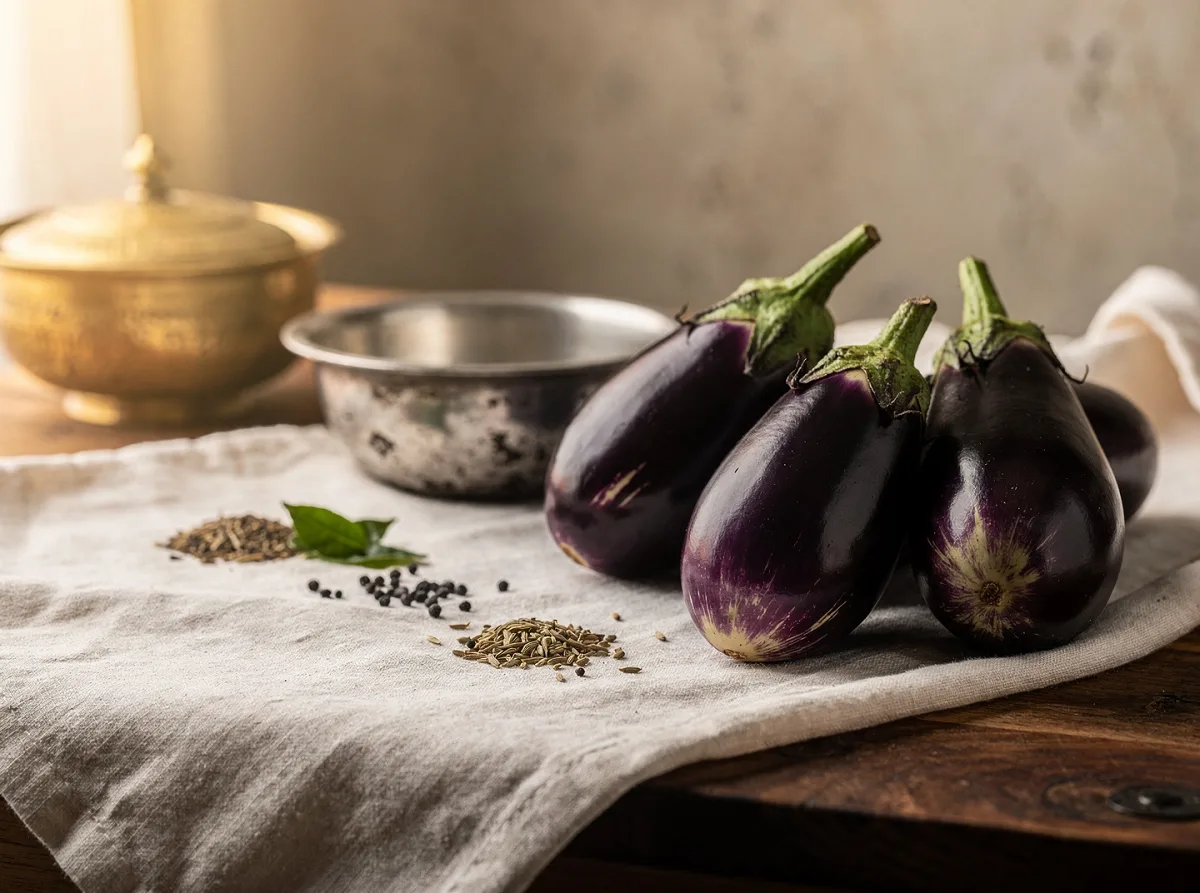
Brinjal (बैंगन, baingan) is a glossy, deep purple vegetable with tender flesh and a mild, slightly earthy taste when cooked. Fresh brinjals are firm and smooth-skinned, ranging from small round varieties to long slender ones depending on region. A staple across Indian kitchens, i...
Nutrition per 100 g
Mean values ± IFCT published SD (edible portion).
More macros
Classification
About Brinjal
What it is
Brinjal (बैंगन, baingan) is a glossy, deep purple vegetable with tender, spongy flesh and a mild, slightly earthy taste when cooked. The skin is smooth and thin, and the flesh turns creamy when fried or roasted. Brinjals come in many shapes - long and slender in the South, round and compact in the North - and are used fresh across Indian home kitchens in curries, stir-fries, and pickles. (IFCT 2017, Ref #D031)
Use in Indian Kitchen
Brinjal is beloved in regional vegetarian cooking. In South India, it features in sambar, puli kuzhambu, and thoran; in the North, it is stuffed with spiced besan and onion (bharwan baingan) or pan-fried into crispy rounds. Across regions, it is pickled, curried with tomato and onion, or roasted whole over flame to soften the skin before mashing into a smoky bharta. A practical tip: salt and turmeric the cut pieces 15 minutes before frying to draw out moisture and mellow any bitterness, then pat dry for a crispier finish.
Key Nutrients
Brinjal is low in calories and provides dietary fibre, potassium, and small amounts of vitamin C and B vitamins. It also contains phenolic compounds and antioxidants. Exact nutrient composition is documented in IFCT 2017.
Health Benefits (Evidence-based)
- May support heart health through its potassium content and fibre, which help maintain healthy blood pressure.
- Low in calories and high in fibre, making it useful for weight management and digestive regularity.
- Contains antioxidants and phenolic compounds linked to reducing inflammation and oxidative stress in the body.
- Traditionally used in Ayurvedic and home remedies to support digestion and reduce excess heat in the body.
- May help regulate blood sugar levels when prepared without excess oil, as part of a balanced meal.
Culinary Uses (Vegetarian)
- Fried rounds or slices in oil or ghee, served as a side dish or snack.
- Stuffed with spiced besan, onion, and ginger (bharwan baingan).
- Curried with tomato, onion, and tempering of mustard seeds and curry leaves.
- Roasted whole over flame, then mashed into a smoky bharta with onion and coriander.
- Added to sambar, puli kuzhambu, and vegetable kootu in South Indian cooking.
- Pickled with turmeric, chilli, and mustard seeds for long-term storage.
- Grilled or baked as a lighter preparation.
Caution
- Brinjal belongs to the nightshade family; some individuals with sensitivity to nightshades may experience mild digestive discomfort.
- Solanine, a naturally occurring alkaloid in brinjal skin, is present in very small amounts and is not a concern in normal culinary use.
- Those with joint pain or arthritis linked to nightshade sensitivity may wish to limit intake, though evidence is limited.
References
- Indian Council of Medical Research - National Institute of Nutrition (ICMR-NIN). Indian Food Composition Tables (IFCT 2017). Reference #D031 - Other Vegetables category.
- Raatz, S. K., Idso, L., Johnson, L. K., Jackson, M. I., & Combs, G. F. (2016). Vegetables have important roles in human nutrition and health. Advances in Nutrition, 7(3), 622S-629S.
Health Benefits
- Antioxidant
- Supports Digestion
- Weight Management Support
- Heart Health Support
- Improves Skin Health
Sourcing & Storage
Storage
Store fresh brinjals in a cool, dry place or in the vegetable drawer of the refrigerator at 7-10°C. Keep them in a paper or cloth bag rather than sealed plastic to allow air circulation and prevent moisture buildup. Avoid storing near ethylene-producing fruits like bananas or tomatoes, as brinjals are sensitive to ethylene gas and will soften and brown quickly. In warm, humid climates, refrigeration is essential to extend shelf life.
Shelf Life
Fresh brinjals keep for 5-7 days when stored in the refrigerator, or 2-3 days at room temperature in a cool kitchen. Once cut, use within 1-2 days. Cooked brinjal dishes last 3-4 days when refrigerated in an airtight container. Pickled brinjal keeps for several weeks to months when stored in a cool, dark place in a sealed jar.
Check Before You Buy
Choose brinjals that are firm, glossy, and heavy for their size, with unblemished, taut skin. The colour should be a deep, uniform purple (or the regional variety's natural shade). Avoid soft spots, wrinkled skin, or dull appearance, which indicate age or poor storage. Press gently with your thumb - the skin should spring back. At the mandi or kirana, check that the vegetable is not spongy or hollow inside, and avoid any with brown patches or mould.
In Ayurveda
In classical Ayurveda, brinjal (बैंगन) is considered to have a slightly astringent (कषाय / kashaya) taste and is believed to be cooling in nature (शीत / sheet virya). It is traditionally used to support digestive health and is thought to help balance excess heat in the body. However, brinjal is not extensively documented in classical Ayurvedic texts as a primary therapeutic ingredient; it is valued more as a common culinary vegetable with mild supportive properties.