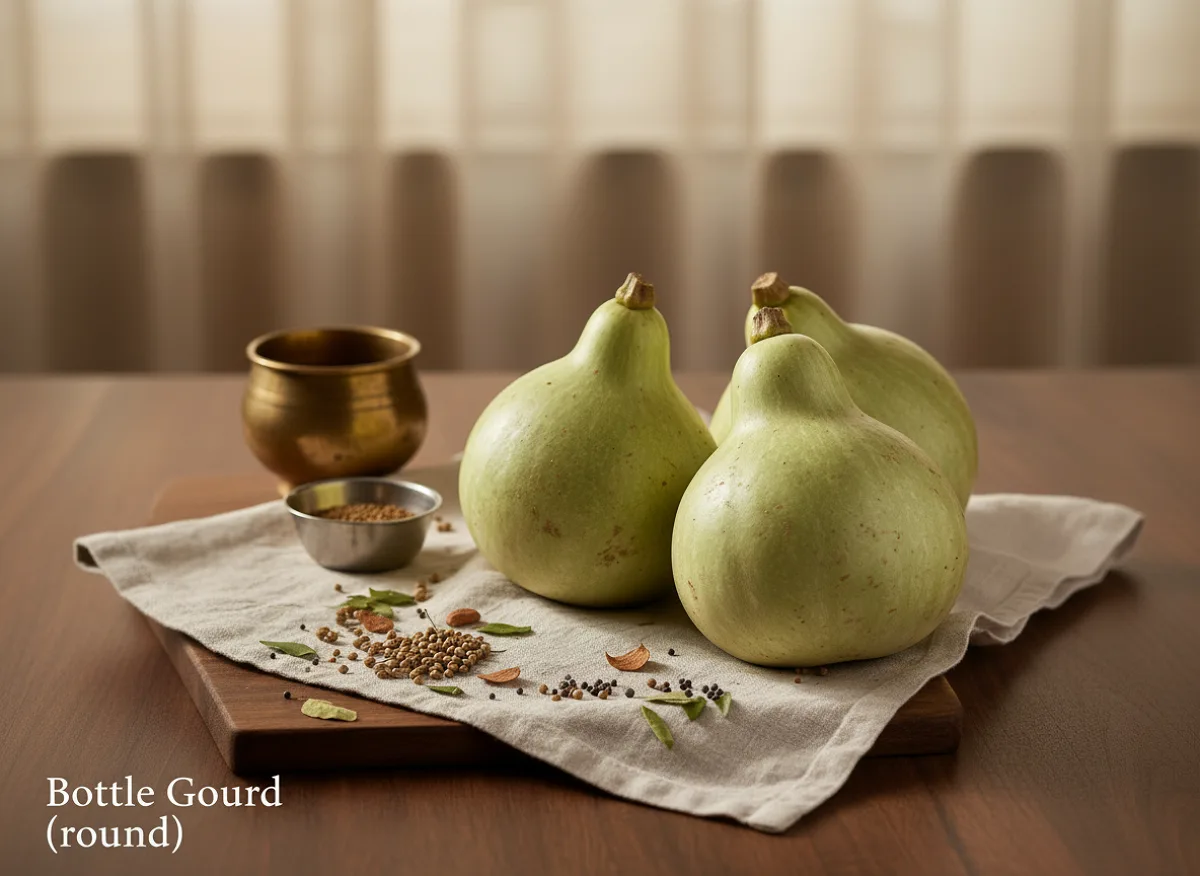
Bottle Gourd (round)
Lagenaria vulgaris · Also known as Lauki
Bottle gourd, or lauki, is a mild, watery vegetable commonly used across Indian kitchens in curries, stir-fries, and stuffed preparations. Low in calories and rich in water content, it is a summer staple in North and West Indian homes. (IFCT 2017, Ref #D008)
Nutrition per 100 g
Mean values ± IFCT published SD (edible portion).
More macros
Classification
About Bottle Gourd (round)
What it is
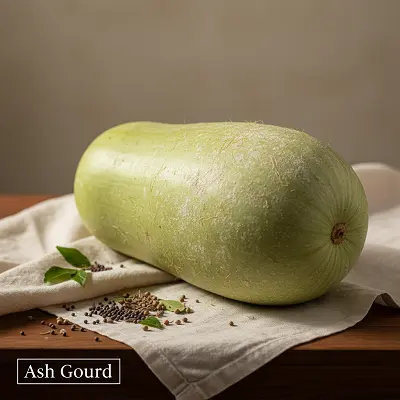
Bottle gourd, known as lauki in Hindi and doodhi in some regions, is a pale green or cream-coloured climbing vine vegetable with a mild, slightly sweet flavour. It belongs to the Cucurbitaceae family and is harvested when young and tender for kitchen use. The vegetable is composed largely of water, making it light and cooling - a reason it features prominently in summer cooking across India. (IFCT 2017, Ref #D008)
Use in Indian Kitchen
Bottle gourd holds a cherished place in Indian home cooking, especially in North India, Gujarat, and Maharashtra, where it appears in everyday curries and festival dishes. In the North, it is simmered into a mild, comforting sabzi with cumin and turmeric; in the West, it is often stuffed with spiced gram flour and baked or fried. South Indian kitchens use it in sambar and rasam, while Bengali cooks prepare it as a simple, delicate curry. Its neutral taste makes it a canvas for tempering spices - a tadka of mustard seeds, curry leaves, and dried chilli transforms it instantly. Many Indian grandmothers favour it for its digestibility and cooling properties during hot months, often serving it to children and the elderly as a gentle, nourishing vegetable.
Key Nutrients
Bottle gourd is predominantly water (around 96%), making it very low in calories. It contains small amounts of carbohydrates, dietary fibre, vitamin C, and minerals including potassium and manganese. The exact nutrient profile per 100 g is documented in IFCT 2017 (Ref #D008).
Health Benefits (Evidence-based)
- May support hydration and electrolyte balance due to high water and potassium content, especially useful in hot climates.
- Linked to gentle digestive support; traditionally used in Indian home remedies for mild constipation and digestive comfort.
- Low glycaemic index may help maintain steady blood sugar levels as part of a balanced meal.
- Contains vitamin C and antioxidants that may support immune function and skin health.
- Its cooling nature (as per Ayurvedic tradition) makes it suitable for pitta-dominant constitutions and summer wellness routines.
Culinary Uses (Vegetarian)
- Lauki sabzi - a simple North Indian curry with onions, tomatoes, and tempering spices.
- Stuffed lauki - halved and filled with spiced gram flour or paneer mixture, then baked or shallow-fried.
- Sambar and rasam - diced bottle gourd adds body and mild flavour to South Indian broths.
- Lauki ka halwa - a traditional sweet pudding made with grated bottle gourd, ghee, and condensed milk, often prepared during festivals.
- Stir-fried with mustard seeds, curry leaves, and coconut for a quick side dish.
- Juice or cooled soup - blended with curd and spices for a refreshing summer drink.
Caution
Bottle gourd is generally safe for most people. However, very rarely, wild or improperly stored bottle gourds can accumulate bitter compounds (cucurbitacins); discard any gourd that tastes intensely bitter. Those with very sensitive digestion may find it easier to peel and cook it thoroughly. No significant drug interactions are documented, though those on blood-thinning medication should maintain consistent intake rather than sudden large changes.
References
- Indian Council of Medical Research - National Institute of Nutrition (ICMR-NIN). Indian Food Composition Tables (IFCT) 2017. Reference #D008 (Other Vegetables - Bottle Gourd).
- Gopalan, C., Rama Sastri, B. V., & Balasubramanian, S. C. (2016). Nutritive Value of Indian Foods. National Institute of Nutrition, ICMR, Hyderabad.
Health Benefits
- Hydration
- Supports Digestion
- Weight Management Support
- Heart Health Support
- Cools Body
Sourcing & Storage
Storage
Store bottle gourd in a cool, dry place away from direct sunlight - a pantry shelf or vegetable basket at room temperature is ideal for short-term storage. For longer storage, keep it in the refrigerator's vegetable compartment in a perforated plastic bag or open container to allow air circulation and prevent moisture buildup. Avoid storing near ethylene-producing fruits like bananas or apples, as these can hasten ripening and spoilage. In humid Indian climates, check regularly for soft spots or mould and use within a few days if stored outside the fridge.
Shelf Life
When stored at room temperature in a cool, dry place, bottle gourd keeps for 5 - 7 days. In the refrigerator, it can last 2 - 3 weeks if kept in the vegetable compartment. Once cut, wrap the unused portion tightly in cling film or place it in an airtight container and use within 3 - 4 days. Bottle gourd does not freeze well due to its high water content, as it becomes mushy upon thawing.
Check Before You Buy
Choose bottle gourds that are firm to the touch with unblemished, pale green or cream-coloured skin - avoid any with soft spots, dark patches, or wrinkled areas, which indicate age or decay. The vegetable should feel heavy for its size, indicating good water content. A fresh gourd will have a mild, slightly sweet aroma; reject any with a musty or fermented smell. When buying from a mandi or kirana shop, gently press the skin with your thumb - it should spring back quickly. If buying pre-packed bottle gourds, check the packaging date and ensure no condensation or discolouration is visible inside the bag. Avoid very large, overgrown gourds, as they tend to be fibrous and less tender; medium-sized ones (about 20 - 25 cm long) are ideal for cooking.
In Ayurveda
Bottle gourd (lauki) is important for its rich nutritional profile, offering vitamins, minerals, and dietary fiber while being low in calories. It supports overall health by aiding digestion, promoting hydration, and helping manage weight. Its high water content makes it particularly beneficial in hot climates.
In home remedies, bottle gourd is commonly used to relieve conditions such as dehydration and digestive issues. Its juice is often recommended for cooling the body and improving skin health, making it a valuable addition to natural wellness practices.