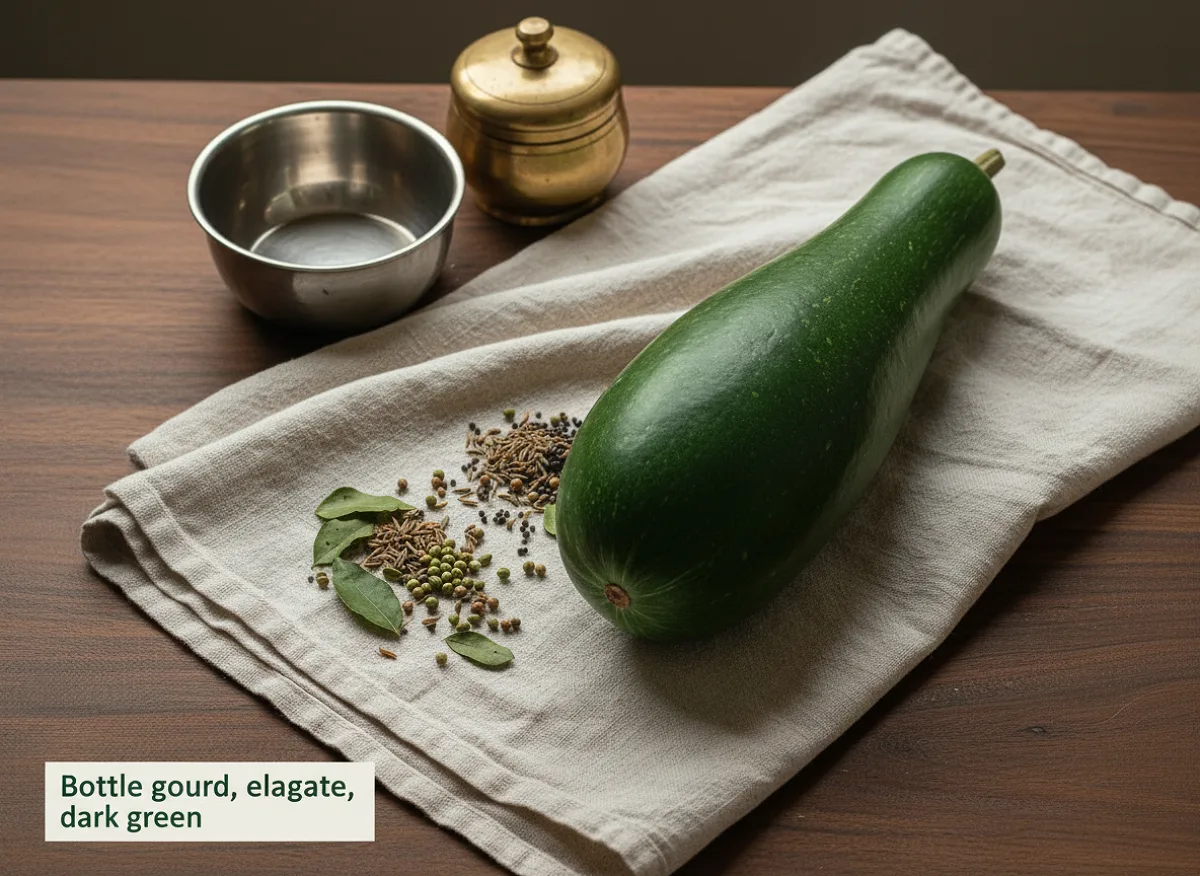
Bottle gourd, elongate, dark green
Lagenaria vulgaris · Also known as Jatilao, Lau, Calabash, White flowered gourd, Dudhi, Lowki, Sorekai, Zeth aal, Klong jrong, Cheranga, Khongdrum, Pandhara, Lauka, Kadu, Kaarabellam, Suraikkai
Bottle gourd (लौकी / lauki), a mild, watery vegetable common across Indian kitchens, is prized for its versatility in curries, stir-fries, and light summer dishes. Low in calories and rich in water content, it is a staple in North Indian sabzi and South Indian sambar. (IFCT 2017,...
Nutrition per 100 g
Edible portion values from the master catalog.
More macros
Classification
About Bottle gourd, elongate, dark green
What it is
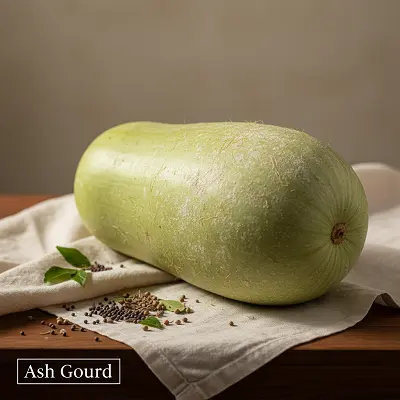
Bottle gourd is a climbing vine vegetable with an elongated, dark green skin and pale, spongy white flesh inside. Native to Africa but now cultivated widely across India, it is harvested when young and tender for the best flavour and texture. The vegetable is over 90% water, making it exceptionally light and cooling. (IFCT 2017, Ref #D009)
Use in Indian Kitchen
Bottle gourd holds a cherished place in Indian home cooking, especially during summer months when its cooling properties are valued. In North India, it is sautéed with cumin and mustard seeds to make a simple, everyday sabzi; in the South, it features in sambar and is sometimes grated into dals. East Indian kitchens use it in light curries, while Western regions incorporate it into khichdi and light gravies. Its mild, almost neutral flavour makes it a comfort food for children and those recovering from illness - many Indian grandmothers prepare a gentle lauki ka kheer (sweet pudding) or a simple boiled preparation for digestive ease. It is also popular in summer drinks and juices for its hydrating and cooling nature.
Key Nutrients
Bottle gourd contains water, dietary fibre, small amounts of vitamin C, and minerals including potassium and manganese. The exact nutrient profile is documented in IFCT 2017 (Ref #D009); the vegetable is notably low in calories and fat, making it suitable for weight-conscious and diabetic-friendly diets.
Health Benefits (Evidence-based)
- May support hydration and electrolyte balance due to high water and potassium content, especially beneficial in hot climates.
- Low glycaemic index and minimal carbohydrate load may help with blood sugar management when part of a balanced meal.
- Dietary fibre content may support digestive health and regular bowel function.
- Traditionally used in Ayurvedic and home remedy practices as a cooling, gentle food for sensitive digestion.
- May contribute to weight management due to low calorie density and high water content.
Culinary Uses (Vegetarian)
- Sautéed with mustard seeds, cumin, and green chilli for a simple North Indian sabzi.
- Grated and added to dal or sambar for body and mild flavour.
- Stir-fried with paneer and spices for a light curry.
- Boiled and mashed with ghee and cumin for infants and convalescents.
- Blended into summer drinks and fresh juices for hydration.
- Stuffed with spiced paneer or moong dal for a festive preparation.
- Cooked into khichdi with rice and moong dal for a nourishing one-pot meal.
Caution
Bottle gourd is generally safe for most people. Those with very sensitive digestion may find it easier to consume when cooked soft rather than raw. Ensure the vegetable is fresh and not stored for extended periods, as old or improperly stored bottle gourd can develop bitter compounds. Pregnant women and those on blood-thinning medications should consume in normal culinary amounts and consult a healthcare provider if concerned.
References
- Indian Council of Medical Research - National Institute of Nutrition (ICMR-NIN). Indian Food Composition Tables 2017 (IFCT 2017). Reference #D009 - Other Vegetables category.
- National Institute of Nutrition, ICMR. Nutritive Value of Indian Foods. Hyderabad: NIN Publications.
Sourcing & Storage
Storage
Store bottle gourd in a cool, dry place away from direct sunlight, ideally in a well-ventilated vegetable basket or cloth bag. In warm, humid Indian climates, refrigerate in the vegetable compartment (8-10°C) to extend freshness. Keep away from ethylene-producing fruits like bananas and apples. Ensure good air circulation to prevent moisture buildup and mould.
Shelf Life
When stored at room temperature in a cool, dry place, bottle gourd keeps for 5-7 days. In the refrigerator, it lasts 10-14 days when kept in a perforated plastic bag or cloth. Once cut, wrap the unused portion tightly in cling film and use within 3-4 days. Bottle gourd does not freeze well due to its high water content and becomes mushy upon thawing.
Check Before You Buy
Choose bottle gourds that are firm to the touch with unblemished, dark green skin free of soft spots or discolouration. The vegetable should feel heavy for its size, indicating good water content. Avoid those with wrinkled skin, cracks, or signs of mould. At the mandi or kirana shop, select medium-sized gourds (too large ones may be fibrous and bitter); gently press the skin - it should spring back. Check that the stem end is fresh and not dried out. Avoid pre-cut or packaged pieces unless from a trusted vendor, as they dry out quickly.