Bottle Gourd
Lagenaria vulgaris · Also known as Laukee, Lauki, Calabash, Opo squash, Bottle squash
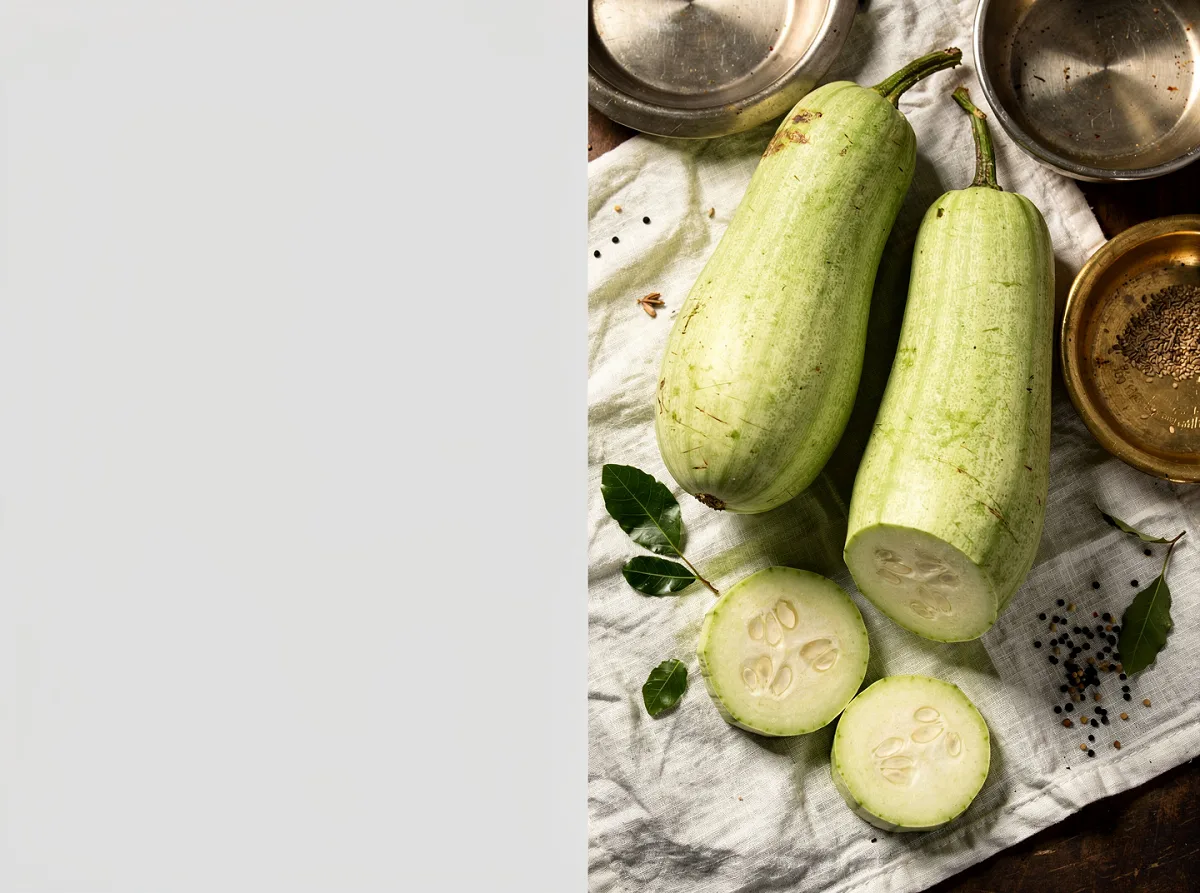
Bottle gourd (लौकी, laukee) is a mild, pale-green or cream-coloured squash with thin, smooth skin and soft, watery white flesh. Prized in Indian kitchens for its gentle, slightly sweet taste and cooling properties, it features in everyday curries, stuffed parathas, and light summ...
Nutrition per 100 g
Mean values ± IFCT published SD (edible portion).
More macros
Classification
About Bottle Gourd
What it is
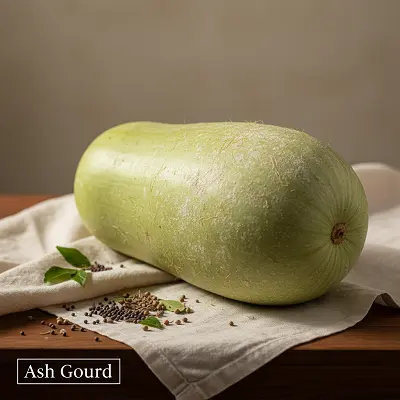
Bottle gourd, known as लौकी (laukee) or लाउकी (lauki) in Hindi and regional Indian languages, is a pale-green or cream-coloured squash with a smooth, thin skin and elongated, bottle-like shape. The flesh inside is soft, watery, and ivory-white, with a mild, slightly sweet flavour and delicate texture. Fresh bottle gourd is sold whole or sometimes pre-cut in Indian markets and is a staple in summer cooking across North, South, and East India. (IFCT 2017, Ref #D007)
Use in Indian Kitchen
Bottle gourd is a workhorse vegetable in everyday Indian home cooking. It is commonly curried with turmeric and cumin (लौकी की सब्जी, laukee ki sabzi), stuffed into parathas with a spiced besan-onion filling, simmered into light khichdi with rice and moong dal, or added to sambar and rasam in South Indian kitchens. In Bengali cuisine, it appears in light curries and is sometimes candied for desserts. The key to good bottle gourd is not to overcook it - a few minutes of gentle simmering keeps it tender and prevents it from turning mushy. Pairing it with warming spices like cumin, asafoetida, and ginger, or cooling elements like coriander and mint, balances its mild nature beautifully.
Key Nutrients
Bottle gourd is very low in calories and high in water content (around 96%), making it hydrating and light. It contains small amounts of vitamin C, potassium, and dietary fibre. The flesh also provides trace minerals and B vitamins. For precise nutrient composition, refer to IFCT 2017, Ref #D007.
Health Benefits (Evidence-based)
- High water content supports hydration and may help maintain fluid balance, especially in hot weather.
- Low calorie density makes it suitable for weight-conscious cooking without sacrificing volume or satisfaction.
- Mild, easily digestible nature may support gentle digestion and is often recommended in light, convalescent diets.
- Contains small amounts of vitamin C and antioxidants, which may support general immune function.
- Traditionally used in Ayurvedic and home remedy contexts for its cooling (शीतल, sheetal) properties during summer.
Culinary Uses (Vegetarian)
- Curried with cumin, turmeric, and onion as a simple everyday sabzi.
- Stuffed into whole wheat parathas with spiced besan and onion filling.
- Cooked into khichdi with rice, moong dal, and ghee for comfort food.
- Added to sambar, rasam, and kootu in South Indian cooking.
- Simmered into light soups or broths with ginger and coriander.
- Candied or made into halwa (sweet preparation) in some regional traditions.
Caution
- Bottle gourd is generally very safe and well-tolerated. However, wild or ornamental bottle gourds (not the culinary variety) can contain toxic compounds and should never be eaten.
- Always purchase from trusted vendors to ensure you are buying the edible culinary variety, not a decorative gourd.
- Those with very sensitive digestion may find large quantities difficult; introduce gradually if new to the ingredient.
References
- Indian Council of Medical Research - National Institute of Nutrition (ICMR-NIN). Indian Food Composition Tables (IFCT) 2017. Reference #D007 (Other Vegetables - Bottle Gourd).
- Gopalan, C., Rama Sastri, B. V., & Balasubramanian, S. C. (2007). Nutritive Value of Indian Foods. National Institute of Nutrition, ICMR, Hyderabad.
Health Benefits
- Hydration
- Supports Digestion
- Detox Support
- Weight Management Support
- Heart Health Support
Sourcing & Storage
Storage
Store whole bottle gourd in a cool, dry place (ideally 10-15°C) away from direct sunlight. In Indian homes, a ventilated basket or cloth bag in a cool corner of the kitchen or pantry works well. If your kitchen is very warm, store in the refrigerator's vegetable compartment. Once cut, wrap the remaining portion tightly in a damp cloth or place in an airtight container in the fridge to prevent it from drying out.
Shelf Life
A whole, uncut bottle gourd keeps for 2-3 weeks in a cool, dry place, or up to 1 week in the refrigerator. Once cut and stored in the fridge in an airtight container or wrapped in a damp cloth, use within 3-4 days. Bottle gourd does not freeze well due to its high water content and becomes mushy when thawed.
Check Before You Buy
Choose bottle gourds that are firm to the touch with unblemished, smooth skin free of soft spots, cracks, or mould. The skin should be pale green or cream-coloured and feel heavy for its size (indicating good water content). Avoid gourds that are very light, wrinkled, or have yellowed patches, as these indicate age and drying. When buying from a mandi or kirana shop, ask the vendor to confirm it is the edible culinary variety, not a decorative or wild gourd.
In Ayurveda
In classical Ayurveda, bottle gourd (लौकी) is considered a cooling (शीत वीर्य) vegetable with a sweet taste (मधुर रस). It is traditionally used to balance Pitta dosha due to its hydrating and cooling properties. The vegetable is often recommended in Ayurvedic texts for its light digestibility and gentle nourishment, particularly during summer months.
Bottle gourd is valued in traditional Indian wellness practices for supporting healthy digestion and promoting a sense of calm. It is commonly used in Ayurvedic kitchens as part of seasonal eating practices (ritucharya) to maintain internal balance during warm seasons.