Board Beans
Vicia faba · Also known as Lablab beans, hyacinth beans, dolichos beans, val, avial, shengri, sem
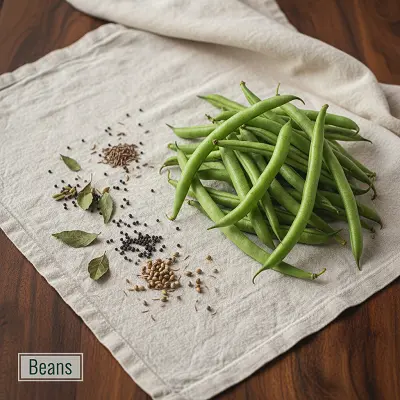
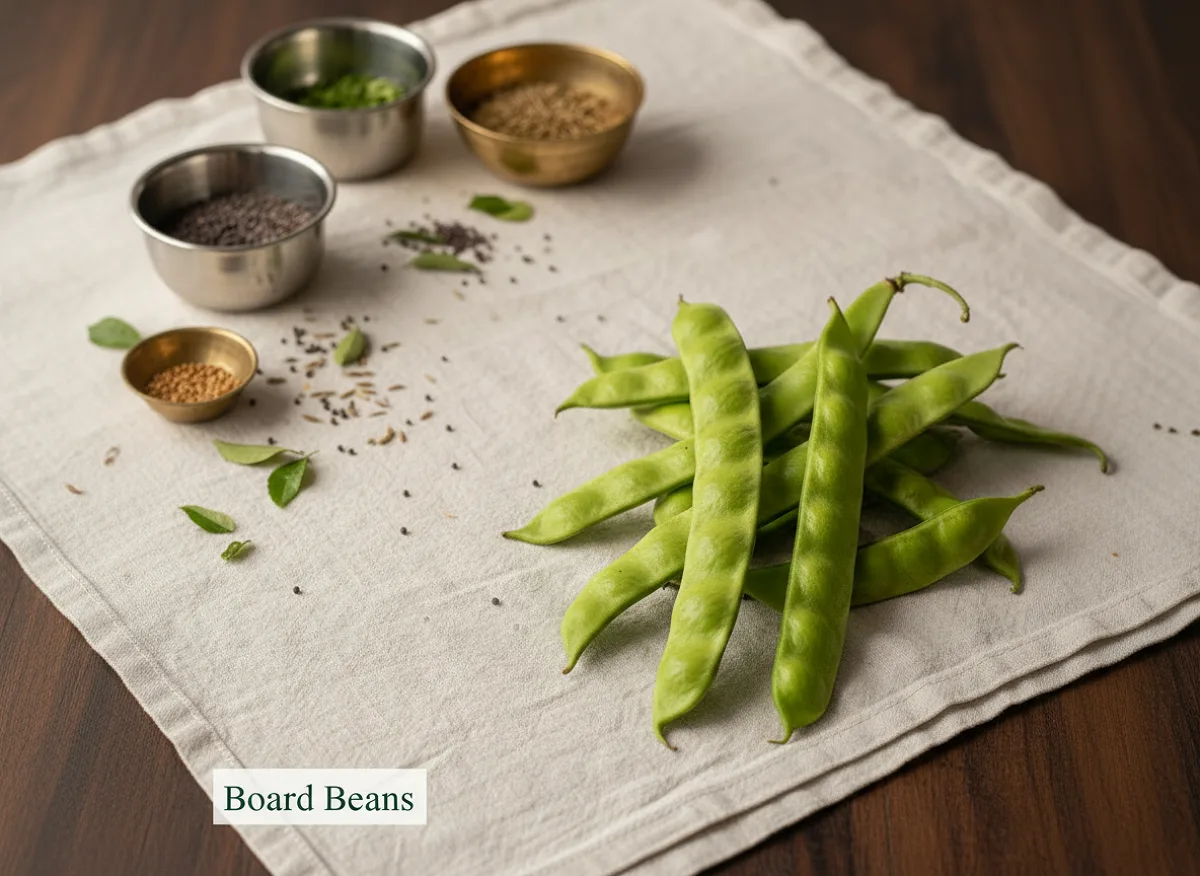
Board beans (val or lablab beans) are tender, flat green pods with a mild, slightly sweet flavour - a monsoon and summer staple across South and West India. Fresh or dried, they're cooked into curries, stir-fries, and kootu, often paired with coconut and spices to bring out their...
Nutrition per 100 g
Mean values ± IFCT published SD (edible portion).
More macros
Classification
About Board Beans
What it is
Board beans, known as val in Marathi and Kannada, or shengri in Hindi, are the tender immature pods of the lablab plant (Dolichos lablab). They are flat, slightly curved, and pale to deep green, with a smooth skin and a crisp, succulent texture when fresh. The pods are eaten whole - seeds and all - when young and tender, before the beans inside mature and harden. They have a mild, slightly sweet taste with a hint of earthiness, quite different from the mature dried beans. Board beans are a seasonal favourite in South Indian, Maharashtrian, and Gujarati kitchens, appearing abundantly during the monsoon and early summer months. (IFCT 2017, Ref #D032)
Use in Indian Kitchen
Board beans shine in simple, flavourful preparations that let their delicate taste come through. In South India, they're cooked into kootu with coconut, cumin, and chilli, or added to sambar for a tender bite. Maharashtrian kitchens favour them in dry stir-fries (val chi bhaji) with onions, garlic, and a tadka of mustard seeds and curry leaves. In Gujarat, they're often paired with jaggery and peanuts for a sweet-savoury balance. A practical tip: slice them into 2-3 cm pieces and cook quickly over medium-high heat to keep them crisp; overcooking turns them mushy and dull. They pair beautifully with coconut, tamarind, and warm spices like cumin and coriander.
Key Nutrients
Board beans are a good source of dietary fibre, plant-based protein, and vitamins including folate and vitamin C. They also contain minerals such as iron, magnesium, and potassium. Exact nutrient composition varies with freshness and growing conditions; refer to IFCT 2017 for detailed micronutrient profiles of fresh lablab pods.
Health Benefits (Evidence-based)
- High in dietary fibre, which may support digestive health and regular bowel function.
- Plant-based protein makes them a useful addition to vegetarian and vegan meals.
- Folate content supports red blood cell formation and may be particularly beneficial during pregnancy.
- Antioxidants and polyphenols in the pods may help reduce oxidative stress.
- Low glycaemic index suggests they may help maintain steady blood sugar levels.
- Traditionally used in Ayurvedic cooking as a light, easily digestible vegetable for balancing digestion.
Culinary Uses (Vegetarian)
- Stir-fried with onions, garlic, and mustard seeds (val chi bhaji).
- Cooked into South Indian kootu with coconut, cumin, and green chilli.
- Added to sambar for texture and mild sweetness.
- Paired with jaggery and peanuts in Gujarati preparations.
- Blanched and tossed into salads or rice dishes.
- Stuffed with spiced besan and fried as a snack.
- Dried and stored for use in winter curries and dal preparations.
Caution
Board beans are generally safe for most people. However, like other legumes, they contain compounds that may cause mild bloating or gas in sensitive individuals; cooking thoroughly and pairing with digestive spices like ginger and asafoetida can help. Ensure pods are fresh and tender; mature, hardened pods are tough and unpalatable. Those with legume allergies should avoid. Always source from trusted vendors to ensure they have not been treated with harmful pesticides.
References
- Indian Council of Medical Research - National Institute of Nutrition (ICMR-NIN). Indian Food Composition Tables (IFCT 2017). Hyderabad: NIN; 2017. Reference #D032 (Other Vegetables - Lablab beans, fresh pods).
- Grubben, G.J.H. & Denton, O.A. (Editors). Plant Resources of Tropical Africa 2: Vegetables. PROTA Foundation, Wageningen; 2004. (Dolichos lablab L. - botanical and culinary reference).
Health Benefits
- Hydration
- Boosts Immunity
- Supports Eye Health
- Weight Management Support
- Improves Skin Health
Sourcing & Storage
Storage
Store fresh board beans in a perforated plastic bag or open container in the refrigerator crisper drawer at 4-8°C. Do not wash before storing; moisture encourages decay. Keep away from ethylene-producing fruits like bananas and tomatoes. In warm, humid Indian climates, use within 2-3 days of purchase. For longer storage, blanch pods for 2-3 minutes, cool in ice water, pat dry, and freeze in airtight containers or freezer bags for up to 3 months. Dried board beans should be stored in an airtight container in a cool, dry place away from direct sunlight and moisture.
Shelf Life
Fresh board beans keep for 3-5 days in the refrigerator when stored properly in a perforated bag. In hot, humid conditions typical of Indian summers, use within 2-3 days for best quality and texture. Blanched and frozen board beans retain good quality for up to 3 months. Dried board beans, stored in an airtight container in a cool, dry cupboard, remain usable for 6-12 months, though flavour and texture are best within the first 6 months.
Check Before You Buy
Choose bright green, firm, and crisp pods with no blemishes, soft spots, or yellowing. Snap a pod gently - it should break cleanly with a fresh sound, not bend limply. Avoid pods that are too large, thick, or have visible bulges where the beans inside have matured; these will be tough and stringy. Check that pods are free from insect damage, mould, or slime. At the mandi or kirana shop, buy from vendors with good turnover to ensure freshness. Packed board beans should have a clear, sealed package with no condensation inside; check the date and source if available.
In Ayurveda
In classical Ayurvedic texts, Lablab beans (वाल) are recognized as a light, easily digestible legume with a sweet taste (madhura rasa) and cooling properties (sheeta virya). They are traditionally considered beneficial for balancing Pitta and Vata doshas, particularly when prepared with warming spices like turmeric and ginger. The beans are valued in Ayurvedic cooking for their nourishing quality (brimhana) without being heavy on digestion, making them suitable for convalescence and general wellness support.