Blackcurrant
Ribes nigrum · Also known as फालसेब, ब्लैक करैन्ट
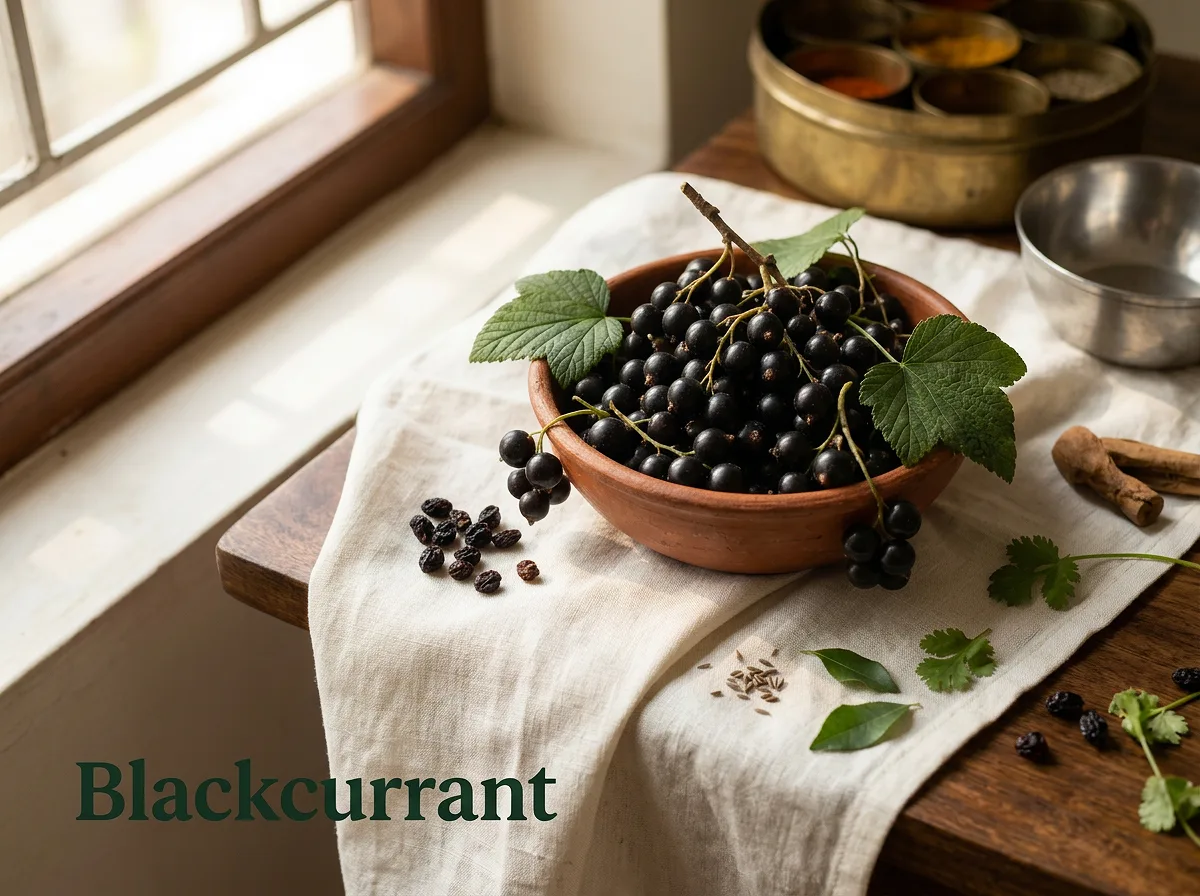
Blackcurrant (फालसेब, ब्लैक करैन्ट) is a small, dark purple-black berry rich in vitamin C and antioxidants. Though not traditionally grown across India, it is increasingly available in hill stations and premium markets, prized for jams, juices, and fresh eating.
Nutrition per 100 g
Edible portion values from the master catalog.
More macros
Classification
About Blackcurrant
What it is
Blackcurrant is a small, round berry from the Ribes nigrum plant, native to temperate regions but now cultivated in cooler Indian hill areas like Himachal Pradesh and Kashmir. The berries are deep purple-black when ripe, with a tart-sweet flavour and a distinctive musky aroma. While not a traditional Indian fruit, blackcurrants have gained popularity in urban kitchens and specialty food shops over the past two decades.
Use in Indian Kitchen
Blackcurrants are still relatively uncommon in everyday Indian home cooking, but they appear in modern desserts, preserves, and health drinks in metropolitan areas. They are most often made into jams, cordials, and squashes - the tartness pairs well with sugar and spices like cardamom. Some regional sweet shops in the North use blackcurrant in contemporary mithai and ice creams. Unlike traditional Indian berries, blackcurrants are not seasonal festival foods, but they are increasingly valued by health-conscious households for their nutritional density and are sometimes added to smoothie bowls and breakfast granolas.
Key Nutrients
Blackcurrants are exceptionally high in vitamin C (ascorbic acid), which supports immunity and collagen formation. They also contain anthocyanins and other polyphenolic antioxidants, potassium for heart health, and dietary fibre. Exact nutrient composition for Indian-sourced blackcurrants is not widely documented in IFCT; figures typically reference international food composition databases.
Health Benefits (Evidence-based)
- May support immune function due to high vitamin C content, particularly useful during seasonal changes.
- Linked to antioxidant activity that may help protect cells from oxidative stress.
- May support eye health through anthocyanins, traditionally valued in European herbal medicine.
- Fibre content may aid digestive regularity when consumed fresh or in whole-fruit preparations.
- Potassium may contribute to healthy blood pressure regulation as part of a balanced diet.
Culinary Uses (Vegetarian)
- Jams, jellies, and preserves - the tartness balances well with sugar and a pinch of cardamom or ginger.
- Cordials and squashes - diluted with water for refreshing summer drinks.
- Fresh in desserts - cheesecakes, tarts, and pavlovas in modern Indian bakeries.
- Smoothies and lassi - blended with curd and honey for a nutrient-dense breakfast drink.
- Compotes - stewed gently with a touch of jaggery or honey as a topping for yoghurt or kheer.
Caution
- Blackcurrants are tart and may cause mild digestive discomfort if eaten in very large quantities on an empty stomach.
- Those on blood-thinning medications should consume in moderation, as high vitamin K content may interact.
- Allergic reactions are rare but possible; introduce gradually if trying for the first time.
References
- Indian Council of Medical Research - National Institute of Nutrition (ICMR-NIN). Indian Food Composition Tables (IFCT 2017). Hyderabad: NIN Publications.
- Skrede, G., Wrolstad, R. E., & Durst, R. W. (2000). Changes in anthocyanins and polyphenolics during juice processing of highbush blueberries (Vaccinium corymbosum L.). Journal of Food Science, 65(3), 357-364.
Health Benefits
- Anti Inflammatory
- Improves Eye Health
- Boosts Immunity
- Heart Health Support
Sourcing & Storage
Storage
Store fresh blackcurrants in a breathable container or perforated plastic bag in the refrigerator at 2-4°C, away from direct moisture and strong-smelling foods. In Indian climates, use the coldest part of your fridge (usually the back of a shelf) to slow ripening and decay. Do not wash until just before eating, as moisture encourages mould. For longer storage, freeze whole berries in a single layer on a tray, then transfer to an airtight container or freezer bag.
Shelf Life
Fresh blackcurrants keep for 5-7 days in the refrigerator when stored properly. Once opened or bruised, use within 2-3 days. Frozen blackcurrants retain quality for up to 12 months in a standard freezer at -18°C or below. Homemade jams and preserves, when sealed properly in sterilised jars, last 6-12 months in a cool, dark cupboard; once opened, refrigerate and use within 3-4 weeks.
Check Before You Buy
Look for berries that are firm, plump, and uniformly dark purple-black with no soft spots, mould, or shrivelling. Avoid berries that are dull, sticky, or leaking juice. A slight bloom (whitish coating) on the skin is natural and indicates freshness. Smell should be musky and slightly sweet, not fermented or musty. When buying from a mandi or kirana shop, ask when they arrived and check the punnet for any crushed berries at the bottom. Packaged blackcurrants should have a clear, sealed container with a printed date; avoid punnets with condensation inside, which signals moisture and early decay.