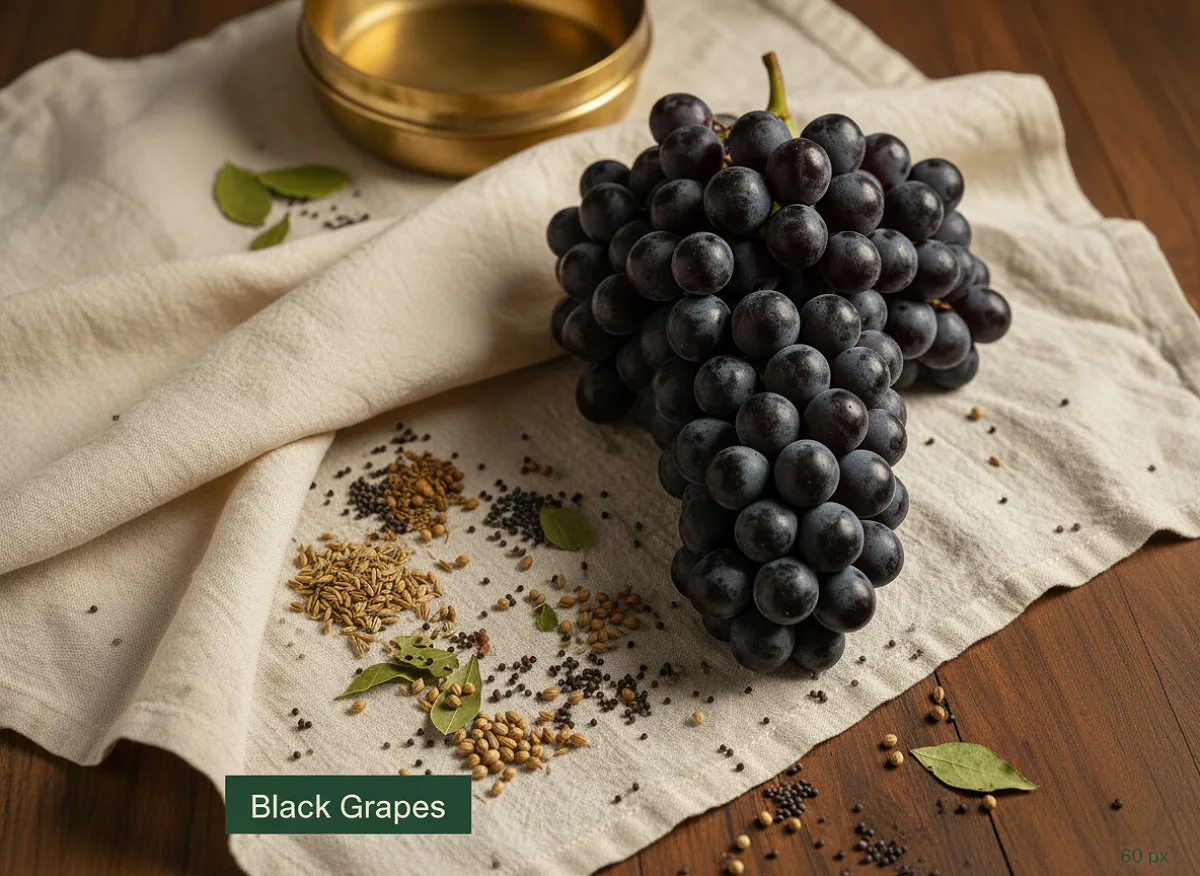
Black Grapes
Vitis vinifera · Also known as काले अंगूर (kale angur), dark grapes, purple grapes, black seedless grapes
Black grapes (काले अंगूर) are plump, dark purple to black berries with thin skin and juicy, sweet flesh. Fresh and versatile, they're eaten whole as a snack, added to fruit salads, or used in chutneys and desserts across Indian kitchens. Their natural sweetness and cooling nature...
Nutrition per 100 g
Mean values ± IFCT published SD (edible portion).
More macros
Classification
About Black Grapes
What it is
Black grapes (काले अंगूर, kale angur) are small, round berries that grow in clusters on woody vines. They have thin, dark purple to black skin with translucent, sweet flesh inside and are typically seedless in modern cultivars. Fresh, crisp, and naturally sweet, they are eaten whole or used in cooking and preserves across Indian homes. (IFCT 2017, Ref #E022)
Use in Indian Kitchen
Black grapes are enjoyed fresh as a cooling summer snack and added to fruit salads, custards, and kheer. In South Indian homes, they feature in fruit chutneys and are sometimes paired with jaggery for a quick energy bite. North Indian kitchens use them in fruit-based desserts, halwa, and as a garnish for festive sweets. A practical tip: chill grapes in water before serving to enhance their refreshing crunch, and wash them gently just before eating to preserve their delicate bloom.
Key Nutrients
Black grapes contain natural sugars (glucose and fructose), dietary fibre, vitamin C, and polyphenols including resveratrol. They also provide potassium and small amounts of B vitamins. Exact nutrient composition varies with ripeness and variety; refer to IFCT 2017 for detailed values.
Health Benefits (Evidence-based)
- May support heart health due to polyphenols and potassium, which help maintain healthy blood pressure.
- Linked to antioxidant activity, helping protect cells from oxidative stress.
- Natural sugars provide quick energy, making them a good pre- or post-activity snack.
- Fibre content supports digestive wellness when eaten with skin.
- Traditionally valued in Ayurvedic practice as a cooling, nourishing fruit for summer balance.
- May help maintain hydration due to high water content.
Culinary Uses (Vegetarian)
- Fresh snacking, chilled or at room temperature.
- Fruit salads, custards, and kheer garnish.
- Fruit chutneys and preserves.
- Halwa and festive dessert toppings.
- Juice or smoothie base.
- Paired with paneer or cheese in modern fusion platters.
Caution
Black grapes are high in natural sugars; those managing blood sugar levels should consume in moderation. Pesticide residue is a concern with conventionally grown grapes - wash thoroughly under running water or soak briefly before eating. Whole grapes can pose a choking risk for very young children; cut them lengthwise if serving to toddlers.
References
- Indian Council of Medical Research - National Institute of Nutrition (ICMR-NIN). Indian Food Composition Tables (IFCT 2017). Reference #E022.
- Katz, D. L., & Meller, S. (2014). Can we say what diet is best for health? Annual Review of Public Health, 35, 83-103. (General fruit and polyphenol evidence.)
Health Benefits
- Anti Inflammatory
- Boosts Immunity
- Heart Health Support
- Improves Skin Health
Sourcing & Storage
Storage
Store black grapes in a breathable container or perforated plastic bag in the refrigerator's fruit drawer, away from direct moisture. Keep them unwashed until just before eating to prevent mould. In warm Indian climates, ensure good air circulation and avoid sealing them in airtight containers. Do not store near ethylene-producing fruits like mangoes or bananas, as they ripen grapes too quickly.
Shelf Life
Fresh black grapes keep for 5-7 days in the refrigerator when stored properly. Once washed, consume within 2-3 days. They can be frozen whole on a tray and transferred to freezer bags for up to 3 months; frozen grapes work well in smoothies or as a chilled snack but lose firmness when thawed.
Check Before You Buy
Choose bunches with plump, firm berries that are uniformly dark purple or black with no soft spots, wrinkles, or mould. The skin should feel taut and slightly waxy (the natural bloom). Avoid grapes that are leaking juice or have brown patches. If buying from a mandi or kirana, gently squeeze a few berries to check firmness; they should not crush easily. Packaged grapes should have a harvest date and show no condensation inside the container, which signals decay.
In Ayurveda
In classical Ayurvedic texts, grapes (अंगूर, angur) are considered a cooling, sweet fruit with a naturally balancing effect. Black grapes, being richer in antioxidants and slightly heavier than green varieties, are traditionally used to support digestive health and promote vitality. They are believed to have a mild laxative quality and are often recommended during summer months to cool the body and maintain hydration. However, they should be consumed in moderation by those with high kapha or weak digestion, as their natural sweetness and moisture can increase heaviness if taken in excess.