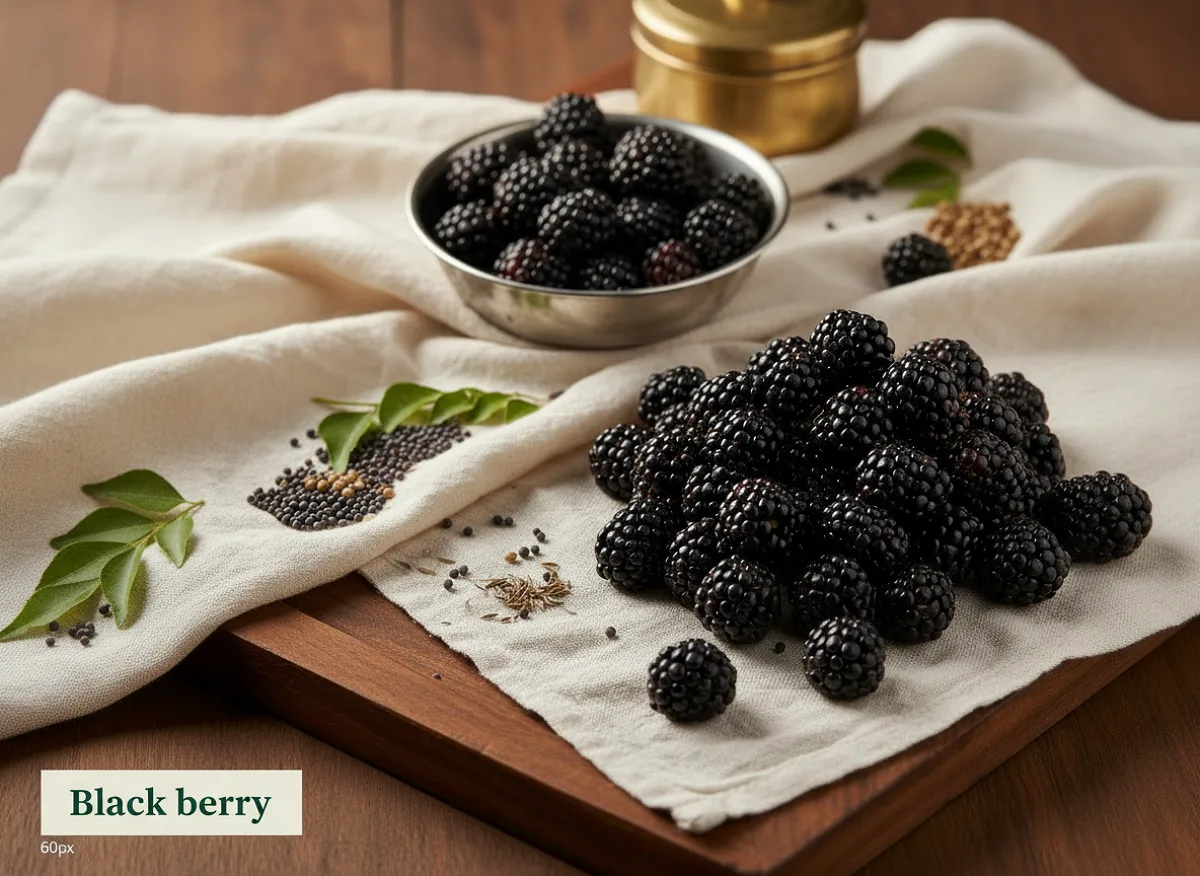
Black berry
Rubus fruticosus · Also known as Kola jamu, Kalojam, Blackberry, Jambu, Kala Jamun, Neralai, Soh jam/ Soh jamun, Naval pazham, Jaam, Jambhool, Jamukoli, Jamun, Nagapazham
Blackberries are dark purple to black berries packed with antioxidants, vitamin C, and fibre. Though not traditionally central to Indian cuisine, they are increasingly available in urban markets and work beautifully in desserts, drinks, and as a fresh topping for yoghurt and brea...
Nutrition per 100 g
Mean values ± IFCT published SD (edible portion).
More macros
Classification
About Black berry
What it is
Blackberries are the aggregate fruit of bramble plants (Rubus species), native to Europe and Asia but now cultivated worldwide, including in cooler Indian regions. Each berry is made up of many small drupelets clustered around a central core. They are deep purple-black when fully ripe and have a sweet-tart flavour. Composition data for blackberries is typically described under the IFCT category label for berries and other fruits.
Use in Indian Kitchen
Blackberries are a relatively modern addition to Indian home kitchens, more common in urban areas and hill stations where they grow or are imported fresh. Unlike traditional Indian berries such as jamun or mulberry, blackberries are not yet woven into regional festival foods or classical recipes. However, they pair naturally with Indian dairy - stirred into thick yoghurt, layered in phirni, or blended into lassi. Some home cooks use them in fruit chutneys or as a garnish for kheer. Their tartness also complements the warmth of cardamom and rose in desserts.
Key Nutrients
Blackberries are rich in vitamin C, dietary fibre, and polyphenolic antioxidants (including anthocyanins, which give them their dark colour). They also contain smaller amounts of vitamin K, manganese, and copper. Exact nutrient composition varies by ripeness and growing conditions; refer to food composition tables for precise values.
Health Benefits (Evidence-based)
- High in antioxidants, particularly anthocyanins, which may help protect cells from oxidative stress.
- Good source of dietary fibre, which supports digestive health and may help maintain healthy cholesterol levels.
- Vitamin C content supports immune function and collagen formation.
- May help maintain healthy blood sugar levels when consumed as part of a balanced diet.
- Traditionally used in folk medicine for their astringent properties, though clinical evidence is limited.
Culinary Uses (Vegetarian)
- Fresh in fruit salads, yoghurt parfaits, and breakfast bowls with granola and honey.
- Blended into lassi, smoothies, and milkshakes with cardamom or rose water.
- Cooked into jams, compotes, and fruit chutneys to serve with paneer or cheese.
- Layered in phirni, kheer, or custard-based desserts.
- As a tart garnish for ice cream or frozen yoghurt.
Caution
Blackberries are generally safe for most people. Those with a history of kidney stones should consume them in moderation, as they contain oxalates. Allergic reactions are rare but possible. Always wash berries thoroughly before eating, especially if purchased from open markets. Individuals on blood-thinning medications should consult a healthcare provider before consuming large quantities regularly.
References
- Indian Council of Medical Research - National Institute of Nutrition (ICMR-NIN). Indian Food Composition Tables. Hyderabad: ICMR-NIN; 2017.
- Kalt W, Cassidy A, Howard LR, Krikorian R. Recent research on the health benefits of blueberries and their anthocyanins. Advances in Nutrition. 2016; 7(2): 247S-256S.
Sourcing & Storage
Storage
Store blackberries in a shallow container lined with paper towels in the coldest part of your refrigerator (ideally 0-4°C). Keep them unwashed until just before eating, as moisture encourages mould. In warm Indian climates, use the fridge immediately after purchase. Avoid stacking berries heavily, as they bruise easily. For longer storage, freeze whole berries on a tray, then transfer to an airtight container or freezer bag.
Shelf Life
Fresh blackberries last 3-5 days in the refrigerator when stored properly. Once washed, consume within 1-2 days. Frozen blackberries keep for up to 8-12 months in the freezer and can be used directly in smoothies, jams, or cooked desserts without thawing.
Check Before You Buy
Choose blackberries that are deep black or dark purple, plump, and firm to the touch. Avoid berries that are red, mushy, or have visible mould or soft spots. A slight bloom (whitish coating) on the skin is natural and not a sign of spoilage. Smell them gently - they should have a sweet, slightly tart aroma. When buying from a mandi or kirana store, check the bottom of the container for crushed or leaking berries. Packaged berries should have a clear, intact seal and no condensation inside.