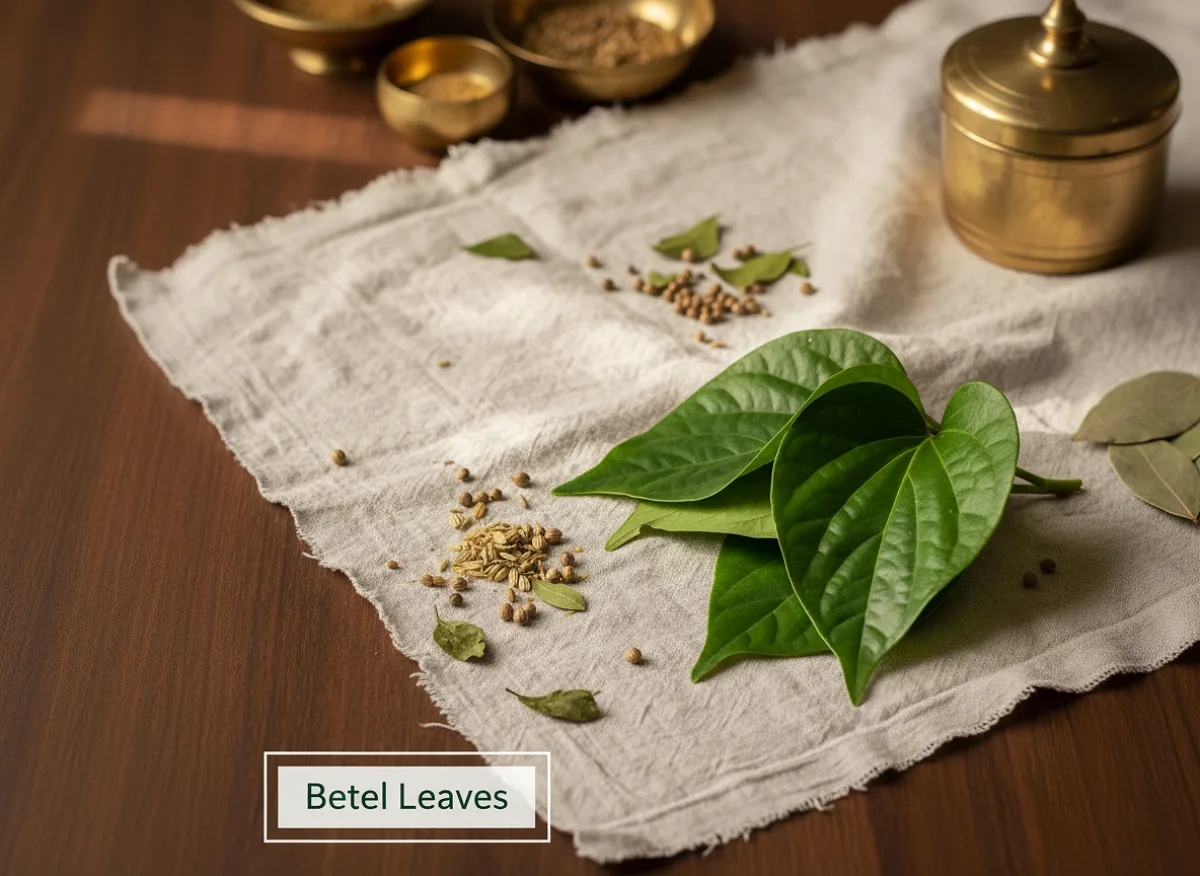
Betel Leaves
Piper betle · Also known as Paan
Betel leaves (paan) are aromatic, heart-shaped green leaves from the betel vine, widely used across Indian kitchens for both culinary and ceremonial purposes. Rich in antioxidants and traditionally valued for digestive support, they feature in chutneys, wraps, and as a palate cle...
Nutrition per 100 g
Mean values ± IFCT published SD (edible portion).
More macros
Classification
About Betel Leaves
What it is
Betel leaves are the fresh, glossy green leaves of the Piper betle vine, native to South and Southeast Asia. They have a distinctive heart shape, mild peppery flavour, and a slightly astringent, aromatic quality. Commonly called paan in Hindi and regional Indian languages, they are a staple in Indian homes and markets, sold fresh in bundles or as part of the traditional paan preparation (IFCT 2017, Ref #C010).
Use in Indian Kitchen
Betel leaves hold deep cultural roots across India. In the South - particularly Tamil Nadu, Andhra Pradesh, and Karnataka - they are ground into chutneys with coconut, chilli, and spices, or used as wraps for savoury fillings. In the North, they are central to the paan ritual: folded with areca nut, slaked lime, and spices, then chewed as a digestive and social custom after meals. In Bengal and Odisha, they feature in fish curries and vegetable dishes. Beyond the plate, offering betel leaves is a mark of hospitality and respect. The leaves are seasonal, most tender and fragrant during monsoon and post-monsoon months, though available year-round in most Indian markets.
Ayurvedic Connection
In Ayurveda, betel leaves are considered warming (ushna virya) and are traditionally used to kindle digestive fire (agni). They are believed to have a pungent and slightly bitter taste (rasa), supporting oral health and freshening the breath. Classical texts recommend them for improving digestion and reducing kapha imbalance. They are also used in traditional remedies for mouth ulcers and as a mild antimicrobial agent in home preparations.
Key Nutrients
Betel leaves contain vitamin C, vitamin A, calcium, and phosphorus. They are also a source of essential oils and phenolic compounds, including eugenol and chavicol, which contribute to their antioxidant and antimicrobial properties. Exact nutrient composition per serving is documented in IFCT 2017 (Ref #C010); values vary slightly with freshness and growing conditions.
Health Benefits (Evidence-based)
- May support oral health and freshen breath due to natural antimicrobial compounds.
- Linked to digestive support and may help stimulate digestive enzymes when consumed in small amounts.
- Rich in antioxidants that may help protect cells from oxidative stress.
- Traditionally used to soothe minor mouth irritations and promote gum health.
- May have mild anti-inflammatory properties, supporting general wellness.
Culinary Uses (Vegetarian)
- Ground into coconut chutneys with green chilli, ginger, and spices for South Indian meals.
- Folded as wraps around vegetable or paneer fillings for appetisers.
- Added fresh to salads or as a garnish for flavour and aroma.
- Infused into buttermilk or curd-based drinks for a subtle peppery note.
- Used in traditional paan preparation with areca nut, lime, and spices as a post-meal digestive.
- Incorporated into vegetable curries, particularly in Bengali and Odia cuisines.
Caution
- Betel leaves are often consumed with areca nut and slaked lime in paan; this combination has been linked to oral health concerns with frequent, heavy use. Enjoy paan occasionally and in moderation.
- Pregnant and nursing women should consume betel leaves sparingly, as traditional use suggests caution during these periods.
- Those with sensitive mouths or existing oral ulcers should test a small amount first, as the leaves can be mildly astringent.
- Always source from clean, pesticide-free suppliers; wash leaves gently before use.
References
- Indian Council of Medical Research - National Institute of Nutrition (ICMR-NIN). Indian Food Composition Tables 2017 (IFCT 2017). Reference #C010 - Green Leafy Vegetables category.
- Gupta, N. P., & Srivastava, K. C. (2014). Piper betle L.: A review on its ethnobotany, phytochemistry, pharmacological and nutritional properties. Journal of Ethnopharmacology, 152(3), 408-417.
Health Benefits
- Anti Inflammatory
- Supports Digestion
- Relieves Bloating
- Oral Health Support
- Breath Freshening
Sourcing & Storage
Storage
Store betel leaves in a cool, dry place or in the refrigerator wrapped loosely in a damp cloth or paper towel inside a sealed container or plastic bag. Keep away from direct sunlight and moisture. In Indian climates, especially during warm months, refrigeration is ideal to maintain freshness and prevent wilting. Do not wash before storage; wash only when ready to use.
Shelf Life
Fresh betel leaves typically stay crisp and aromatic for 5-7 days when refrigerated in a sealed container or wrapped in damp cloth. In cooler seasons or with careful storage, they may last up to 10 days. Once opened or removed from storage, use within 2-3 days for best flavour and texture. They do not freeze well and are best used fresh.
Check Before You Buy
Look for bright green, glossy leaves with no yellowing, browning, or dark spots. The leaves should feel firm and slightly waxy to the touch, not limp or slimy. A fresh, mild peppery aroma is a good sign; avoid bundles with a musty or fermented smell. Check that stems are not dried out or blackened. Buy from trusted vendors at the mandi or kirana shop who have regular stock turnover. Avoid pre-packed leaves that have been sitting in plastic for too long, as they wilt quickly; fresh bundles sold loose are usually superior.
In Ayurveda
In Ayurveda, betel leaves are valued for their digestive benefits and cooling properties. They help soothe the stomach, freshen breath, and promote oral health. Rich in antioxidants, they balance the body's energies and enhance overall wellness, making them a cherished part of traditional practices.