Beet Greens
Beta vulgaris · Also known as Beet Spinach, Chard, Beetroot Leaves, Beta Leaves
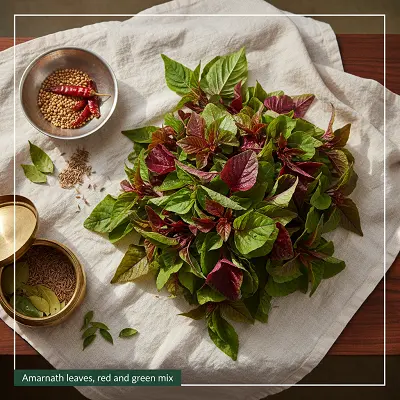
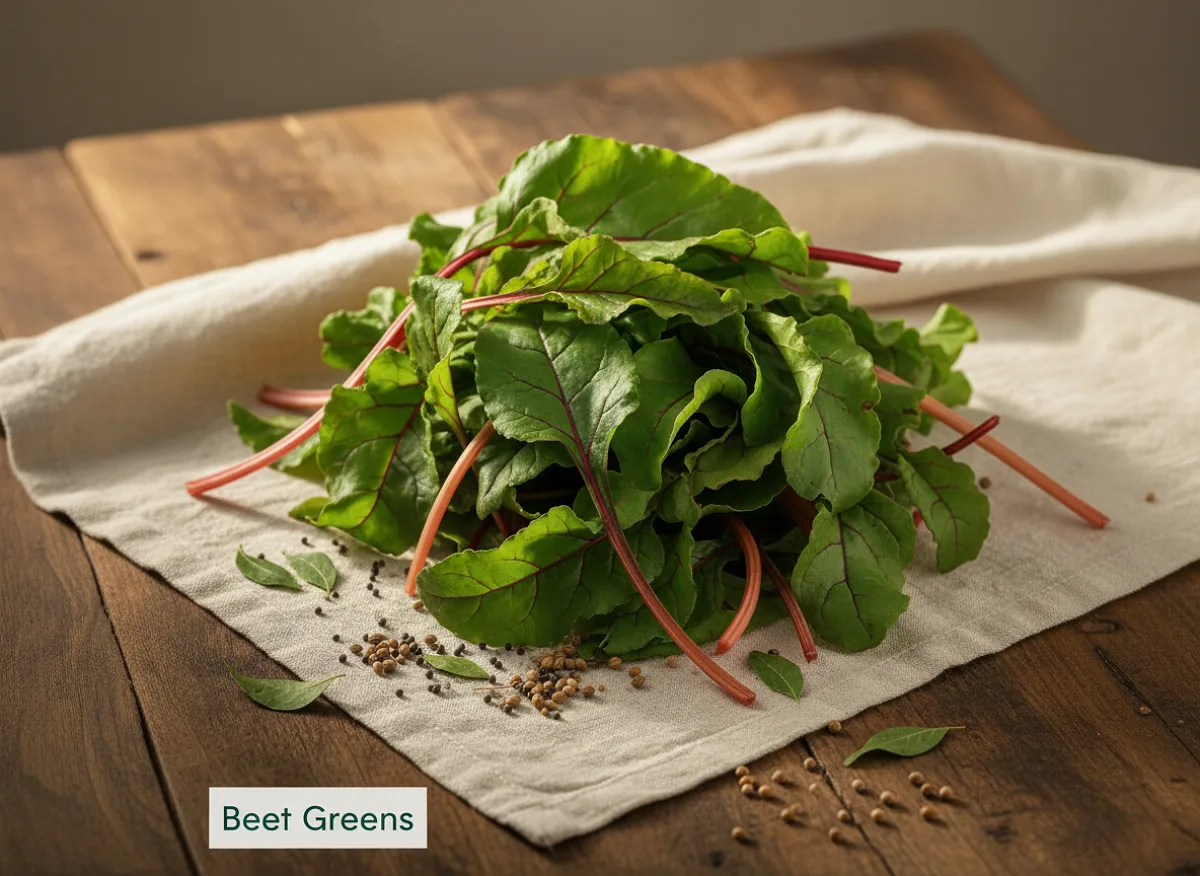
Beet greens are the tender, leafy tops of beetroot plants, with deep green or reddish-veined leaves and a mild, slightly earthy flavour. Fresh and vibrant, they're often overlooked but are a nutritious addition to Indian kitchens. Use them in simple stir-fries, add to dal, blend...
Nutrition per 100 g
Mean values ± IFCT published SD (edible portion).
More macros
Classification
About Beet Greens
What it is
Beet greens are the leafy tops harvested from beetroot plants, featuring broad, tender leaves that range from deep green to burgundy-tinged, depending on the beetroot variety. They have a mild, slightly sweet and earthy taste - less assertive than spinach, with a pleasant crunch when fresh. Commonly sold fresh in bundles at markets or as part of whole beetroots, they're a seasonal treasure in Indian home kitchens, especially during cooler months. (IFCT 2017, Ref #C009)
Use in Indian Kitchen
Beet greens work beautifully in everyday vegetable dishes. Chop and temper them with mustard seeds, cumin, and dried chilli for a simple sabzi; add to sambar or rasam in the final minutes of cooking; blend into coconut-based chutneys with green chilli and jaggery for a balanced sweet-savoury bite. In North Indian kitchens, they're often wilted into dal or mixed into paratha dough for colour and nutrition. A practical tip: if the leaves feel sandy or gritty (common in fresh bundles), soak them briefly in water, then spin or pat dry before cooking. The tender stems are edible too - chop and cook alongside the leaves for extra texture.
Key Nutrients
Beet greens are rich in iron, calcium, magnesium, and potassium. They also contain vitamins A, C, and K, as well as folate and dietary fibre. Exact nutrient composition varies with freshness and growing conditions; refer to IFCT 2017 for detailed micronutrient profiles.
Health Benefits (Evidence-based)
- May support bone health due to high calcium and magnesium content.
- Iron and folate may help maintain healthy blood and energy levels, particularly useful in vegetarian diets.
- Vitamin K is linked to blood clotting and bone metabolism.
- Antioxidants and dietary fibre may support digestive wellness.
- Traditionally used in Ayurvedic and folk medicine as a cooling, nourishing green.
Culinary Uses (Vegetarian)
- Tempered sabzi with mustard seeds, cumin, and dried chilli.
- Added to sambar, rasam, or vegetable curries in the final cooking stage.
- Blended into fresh chutneys with coconut, green chilli, and jaggery.
- Wilted into dal or mixed into paratha dough.
- Sautéed with garlic, ginger, and a squeeze of lemon as a simple side dish.
- Steamed and served with a drizzle of ghee and a pinch of asafoetida.
Caution
- Beet greens contain oxalates; those with a history of kidney stones or on a low-oxalate diet should consume in moderation.
- Always wash thoroughly to remove soil and grit before cooking.
- If taking blood-thinning medications, consult a healthcare provider, as high vitamin K content may interact.
References
- Indian Council of Medical Research - National Institute of Nutrition (ICMR-NIN). Indian Food Composition Tables (IFCT 2017). Reference #C009 - Green Leafy Vegetables.
- Gopalan, C., Rama Sastri, B. V., & Balasubramanian, S. C. (2016). Nutritive Value of Indian Foods. National Institute of Nutrition, ICMR.
Health Benefits
- Antioxidant
- Supports Bone Health
- Supports Digestion
- Boosts Immunity
- Improves Hemoglobin
Sourcing & Storage
Storage
Store beet greens in a breathable bag or wrapped loosely in damp kitchen paper inside the refrigerator's vegetable drawer. Keep away from ethylene-producing fruits (apples, bananas) which can speed wilting. In warm, humid Indian climates, use within 2-3 days for best texture and flavour. If you have a cool, dark pantry or cellar, fresh bundles can last slightly longer. Do not wash before storing - moisture encourages decay.
Shelf Life
Fresh beet greens keep for 3-5 days when refrigerated in a vegetable drawer, depending on initial freshness and climate. Once cooked, store in an airtight container for up to 2 days. Blanched and frozen beet greens retain quality for up to 3 months in the freezer.
Check Before You Buy
Look for bright, crisp leaves with no yellowing, wilting, or dark spots. The stems should snap cleanly when bent, not feel limp or slimy. Avoid bundles with a strong, unpleasant smell or visible mould. If buying from a mandi or kirana, ask for freshly harvested greens - they should feel cool and firm to the touch. Packaged greens in supermarkets should show no condensation or browning inside the bag.
In Ayurveda
In classical Ayurvedic texts, leafy greens including beet greens are valued for their cooling (शीत / sheet) nature and their ability to support digestive fire (agni) when prepared with warming spices. Beet greens are traditionally considered to have a slightly bitter (कटु / katu) and astringent (कषाय / kashaya) taste, which aids in balancing excess pitta and kapha doshas. The iron and mineral content makes them particularly valued in Ayurvedic nutrition for supporting healthy blood (रक्त / rakta) and vitality.