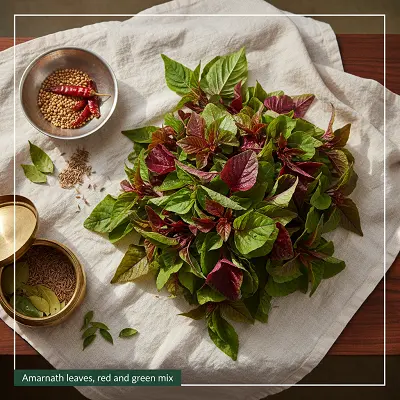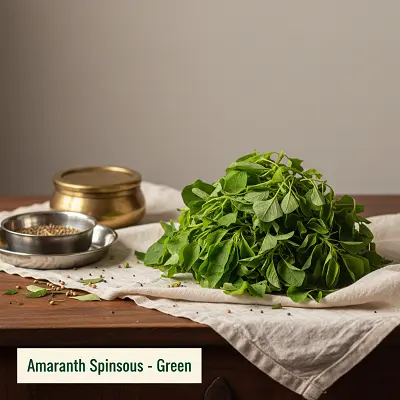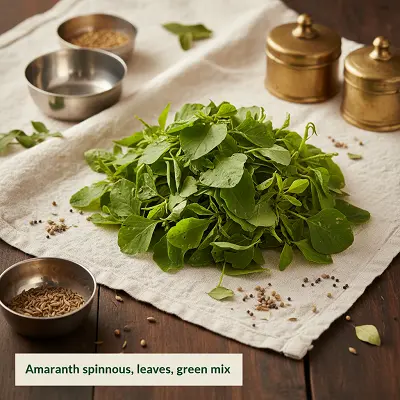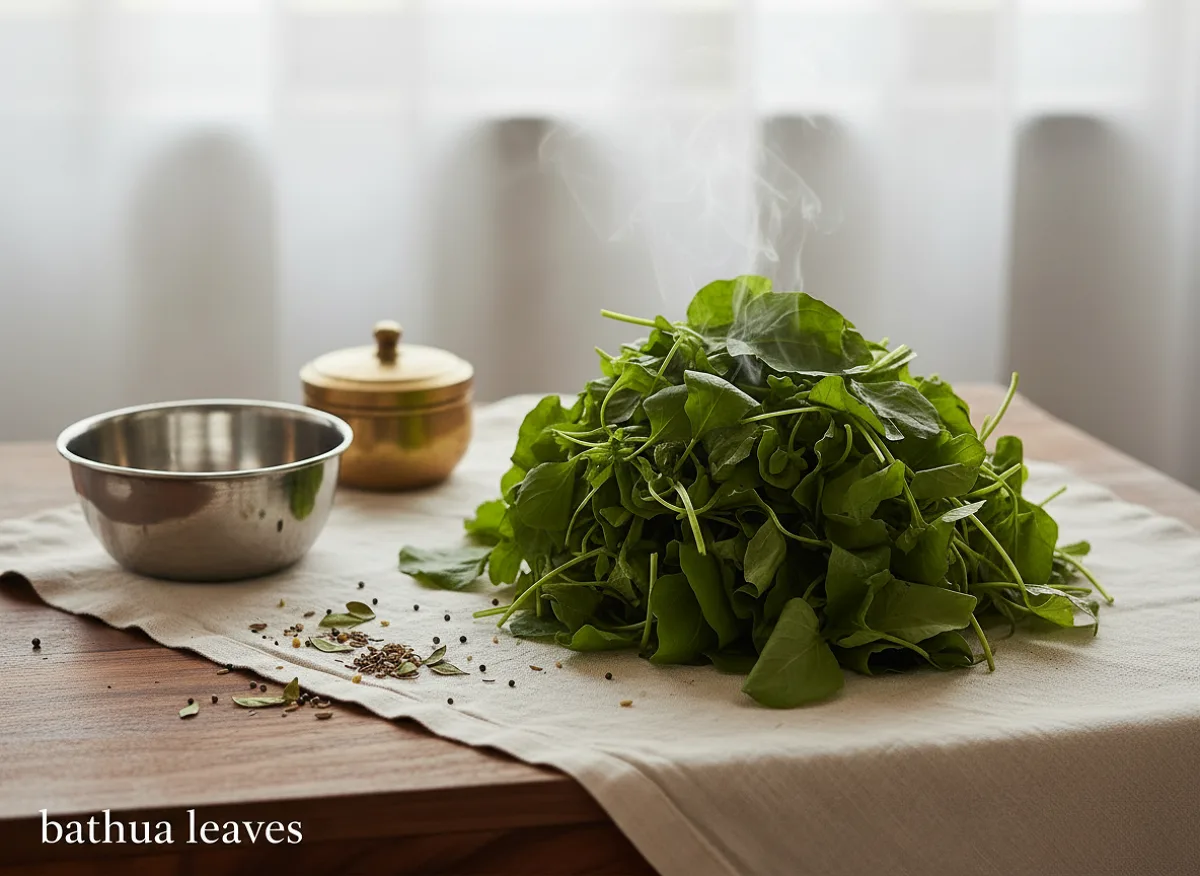
bathua leaves
Chenopodium album · Also known as bathue ke patte, Bathua Saag
Bathua leaves (bathue ke patte), also called bathua saag, are a tender green leafy vegetable commonly foraged or grown in North Indian home gardens, especially during winter months. A seasonal favourite in the kitchen, they are rich in minerals and traditionally cooked as a simpl...
Nutrition per 100 g
Edible portion values from the master catalog.
More macros
Classification
About bathua leaves
What it is
Bathua (Chenopodium album) is a hardy, fast-growing leafy green vegetable with tender, pale-green leaves and a mild, slightly earthy flavour. Widely cultivated in North India and parts of Central India, it thrives in cool seasons and is often harvested fresh from kitchen gardens or purchased at winter markets. The leaves are eaten; the seeds are also used in some regional cuisines. Composition data for bathua leaves is typically described under the IFCT category for green leafy vegetables.
Use in Indian Kitchen
Bathua is quintessentially a North Indian winter green, especially beloved in Punjab, Uttar Pradesh, and Rajasthan. It appears most often as a simple saag - cooked with minimal spice, ghee, and sometimes ginger - or blended into makki di roti (cornmeal flatbread) and bajra rotis for a rustic, wholesome meal. In some households, tender bathua leaves are added to dal or mixed into vegetable curries. The flavour is delicate and slightly mineral-forward, quite different from spinach or mustard greens. There is a quiet nostalgia around bathua in North Indian kitchens; it signals the arrival of winter and is often one of the first greens a grandmother teaches a child to cook.
Key Nutrients
Bathua leaves are a good source of iron, calcium, and other minerals typical of leafy greens. They also contain vitamins including vitamin A and vitamin C, along with dietary fibre. Exact nutrient composition varies with growing conditions and harvest stage; detailed figures are available in the IFCT food composition database under the green leafy vegetable category.
Health Benefits (Evidence-based)
- May support bone health due to calcium and mineral content, particularly relevant for regular consumption in winter diets.
- The iron content may help support healthy blood levels, especially when cooked with ghee or fat to aid absorption.
- Traditionally used in Ayurvedic and folk medicine as a gentle digestive aid and mild laxative.
- High in antioxidants and fibre, linked to general digestive wellness and satiety.
- Lightweight and easy to digest, making it suitable for most age groups when cooked simply.
Culinary Uses (Vegetarian)
- Bathua Saag: Cooked with ghee, ginger, and a pinch of asafoetida; often finished with a tadka of cumin and garlic.
- Makki di Roti: Tender bathua leaves are kneaded into cornmeal dough for a traditional Punjabi flatbread.
- Dal Mix: Added to moong dal or masoor dal in the final minutes of cooking for extra nutrition and mild flavour.
- Vegetable Curry: Paired with potatoes, paneer, or other winter vegetables in a light tomato or yoghurt-based gravy.
- Chutney: Fresh leaves ground with coconut, ginger, and green chilli for a simple accompaniment.
Caution
Bathua contains oxalic acid, as do most leafy greens; those with a history of kidney stones or oxalate sensitivity should consume in moderation. Always cook bathua thoroughly rather than eating raw, as this reduces oxalate bioavailability and aids digestion. Wash leaves carefully to remove any soil or debris. If foraged from the wild, ensure the plant is correctly identified and harvested from clean areas away from roads or pesticide use.
References
- Indian Council of Medical Research - National Institute of Nutrition (ICMR-NIN). Indian Food Composition Tables (IFCT 2017). Green leafy vegetables category.
- Gopalan, C., Rama Sastri, B. V., & Balasubramanian, S. C. (2016). Nutritive Value of Indian Foods. National Institute of Nutrition, ICMR, Hyderabad.
Health Benefits
- Supports Bone Health
- Supports Digestion
- Boosts Immunity
- Provides Iron
- Detox Support
Sourcing & Storage
Storage
Store fresh bathua leaves in a breathable cloth bag or perforated plastic bag in the refrigerator's vegetable drawer, away from ethylene-producing fruits. Keep them dry; excess moisture encourages wilting and decay. In hot, humid climates, use the coldest part of the fridge and check daily for any yellowing or soft spots. Do not wash before storage; wash only just before cooking.
Shelf Life
Fresh bathua leaves keep for 3 to 5 days in the refrigerator when stored properly in a cool, dry drawer. Once cooked, bathua saag or cooked greens will last 2 to 3 days in an airtight container in the fridge. Blanched and frozen bathua can be stored for up to 3 months in the freezer, though texture will soften upon thawing and is best used in cooked dishes rather than fresh applications.
Check Before You Buy
Choose bunches with bright, tender green leaves that feel crisp and snap cleanly when bent. Avoid yellowing, wilted, or bruised leaves, or any with visible insect damage or slime. The stems should be thin and pale green; thick, woody stems indicate the plant is past its prime and will be tough to cook. If buying from a mandi or kirana, ask for freshly harvested bunches cut that morning. Packed or pre-cut bathua should show no browning at the cut edges and should smell fresh and earthy, never musty or fermented. In winter markets, bathua is often sold loose by weight; select leaves by hand rather than accepting pre-bundled packs if possible.
In Ayurveda
In Ayurveda, bathua leaves are esteemed for their cooling effects and rich nutrient profile. They help balance Pitta dosha, aid digestion, and support detoxification. Packed with vitamins and minerals, bathua promotes overall health and vitality, making it a valued superfood.