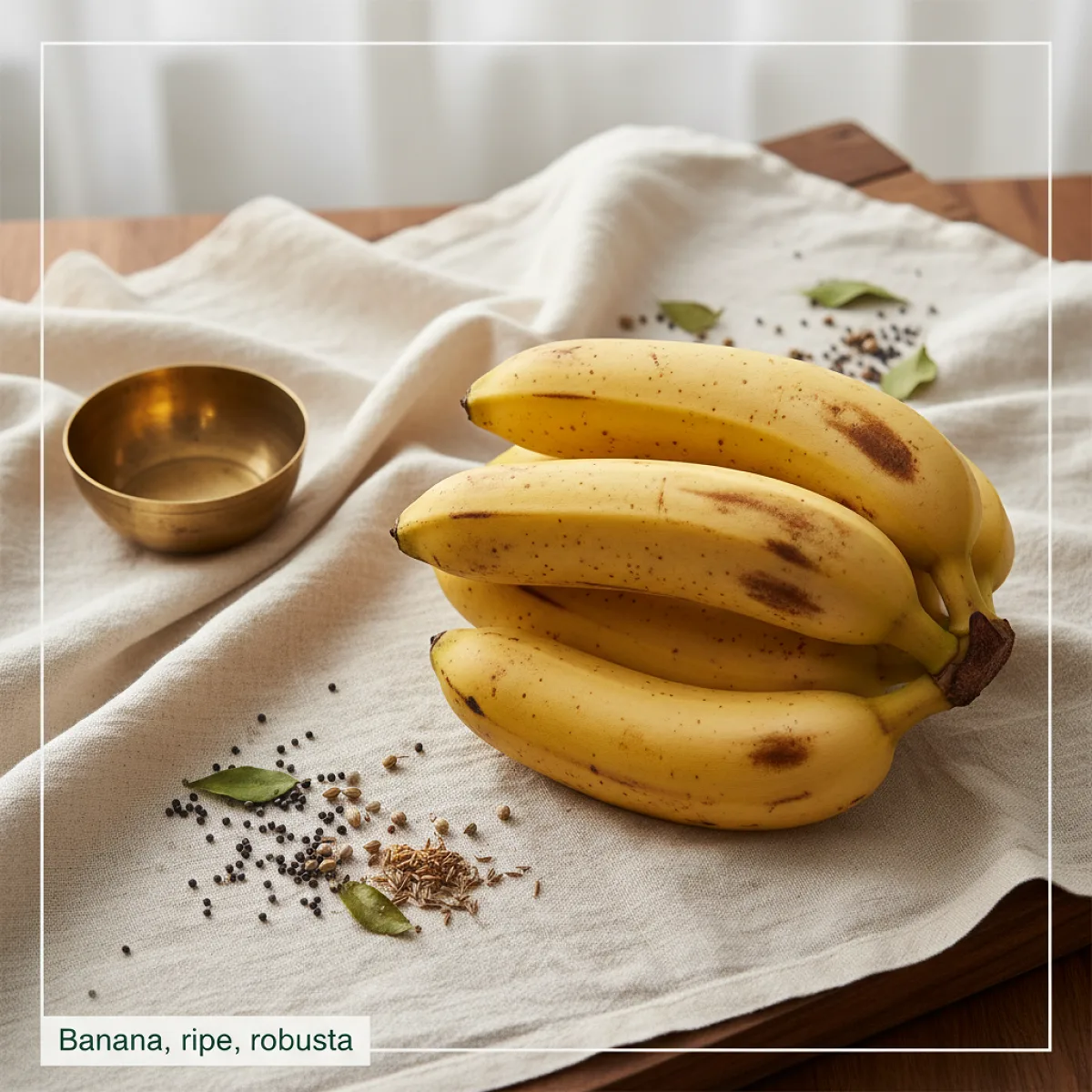
Banana, ripe, robusta
Musa x paradisiaca · Also known as Poka kol, Kola (paka), keda, Kela, Bale hannu, Kait jaji, Vazha pazham, Laphoi, Kele, Kera, Champa kadali, Kella, Kadalii, Vazhaipazham, Arati pandu
Ripe robusta bananas are soft, creamy yellow fruits rich in potassium, vitamin B6, and natural sugars - a staple comfort food across Indian homes. Eaten fresh, mashed into baby food, or cooked into warm desserts, they're a quick energy source and beloved in both everyday meals an...
Nutrition per 100 g
Mean values ± IFCT published SD (edible portion).
More macros
Classification
About Banana, ripe, robusta
What it is
Ripe robusta bananas are the soft, yellow variety commonly found in Indian markets and home kitchens. Robusta cultivars are shorter and thicker than cavendish types, with a creamier texture and slightly earthier sweetness when fully ripe. They are a tropical fruit native to Southeast Asia and now grown widely across India, particularly in Kerala, Karnataka, and Maharashtra (IFCT 2017, Ref #E012).
Use in Indian Kitchen
Bananas hold a quiet, everyday place in Indian cooking - not flashy, but deeply woven into family routines. In South India, they appear in payasam, halwa, and banana chips; in the North, they're mashed into warm milk for children or sliced into fruit salads at festivals. Across regions, ripe bananas are comfort food - eaten plain as a quick breakfast, mashed with jaggery and ghee for a simple dessert, or blended into lassi. They're also a traditional offering in temples and a gentle first food for babies. The leaves themselves are used for serving food and wrapping steamed preparations.
Ayurvedic Connection
In Ayurveda, ripe bananas are considered sweet (madhura rasa) and cooling (sheeta virya), believed to balance pitta and vata doshas. They are traditionally used to support digestion, nourish tissues (dhatu), and provide gentle strength - especially valued for children, the elderly, and those recovering from illness. The fruit is thought to promote ojas (vital essence) and is often recommended in classical texts as a sattvic food.
Key Nutrients
Ripe robusta bananas are a good source of potassium, vitamin B6 (pyridoxine), vitamin C, manganese, and dietary fibre. They also contain natural sugars (glucose, fructose, sucrose) and small amounts of magnesium and folate. The exact nutrient profile varies slightly with ripeness and cultivar; refer to IFCT 2017 (Ref #E012) for detailed composition data.
Health Benefits (Evidence-based)
- May support heart health through potassium content, which helps regulate blood pressure and fluid balance.
- Linked to steady energy release due to a mix of natural sugars and resistant starch, especially in slightly less ripe fruit.
- May aid digestive comfort - ripe bananas are gentle on the stomach and traditionally used to soothe mild digestive upset.
- Vitamin B6 supports brain function and mood regulation, contributing to overall nervous system health.
- Pectin and resistant starch may support healthy gut bacteria and digestive regularity.
- Easily digestible and often recommended as a first solid food for infants and a safe option for those with sensitive digestion.
Culinary Uses (Vegetarian)
- Fresh and ripe - sliced into fruit salads, eaten plain as a snack, or mashed with jaggery and ghee.
- Desserts - banana payasam, banana halwa, banana bread, and banana chips (fried or baked).
- Drinks - blended into banana lassi, smoothies, or warm milk with cardamom and honey.
- Baby food - mashed plain or mixed with warm milk and a pinch of cardamom.
- Fritters - sliced and dipped in gram flour batter, then fried as a teatime snack.
- Banana leaves - used for steaming idli, dosa, or sweet preparations, and for serving food at festivals.
Caution
- High natural sugar content - those managing blood sugar levels should eat in moderation and pair with protein or fat.
- May cause constipation in some people if eaten in large quantities; balance with adequate water and fibre from other sources.
- Potassium-rich - individuals on potassium-restricted diets (e.g. certain kidney conditions) should consult a healthcare provider.
- Latex-fruit syndrome - rarely, people with latex allergy may react to banana proteins; seek medical advice if concerned.
- Overripe or fermented bananas may trigger headaches in sensitive individuals due to tyramine content.
References
- Indian Council of Medical Research - National Institute of Nutrition (ICMR-NIN). Indian Food Composition Tables 2017 (IFCT 2017). Reference #E012 - Banana, ripe, robusta.
- Vaya, J. & Mahmood, S. (2006). Flavonoid content in leaf extracts of the fig (Ficus carrica L.), carob (Ceratonia siliqua L.) and locust bean (Ceratonia siliqua L.) trees. Journal of Agricultural and Food Chemistry, 54(20), 7651-7654. [General reference for tropical fruit nutrient profiles and traditional use in South Asian cuisines.]
Sourcing & Storage
Storage
Store ripe bananas at room temperature (20-25°C) away from direct sunlight and heat sources to slow ripening. Keep them in a cool, well-ventilated spot - a fruit bowl or hanging banana stand works well. If you want to slow ripening further, wrap the crown (where the bananas bunch together) loosely in paper or cloth. Once very ripe or if you prefer them chilled, move them to the refrigerator; the skin will darken but the fruit inside stays fresh. Do not store in airtight plastic bags, as they trap ethylene gas and speed decay.
Shelf Life
Ripe bananas keep for 3-5 days at room temperature, depending on how ripe they are when purchased and your kitchen temperature. In the refrigerator, they last 7-10 days (skin darkens but flesh remains good). For longer storage, peel, slice, and freeze in an airtight container or freezer bag for up to 2-3 months - ideal for smoothies, halwa, or banana bread later.
Check Before You Buy
Look for bananas with a bright yellow skin, free of large brown spots or bruises - a few small freckles are normal and indicate ripeness. Gently squeeze: the fruit should yield slightly to pressure but not feel mushy. Avoid bunches with green tips if you want to eat them immediately, or choose them if you prefer to ripen at home over a few days. Check that the crown (where bananas join) is not split or oozing, which signals overripeness or damage. At the mandi or kirana, buy from vendors with good turnover to ensure freshness. If buying pre-packed, check the date and ensure the plastic is not torn or condensation-heavy inside.