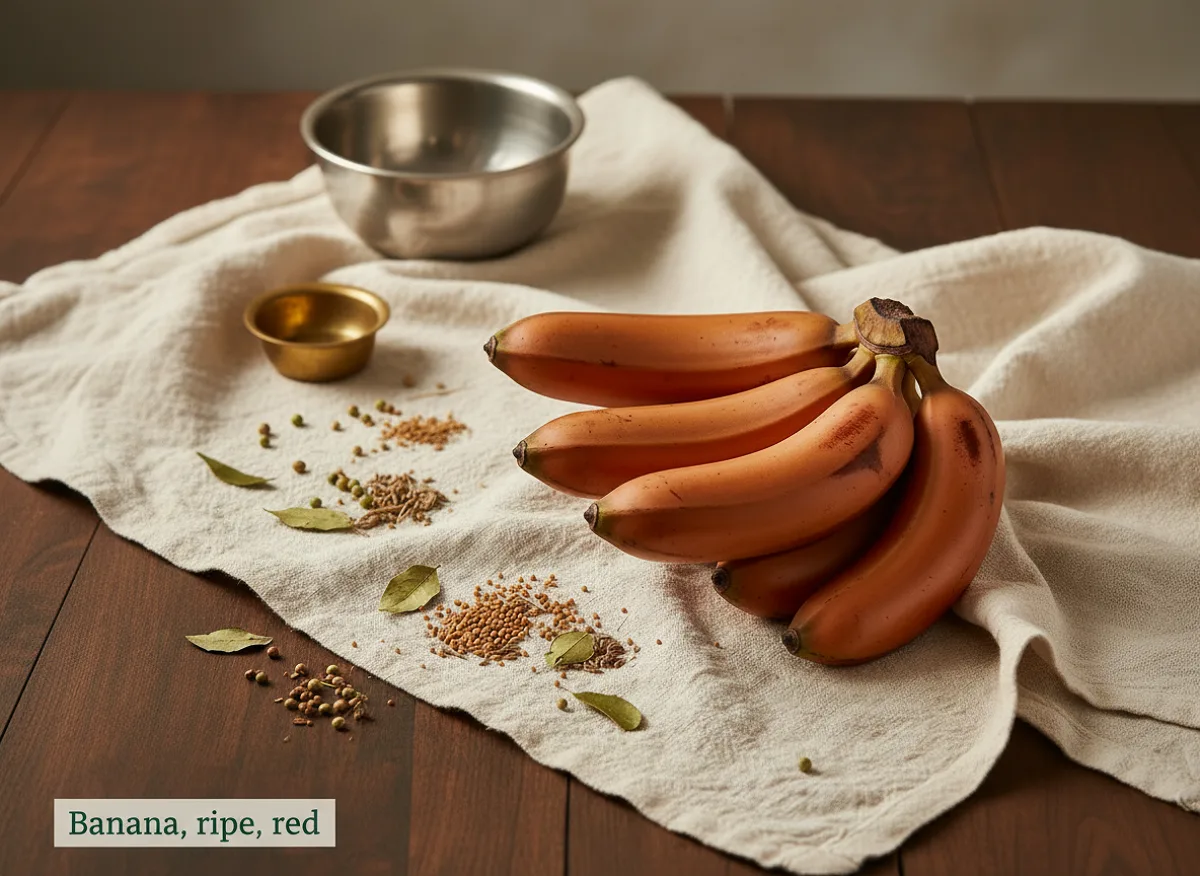
Banana, ripe, red
Musa x paradisiaca · Also known as Poka kol, Kola (paka), Lal paka keda, Kela, Bale hannu, Kait saw, Vazha pazham, Laphoi, Kele, Kera, Champa kadali, Kella, Kadalii, Sevvazhaipazham, Arati pandu
Ripe red bananas are soft, creamy tropical fruits with a naturally sweet flavour and deep burgundy skin. Common across Indian markets and home kitchens, they're eaten fresh, added to smoothies, or used in traditional sweets and breakfast dishes. Rich in potassium and natural suga...
Nutrition per 100 g
Edible portion values from the master catalog.
More macros
Classification
About Banana, ripe, red
What it is
Red bananas are a variety of the common banana plant, distinguished by their deep reddish-purple skin and creamier, slightly sweeter flesh than yellow varieties. They're a tropical fruit widely cultivated and consumed across India, particularly in South and Western regions. The ripe red banana is softer and more fragrant than its green or yellow counterparts, making it ideal for eating fresh or cooking into desserts and drinks. (IFCT 2017, Ref #E011)
Use in Indian Kitchen
In South Indian homes, ripe red bananas feature in payasam, halwa, and banana chips. North Indian kitchens use them in smoothies, milkshakes, and as a natural sweetener in kheer. They're also mashed into baby food and added to breakfast porridges. The fruit holds cultural significance during festivals and is often offered as prasad in temples. Ripe red bananas are preferred over yellow ones for their creamier texture and deeper sweetness, making them a comfort food across generations - the kind your grandmother would peel and hand you as an afternoon snack.
Key Nutrients
Ripe red bananas are a good source of potassium, which supports heart health and muscle function. They contain natural sugars (glucose, fructose, sucrose), dietary fibre, vitamin B6, vitamin C, and manganese. The exact nutrient profile varies with ripeness; fully ripe fruit has higher sugar content and softer starch.
Health Benefits (Evidence-based)
- May support heart health and blood pressure regulation due to high potassium content.
- Provides quick, sustained energy from natural sugars and resistant starch, especially useful before or after physical activity.
- Linked to improved digestive health when ripe, as the starch converts to easily digestible sugars.
- Contains antioxidants and polyphenols that may help reduce oxidative stress.
- Traditionally used to soothe the stomach and support digestive comfort in Indian home remedies.
- May promote satiety and stable blood sugar when eaten with protein or healthy fats (e.g. with curd or nuts).
Culinary Uses (Vegetarian)
- Fresh: eaten as a simple snack, sliced into fruit salads, or blended into smoothies and milkshakes.
- Desserts: mashed into payasam, halwa, kheer, and banana bread.
- Breakfast: sliced over porridge, mixed into dahi (curd), or layered in fruit chaat.
- Fried: banana chips (deep-fried thin slices, often salted or spiced).
- Steamed or baked: wrapped in leaves as a traditional sweet preparation in some regional cuisines.
Caution
Ripe red bananas are high in natural sugars and should be consumed in moderation by those managing blood sugar levels or diabetes. They are generally safe for most people, but those with latex allergies may rarely experience cross-reactivity. Unripe bananas contain resistant starch that can be harder to digest; wait until fully soft and fragrant before eating if you have a sensitive stomach.
References
- Indian Council of Medical Research - National Institute of Nutrition (ICMR-NIN). Indian Food Composition Tables (IFCT) 2017. Reference #E011 (Banana, ripe).
- Vaya, J. & Mahmood, S. (2006). Flavonoid content in leaf extracts of the fig (Ficus carrica L.), carob (Ceratonia siliqua L.) and locust bean (Ceratonia siliqua L.) trees. Journal of Agricultural and Food Chemistry, 54(20), 7651-7654. [General antioxidant reference for tropical fruits.]
Sourcing & Storage
Storage
Store ripe red bananas at room temperature (20-25°C) away from direct sunlight and heat sources. If you need to slow ripening, place them in a cool, well-ventilated spot or in the refrigerator (the skin will darken, but the fruit inside stays fresh). Keep them separate from other fruits to prevent them from over-ripening quickly due to ethylene gas. In humid Indian climates, ensure good air circulation to prevent mould; a fruit bowl or hanging banana stand works well.
Shelf Life
Ripe red bananas stay fresh at room temperature for 2-4 days, depending on how ripe they were when purchased and ambient temperature. Refrigerated, they last 5-7 days (skin darkens but flesh remains good). For longer storage, peel, slice, and freeze in an airtight container or freezer bag for up to 3 months; thawed banana is best used in smoothies, porridge, or baking rather than eaten fresh.
Check Before You Buy
Choose bananas with deep red or burgundy skin that yield slightly to gentle pressure - a sign of ripeness and sweetness. Avoid fruit with large brown patches, soft mushy spots, or visible mould. The skin should be unblemished and fragrant; a sweet aroma indicates good flavour. If buying from a mandi or kirana store, check that the bunch is not bruised from stacking. Packed or pre-cut banana should be stored in a cool section and checked for any signs of browning or fermentation.