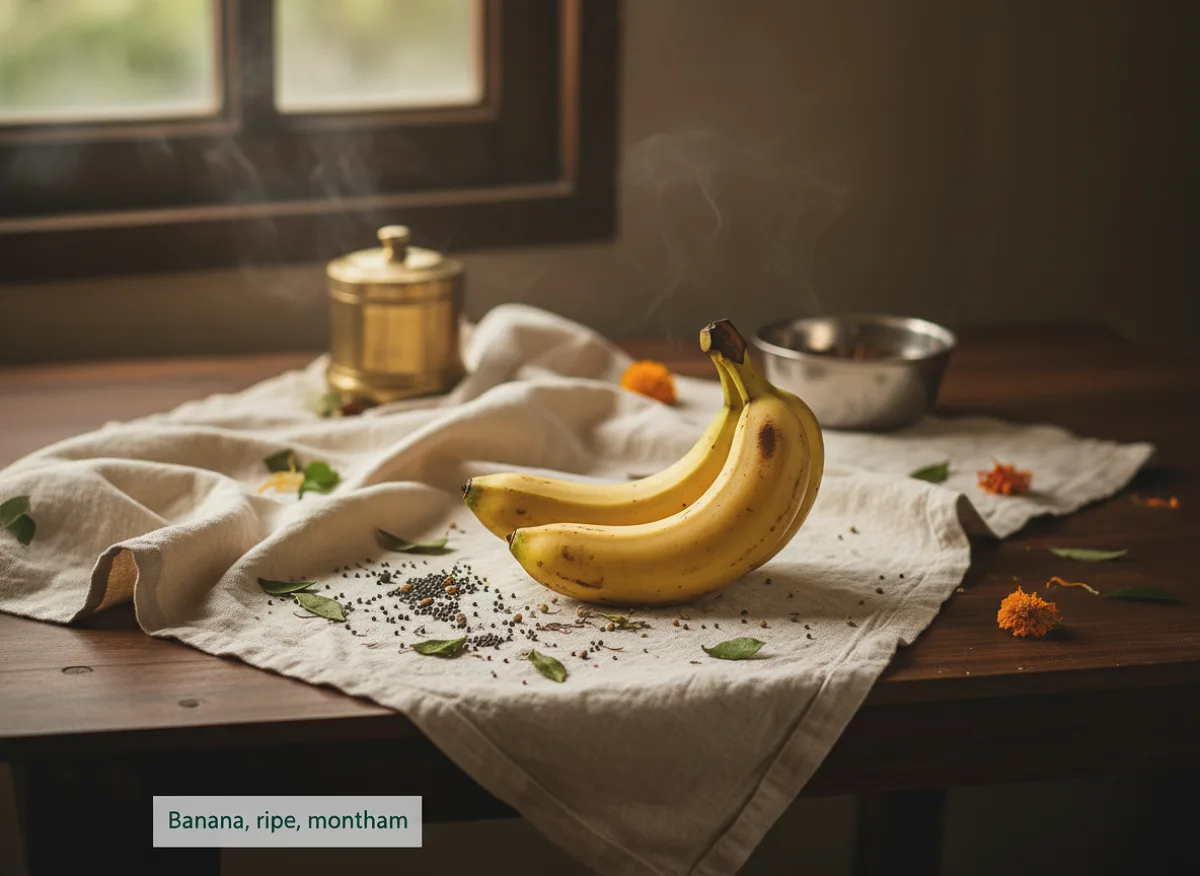
Banana, ripe, montham
Musa x paradisiaca · Also known as Poka kol, Kola(paka), Paka keda, Kela, Bale hannu, Kait syiem, Vazha pazham, Laphoi, Kele, Kera, Champa kadali, Kella, Kadalii, Arati pandu
Ripe banana (montham), a soft, naturally sweet fruit rich in potassium and carbohydrates, is a staple across Indian kitchens. Eaten fresh, mashed into desserts, or fried as a snack, it features in everything from breakfast porridge to festival sweets (IFCT 2017, Ref #E009).
Nutrition per 100 g
Edible portion values from the master catalog.
More macros
Classification
About Banana, ripe, montham
What it is
Ripe banana (montham in Tamil, kela in Hindi) is the mature, yellow fruit of the Musa species, soft and naturally sweet when fully ripened. It is one of India's most accessible fruits, grown widely across tropical and subtropical regions. The fruit is eaten fresh, cooked, or processed into flour and snacks (IFCT 2017, Ref #E009).
Use in Indian Kitchen
Ripe banana holds a cherished place in Indian home cooking. In South India, it is steamed with jaggery and coconut for payasam, or mashed into banana chips (upperi in Kerala). North Indian kitchens use it in halwa, kheer, and as a natural sweetener in baby food and convalescent diets. In Maharashtra and Gujarat, it appears in fritters (pakora) and as a filling in puris. Bananas are also offered in temples and eaten during fasting days. The fruit's natural sweetness and soft texture make it ideal for those recovering from illness, and it is a comfort food across generations - a quick breakfast, a child's first solid food, and a grandmother's remedy for digestive ease.
Key Nutrients
Ripe banana is notably rich in potassium, which supports heart and muscle function. It also contains carbohydrates (mainly natural sugars and resistant starch), vitamin B6, vitamin C, and dietary fibre. Manganese and small amounts of magnesium are present. The exact nutrient profile varies slightly with ripeness and variety; IFCT 2017 provides detailed composition data for Indian banana varieties.
Health Benefits (Evidence-based)
- High in potassium, which may help maintain healthy blood pressure and support heart function.
- Natural sugars and resistant starch provide sustained energy, making it a popular pre- or post-workout snack.
- Contains pectin and resistant starch, which may support digestive health and feed beneficial gut bacteria.
- Vitamin B6 content supports brain development and function, particularly valued in infant and child nutrition.
- Soft texture and easy digestibility make it suitable for convalescent diets and gentle on the stomach.
- Traditionally used in Ayurvedic practice as a cooling, nourishing food for pitta and vata balance.
Culinary Uses (Vegetarian)
- Steamed or boiled with jaggery and coconut for South Indian payasam and kheer.
- Mashed into banana chips (upperi), fritters (pakora), and halwa.
- Sliced fresh as a breakfast fruit, in fruit salads, or with curd and honey.
- Pureed as a natural sweetener and binder in cakes, breads, and baby food.
- Fried as a quick snack or side dish with dal and rice.
Caution
- High natural sugar content; those managing blood sugar should consume in moderation and pair with protein or fat.
- Rich in potassium; individuals on potassium-restricted diets (certain kidney conditions) should consult a healthcare provider.
- Unripe (green) bananas contain more resistant starch and may be harder to digest; ripe bananas are gentler.
- Banana peels can harbour pesticide residues; wash thoroughly before eating or processing.
References
- Indian Council of Medical Research - National Institute of Nutrition (ICMR-NIN). Indian Food Composition Tables (IFCT) 2017. Reference #E009 (Banana, ripe).
- Vaya, J. & Mahmood, S. (2006). Flavonoid content in leaf extracts of the fig (Ficus carrica L.), carob (Ceratonia siliqua L.) and locust bean (Ceratonia siliqua L.) trees. Journal of Agricultural and Food Chemistry, 54(20), 7651-7654. [General reference for fruit nutrient profiling in Indian contexts.]
Sourcing & Storage
Storage
Store ripe bananas at room temperature (20-25°C) away from direct sunlight and heat sources. In warm Indian climates, keep them in a cool, well-ventilated place or a fruit bowl. To slow ripening further, place them in the refrigerator (4-8°C); the skin will darken but the fruit inside remains fresh. Separate bananas from the bunch to slow ethylene gas release and extend shelf life. Avoid storing near onions, potatoes, or other ethylene-producing fruits, as this will accelerate ripening.
Shelf Life
Ripe bananas keep for 3-5 days at room temperature, depending on initial ripeness and ambient temperature. In the refrigerator, they last 7-10 days (skin darkens but flesh remains good). For longer storage, peel, slice, and freeze in airtight containers or freezer bags for up to 3 months; thawed banana is best used in smoothies, porridge, or baking rather than eaten fresh. Overripe bananas (very soft, brown spots) are ideal for mashing into banana bread or halwa and can be frozen whole in their skins.
Check Before You Buy
Choose bananas that are uniformly yellow with no green at the crown or tip, indicating full ripeness. The skin should yield slightly to gentle pressure but not feel mushy. Avoid bananas with large brown bruises, splits, or mould. A faint sweet aroma is a good sign. If buying from a mandi or kirana store, check that the bunch is not overly soft or leaking. For packaged or pre-cut banana chips, inspect the seal and expiry date; avoid any with discolouration or off odours. Organic or pesticide-free options are preferable if available, especially for baby food.