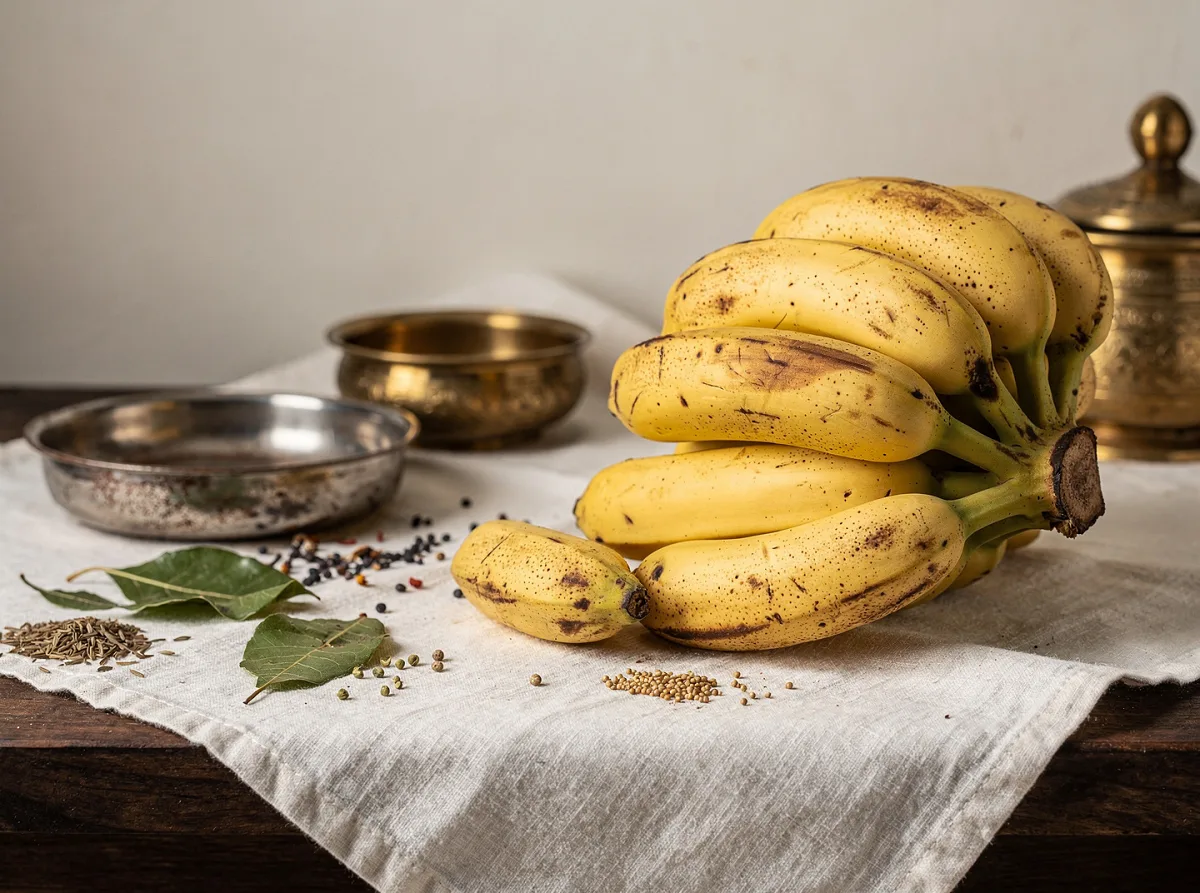
Banana
Musa x paradisiaca · Also known as Kela
Banana (kela) is a soft, creamy tropical fruit rich in potassium and natural sugars, widely eaten fresh or cooked across Indian kitchens. A staple breakfast fruit, it's also used in curries, fritters, and sweets from South to North India (IFCT 2017, Ref #E010).
Nutrition per 100 g
Edible portion values from the master catalog.
More macros
Classification
About Banana
What it is
Banana is a tropical fruit with soft, pale flesh enclosed in a yellow or green peel, depending on ripeness. Native to Southeast Asia, it is now grown widely across India - particularly in Kerala, Karnataka, Maharashtra, and Tamil Nadu. The fruit is eaten fresh, cooked, or dried, and is one of the most affordable and accessible fruits in Indian households (IFCT 2017, Ref #E010).
Use in Indian Kitchen
Bananas hold a cherished place in Indian cooking, though their role varies by region. In South India, ripe bananas are sliced into curries like sambar or used in payasam (kheer), while raw green bananas are steamed or fried as chips. In the North, they appear in halwa, khichdi, and as a simple breakfast with jaggery or honey. Maharashtrian cuisine features banana fritters (kela chi bhaji), and across India, mashed banana is comfort food for children and the elderly. Bananas are also offered in temples and feature in festival sweets. The fruit's natural sweetness and creamy texture make it a bridge between savoury and sweet cooking - a quiet staple that grandmothers have always kept in the kitchen.
Key Nutrients
Bananas are notably rich in potassium, which supports heart and muscle function. They also contain vitamin B6, vitamin C, manganese, and dietary fibre. The fruit provides natural sugars (glucose, fructose, sucrose) that offer quick energy, and resistant starch in greener bananas aids digestive health. Exact nutrient composition varies with ripeness and variety (IFCT 2017, Ref #E010).
Health Benefits (Evidence-based)
- High potassium content may help maintain healthy blood pressure and support heart function.
- Vitamin B6 is linked to brain development and immune system support.
- Natural pectin and resistant starch in less-ripe bananas may promote digestive health and satiety.
- Quick-digesting carbohydrates make bananas a practical pre- or post-workout snack for sustained energy.
- Traditionally used in Ayurvedic and home remedies to soothe digestion and support recovery from illness.
Culinary Uses (Vegetarian)
- Fresh ripe banana - sliced into curries, payasam, kheer, or eaten plain with jaggery or honey.
- Green banana - steamed, boiled, or fried as chips (kela chips); added to sambar or vegetable curries.
- Mashed banana - mixed into halwa, porridge, or as a binding agent in vegetable fritters.
- Banana flower - the tender inner petals are used in South Indian curries and stir-fries.
- Dried banana - eaten as a snack or powdered for use in sweets and breakfast dishes.
Caution
- Bananas are high in natural sugars; those managing blood sugar levels should eat in moderation and pair with protein or fat.
- The fruit's starch content may cause bloating in some people; eating slowly and chewing well helps.
- Unripe bananas contain more resistant starch and may be harder to digest for sensitive stomachs; ripe bananas are gentler.
- Those on potassium-restricted diets (e.g. certain kidney conditions) should consult a healthcare provider before regular consumption.
References
- Indian Council of Medical Research - National Institute of Nutrition (ICMR-NIN). Indian Food Composition Tables (IFCT 2017). Hyderabad: ICMR-NIN; 2017. Reference #E010 (Banana, raw).
- Vaya J, Mahmood U. Polyphenol content and antioxidant activity of banana (Musa acuminata, Colla) fruits: analysis of three stages of ripeness. Journal of Agricultural and Food Chemistry. 2006.
Health Benefits
- Provides Energy
- Supports Digestion
- Boosts Immunity
- Improves Hemoglobin
Sourcing & Storage
Storage
Store bananas at room temperature (20-25°C) away from direct sunlight and heat. Keep them in a cool, well-ventilated spot - a fruit bowl or kitchen shelf works well. If you want to slow ripening, place them in a paper bag or wrap the crown (stem end) loosely in newspaper. Avoid storing near onions, potatoes, or other ethylene-producing fruits, as this speeds ripening. Once very ripe, move bananas to the refrigerator to extend shelf life; the peel will darken, but the fruit inside stays fresh.
Shelf Life
Ripe bananas keep for 3-5 days at room temperature. Once refrigerated, they last 7-10 days (peel may blacken, but the fruit remains good). Peeled or sliced banana should be eaten within a few hours or frozen in an airtight container for up to 3 months. Unripe green bananas can be stored at room temperature for up to 2 weeks before ripening.
Check Before You Buy
Choose bananas based on your intended use. For eating fresh, pick bright yellow fruit with no brown spots - these are ripe and sweet. For cooking into curries or halwa, select slightly greener bananas with a hint of yellow, as they hold their shape better. Avoid bananas with large dark bruises, splits, or a fermented smell. Check that the crown (stem end) is intact and not dried out. At the mandi or kirana shop, gently squeeze the fruit - it should yield slightly to pressure but not feel mushy. Reject any with visible mould or an off smell. Packaged bananas should have no visible damage to individual fruits.
In Ayurveda
In Ayurveda, bananas are considered sattvic (pure) and balancing for the body. They are believed to nourish the body, support digestion, and enhance mental clarity. Bananas are also thought to pacify Vata and Pitta doshas, promoting overall health and vitality.