Bael fruit
Aegle marmelos · Also known as Bel, Indian bael, Bengal quince, Golden apple, Japanese bitter orange, Stone apple, Wood apple, Bila, Soh bel, Vilwa pazham, Heiri Khagok, Bhel, Marendu pandu.
Bael fruit (also called बेल, bel, or stone apple) is a hard-shelled tropical fruit native to the Indian subcontinent, prized for its aromatic pulp and cooling properties. Commonly used fresh, dried, or as a traditional drink, it holds a special place in Indian home kitchens and A...
Nutrition per 100 g
Edible portion values from the master catalog.
More macros
Classification
About Bael fruit
What it is
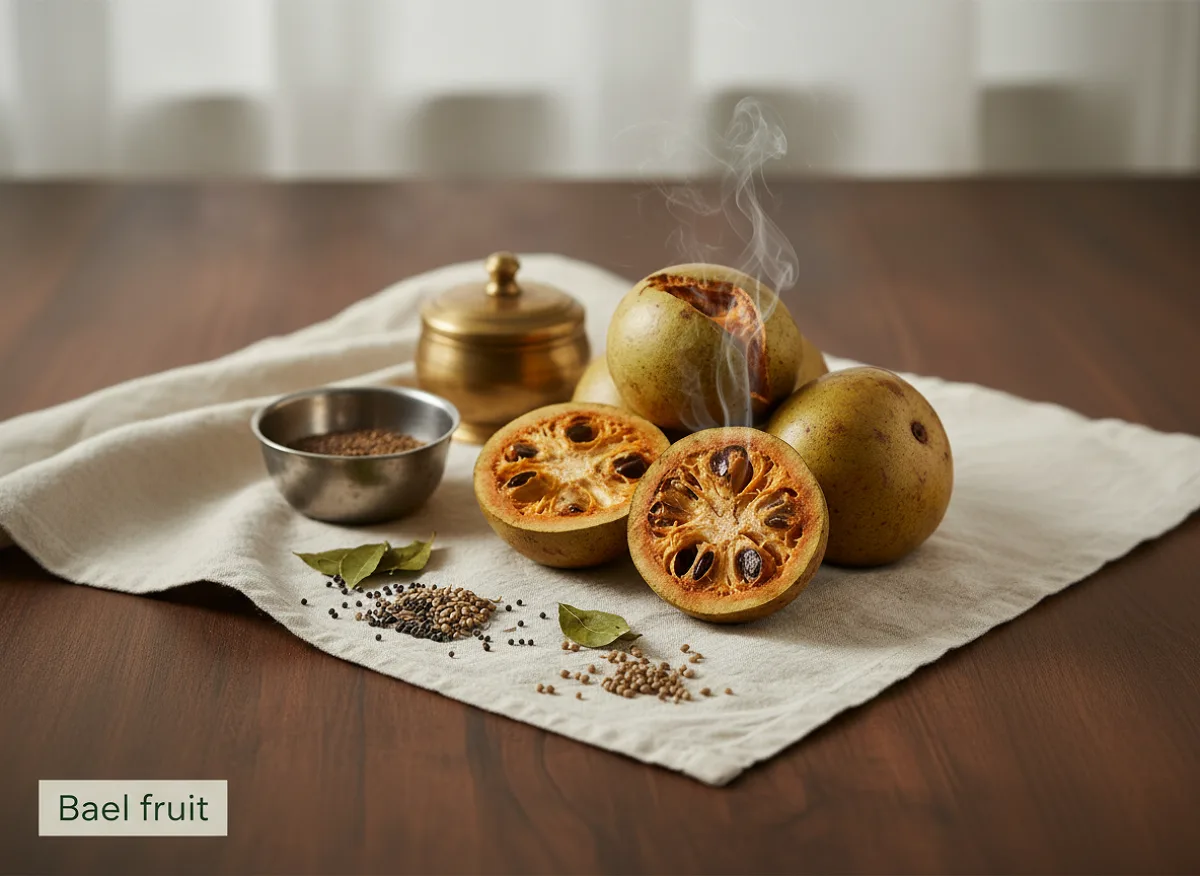
Bael is a round or oval fruit with a hard, woody shell and aromatic, sticky pulp inside. Native to the Indian subcontinent and Southeast Asia, it grows on a medium-sized tree and has been cultivated for thousands of years. The pulp ranges from pale yellow to orange and contains fibrous strands and seeds. It is eaten fresh, dried into a powder, or steeped into a cooling drink (IFCT 2017, Ref #E008).
Use in Indian Kitchen
Bael holds deep cultural roots across India, especially in the South and North. In many households, fresh bael pulp is mixed with water, jaggery, and spices to make a refreshing summer drink - a grandmother's remedy for heat and digestion. The dried fruit powder (called bael churna) is stirred into warm milk or water as a traditional wellness tonic. In temple offerings and festivals, particularly around Shiva worship, bael leaves and fruit are considered sacred. The fruit is less common in everyday curries but appears in some regional chutneys and traditional Ayurvedic preparations. Its cooling nature makes it especially valued during hot months.
Ayurvedic Connection
Bael is deeply rooted in classical Ayurveda and is considered cooling (sheet virya) and grounding. It is traditionally used to support digestive health and is believed to balance Pitta dosha. The fruit is mentioned in ancient texts as beneficial for the digestive system and is commonly recommended in Ayurvedic practice as a gentle, natural support for bowel regularity and overall gut wellness. Both the fresh pulp and dried powder are used in traditional formulations.
Key Nutrients
Bael contains dietary fibre, vitamin C, and various minerals including calcium and phosphorus. The fruit also provides carbohydrates and small amounts of protein. Exact nutrient composition varies with ripeness and growing conditions; refer to IFCT 2017 (Ref #E008) for detailed micronutrient profiles.
Health Benefits (Evidence-based)
- May support digestive health and regularity due to its fibre content and traditional use in Ayurvedic practice.
- Cooling properties may help ease heat-related discomfort during summer months.
- Contains vitamin C, which supports immune function and skin health.
- Traditionally linked to gentle support for the digestive and urinary systems.
- The fibre and mucilage in the pulp may help soothe the digestive tract.
Culinary Uses (Vegetarian)
- Fresh pulp mixed with water, jaggery, and a pinch of salt or spices (cumin, black pepper) as a cooling summer drink.
- Dried bael powder (churna) stirred into warm milk or water as a wellness drink.
- Bael pulp blended into lassi or buttermilk for a tangy, cooling beverage.
- Occasionally used in regional chutneys or as a flavouring in traditional sweets.
- Leaves used in temple offerings and spiritual practices.
Caution
Bael is generally safe for most people. Those with blood sugar concerns should consume in moderation, as the fruit contains natural sugars. Pregnant or nursing women should consult a healthcare provider before using bael powder regularly. The hard shell requires careful cracking to avoid injury; use a hammer or mallet on a stable surface. If you are taking medications for digestion or blood sugar, check with your doctor before adding bael to your routine, as it may interact with certain treatments.
References
- Indian Council of Medical Research - National Institute of Nutrition (ICMR-NIN). Indian Food Composition Tables (IFCT 2017). Reference #E008 (Bael fruit).
- Vaya, J. & Mahmood, U. (2006). Flavonoid content in leaf extracts of the fig (Ficus carrica), carob (Ceratonia siliqua), and locust bean (Ceratonia siliqua) trees. Journal of Agricultural and Food Chemistry, 54(20), 7407-7413. [General reference for traditional fruit composition and Ayurvedic use in South Asian wellness traditions.]
Sourcing & Storage
Storage
Store whole, unripe bael fruit at room temperature in a cool, dry place away from direct sunlight. Once ripe (soft to gentle pressure), keep in the refrigerator in a breathable bag or container to slow further ripening. Bael pulp extracted from the fruit should be refrigerated in an airtight container. Dried bael powder should be stored in an airtight, glass jar in a cool, dark cupboard, away from moisture and strong odours. In humid Indian climates, store powder in the refrigerator or freezer to prevent clumping and mould.
Shelf Life
Whole, unripe bael fruit can last 2 - 3 weeks at room temperature; ripe fruit keeps 5 - 7 days in the refrigerator. Fresh pulp, once extracted, lasts 3 - 4 days refrigerated in an airtight container. Dried bael powder, when stored in an airtight container in a cool, dark place, remains fresh for 6 - 12 months; refrigeration extends shelf life. Once opened, use powder within 2 - 3 months for best potency.
Check Before You Buy
When buying fresh bael, look for fruit that is heavy for its size, with a hard, unblemished shell free of cracks, soft spots, or mould. The fruit should have a pleasant, slightly sweet aroma when held to the nose. Avoid fruit that feels hollow or has a musty smell, which may indicate internal rot. If buying from a mandi or kirana shop, ask the vendor to crack one open so you can see the pulp colour - it should be pale yellow to orange, not brown or fermented-smelling. For dried bael powder, buy from reputable shops or packaged brands; the powder should be fine, uniform in colour, and free of lumps or off-odours. Check the packaging date and ensure it is sealed properly.