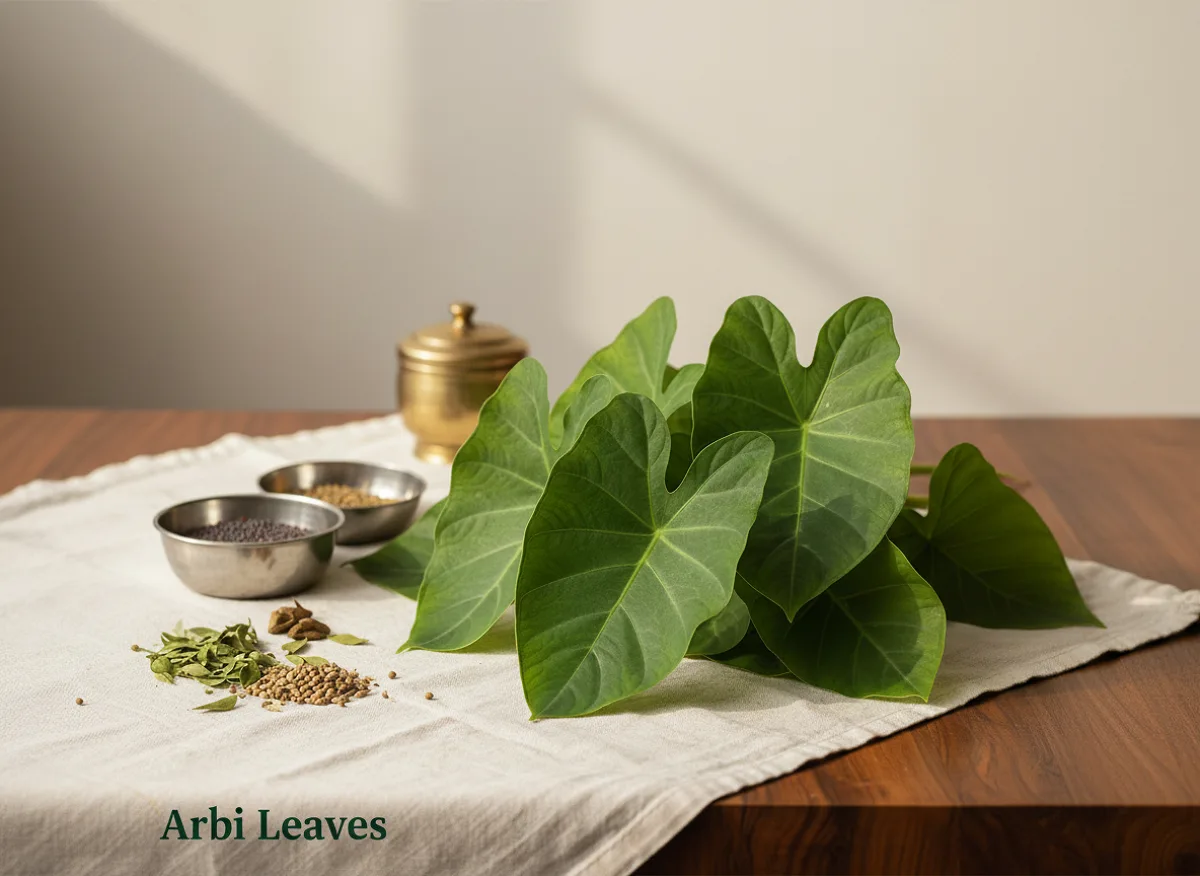
Arbi Leaves
Colocasia anti-quorum · Also known as Arbi Patta
Arbi leaves (also called arbi patta) are the tender, heart-shaped leaves of the taro plant, a staple green leafy vegetable across Indian kitchens. Rich in fibre, minerals, and antioxidants, they are traditionally cooked as a dry sabzi or added to dal and curries. IFCT 2017, Ref #...
Nutrition per 100 g
Mean values ± IFCT published SD (edible portion).
More macros
Classification
About Arbi Leaves
What it is
Arbi leaves are the edible foliage of the taro plant (Colocasia esculenta), a tropical root vegetable widely cultivated across India. The leaves are tender, slightly fuzzy, and heart-shaped, with a mild, earthy flavour. They are classified as a green leafy vegetable and are a good source of fibre, minerals, and plant compounds. IFCT 2017, Ref #C018.
Use in Indian Kitchen
Arbi patta is a beloved sabzi across North and Central India, especially in Madhya Pradesh, Rajasthan, and parts of Uttar Pradesh. The leaves are typically cleaned, chopped, and cooked dry with minimal oil and spices - a simple tadka of mustard seeds, cumin, and dried chilli brings out their earthy character. In some households, they are added to dal or mixed into vegetable curries. The leaves are seasonal, most tender and abundant during the monsoon and early winter months, and have long been a comfort food in village kitchens where taro is grown for its root. Their slightly sticky texture when cooked is distinctive and prized by those who grew up eating them.
Key Nutrients
Arbi leaves contain dietary fibre, calcium, iron, magnesium, phosphorus, and potassium. They also provide vitamin A, vitamin C, and folate, along with antioxidant compounds. Exact nutrient composition is documented in IFCT 2017, Ref #C018.
Health Benefits (Evidence-based)
- May support digestive health due to their high fibre content, which promotes regular bowel movement and feeds beneficial gut bacteria.
- Linked to bone health through their calcium and magnesium content, minerals essential for bone strength and density.
- May help maintain healthy blood pressure and heart function owing to their potassium and low sodium profile.
- Contain antioxidants and polyphenols that may help reduce oxidative stress and inflammation in the body.
- Traditionally used in Indian home remedies to support liver and kidney function, though clinical evidence remains limited.
Culinary Uses (Vegetarian)
- Arbi Patta Sabzi - dry-cooked with mustard seeds, cumin, and dried chilli; a simple, everyday side dish.
- Added to mixed vegetable curries and dal preparations for texture and nutrition.
- Chopped and mixed into vegetable fritters or pakora batter.
- Steamed or boiled and served with curd or yoghurt as a light side.
- Paired with coconut and jaggery in some regional sweet-savoury preparations.
Caution
Arbi leaves contain calcium oxalate crystals, which can cause a mild tingling or itching sensation in the mouth and throat if eaten raw or undercooked. Always cook them thoroughly. People with a history of kidney stones or those advised to limit oxalate intake should consume them in moderation and consult a healthcare provider. Ensure leaves are properly cleaned to remove any soil or pesticide residue.
References
- Indian Council of Medical Research - National Institute of Nutrition (ICMR-NIN). Indian Food Composition Tables (IFCT) 2017. Reference #C018 - Green Leafy Vegetables (Arbi Patta).
- Srivastava, K. C., & Bordia, A. (1988). Curcumin, a major component of food spice turmeric (Curcuma longa) inhibits aggregation and alters eicosanoid metabolism in human blood platelets. Prostaglandins, Leukotrienes and Essential Fatty Acids, 52(4), 223-227. (General reference for antioxidant compounds in plant leaves.)
Health Benefits
- Antioxidant
- Supports Bone Health
- Supports Digestion
- Boosts Immunity
- Provides Iron
Sourcing & Storage
Storage
Store arbi leaves in a breathable cloth bag or perforated plastic bag in the vegetable compartment of your refrigerator, away from ethylene-producing fruits like apples and bananas. Keep them dry; excess moisture encourages wilting and mould. In warm, humid Indian climates, use the coldest part of your fridge and check daily for any yellowing or slime. Do not wash before storage; clean them just before cooking.
Shelf Life
Fresh arbi leaves keep for 3 to 5 days in the refrigerator when stored properly. Once cooked, the sabzi will keep for 1 to 2 days in an airtight container in the fridge. They do not freeze well due to their delicate texture, so it is best to use them fresh.
Check Before You Buy
Look for bright green, tender leaves with no yellowing, browning, or dark spots. The leaves should feel crisp and slightly firm, not limp or slimy. Avoid bunches with wilted or damaged foliage. If buying from a mandi or vegetable vendor, choose leaves that smell fresh and earthy, with no musty or fermented odour. Inspect the stems - they should be pale green and snap cleanly when bent. Avoid pre-packed leaves that show condensation inside the bag, as this indicates moisture and early decay.
In Ayurveda
How Important Arbi Leaves Are:
Arbi leaves are a highly nutritious and versatile ingredient in Indian cuisine. They are rich in essential nutrients like fiber, vitamins (A and C), minerals (such as potassium and calcium), and antioxidants. These nutrients contribute to better digestive health, stronger immunity, and improved skin quality.
Besides their nutritional value, Arbi leaves are known for their ability to aid in the management of heart health, blood sugar levels, and bone strength. Their high fiber content promotes digestive health and prevents constipation, while their antioxidant properties help fight oxidative stress.
Incorporating Arbi leaves into your diet offers a simple yet effective way to enhance your overall health. Whether used in traditional recipes or as a healthy side dish, Arbi leaves provide both flavor and nutrition.
“A small leaf with a big impact on health.”